
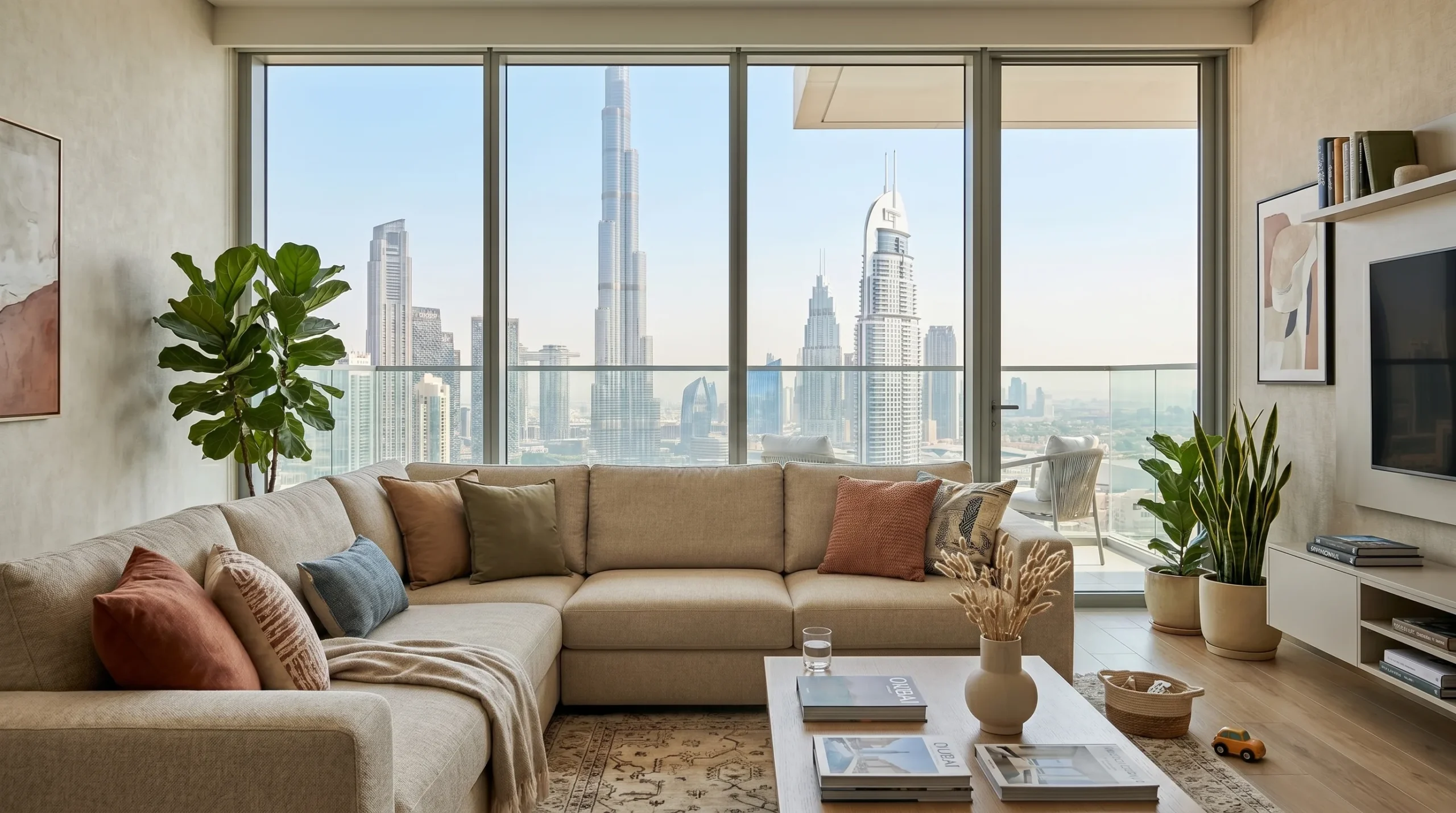
Walk into almost any furniture showroom in Dubai and you’ll face the same question within minutes: fabric or leather? It sounds simple. It isn’t. Because the answer that works perfectly in a London townhouse or a New York loft might be completely wrong for your villa in Arabian Ranches or your apartment in JLT.
At Karnak Home, we’ve been helping UAE families furnish their homes since 1988. Over 35 years and more than 70,000 families served across Dubai, Abu Dhabi, Sharjah, and beyond, we’ve seen every sofa trend come and go and more importantly, we’ve seen what holds up and what doesn’t in this specific climate and lifestyle. This guide isn’t about pushing you toward a sale. It’s about giving you the honest information you need to make a decision you’ll be happy with five years from now.
The UAE presents furniture with a genuinely unique set of challenges. You have extreme outdoor heat hitting 45°C in summer, combined with heavily air-conditioned interiors that can drop to 20°C or lower. You have humidity along the coast particularly in Abu Dhabi and Fujairah and dry, dusty air inland. Add in the lifestyle realities of large family gatherings, children, frequent guests, and a culture of daily home use, and the fabric-versus-leather question becomes more nuanced than most guides will tell you.
How Dubai’s Climate Actually Affects Your Sofa
This is where most buying guides go wrong: they talk about material properties in general terms without addressing what UAE conditions specifically do to furniture over time. Understanding this is the foundation of a smart purchase.
The Heat and AC Cycle Problem
The biggest threat to sofas in the UAE isn’t the outdoor heat — it’s the constant cycling between extreme heat and aggressive air conditioning. When you leave home with the AC off, interior temperatures can reach 38–42°C in summer. When you return and the AC kicks in, the room drops 15–20 degrees within an hour or two. This expansion and contraction cycle, repeated hundreds of times a year, is genuinely hard on upholstery materials.
Genuine full-grain leather, being a natural material, expands and contracts with temperature changes. Over time, without proper conditioning, this cycle causes it to dry out and crack — particularly along seam lines and armrests where tension is highest. Lower-quality bonded leather (made from leather scraps glued to a fabric backing) handles this even more poorly; the bonding layer separates, and you’ll see that unsightly peeling within two to three years in UAE conditions. We’ve had many families come to us after a bonded leather sofa purchased elsewhere has started peeling within 18 months. It’s one of the most common furniture disappointments we see.
Quality fabric, by contrast, handles temperature cycling relatively well. The fibres flex without the same structural stress. This is one genuine advantage fabric has in the UAE context that often goes unmentioned.
Supporting scientific research:
Humidity: A Coastal vs. Inland Distinction
If you live in coastal areas — Dubai Marina, Abu Dhabi Corniche, Sharjah waterfront, or anywhere in Fujairah and Ras Al Khaimah — ambient humidity is a real consideration. High humidity accelerates wear in leather if it isn’t regularly conditioned, and it can encourage mildew in certain fabric types if air circulation is poor.
For coastal homes, tightly woven synthetic-blend fabrics (polyester-microfiber blends) or treated performance fabrics perform particularly well because they resist moisture absorption. Natural fabrics like untreated linen or cotton, while beautiful, absorb humidity and can feel slightly damp in a poorly ventilated room during summer. If you love the look of natural linen, choose linen-blend options with at least 40% synthetic content — they give you the aesthetic with better resilience.
For inland locations — Dubai inland communities, Al Ain, parts of Sharjah — the concern is the opposite: dry air and dust. Dry conditions accelerate leather dehydration, making conditioning even more important. Fabric sofas in dusty inland areas need more frequent vacuuming, but structurally handle the dry conditions well.
Sunlight and UV Fading
The UAE sun is intense, and even through double-glazed glass, UV exposure is significant. Both fabric and leather fade with sustained direct sunlight, but they fade differently. Leather tends to lighten unevenly, developing blotchy patches that are very difficult to reverse. Fabric fades more uniformly, which is less visually offensive, and certain solution-dyed fabrics (where colour goes through the entire fibre rather than just the surface) resist fading remarkably well.
If your sofa will be positioned near south or west-facing windows — very common in UAE apartments — this is worth factoring heavily into your material choice. UV-filtering window film is an inexpensive addition that dramatically extends sofa life regardless of material.
Leather Sofas in Dubai: The Full Picture
Leather has a timeless appeal, and in the right context, it genuinely is the better choice. But the UAE context has some specific requirements.
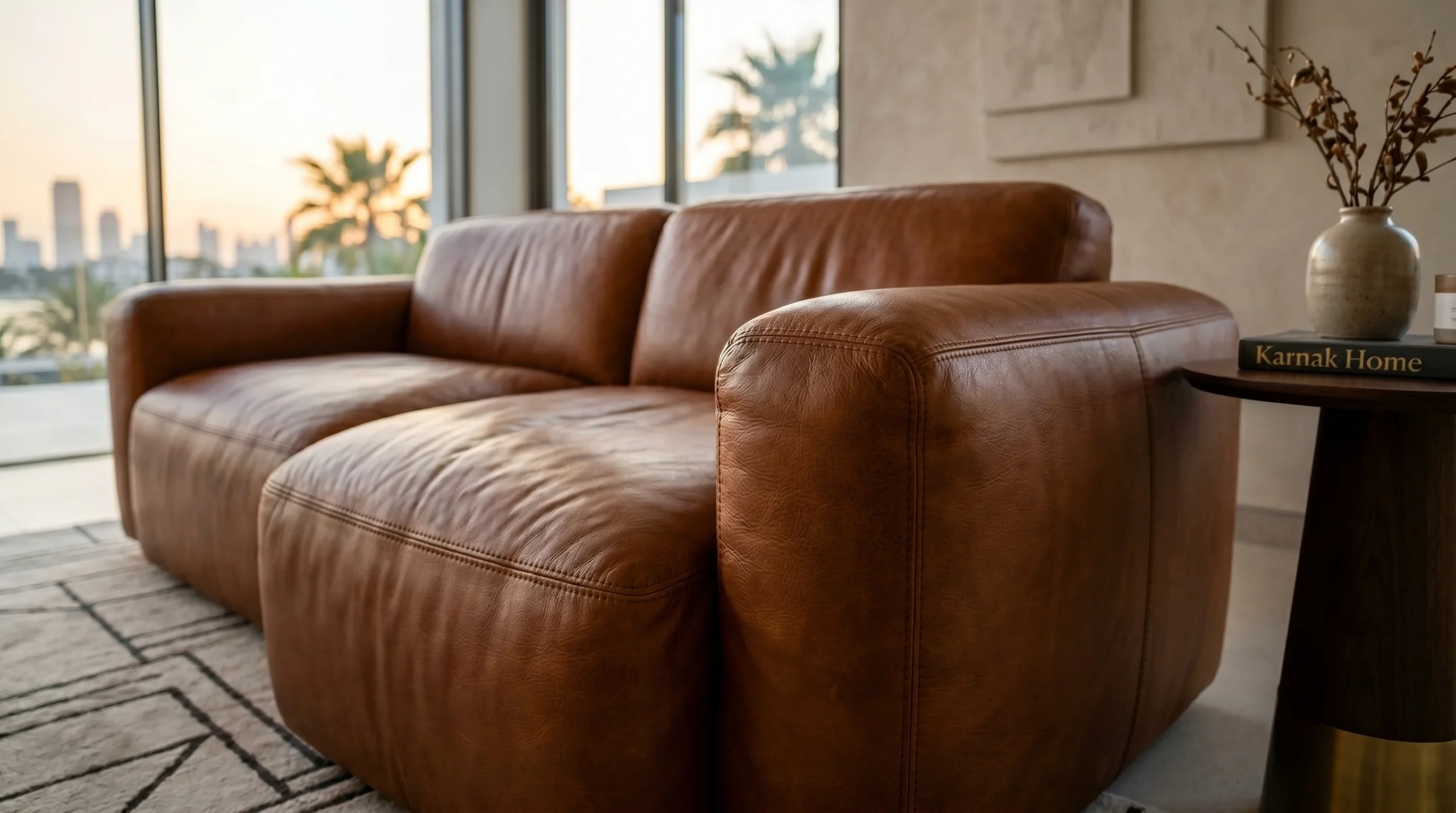
Genuine Leather: The Only Type Worth Buying in the UAE
When we say “leather sofa,” there are actually four very different products being sold under that label: full-grain leather, top-grain leather, corrected-grain leather, and bonded leather. In the UAE climate, only the first two are genuinely worth your investment.
Full-grain leather uses the complete outer hide with natural grain intact. It is the most breathable, most durable, and actually improves with age — developing a patina that adds character. A quality full-grain leather sofa, properly maintained, can last 20+ years in a UAE home. Top-grain leather has the surface sanded slightly for a more uniform appearance; it is slightly less breathable but still high quality and very durable. These typically range from AED 6,000 to AED 20,000+ depending on size and brand.
Corrected-grain leather has significant surface treatments applied to hide imperfections — it performs adequately but lacks the longevity of the above grades. Bonded leather is, for practical purposes, not leather in any meaningful functional sense. It is leather dust and scraps glued to a polyurethane-coated fabric backing. Moreover, it looks like leather in a showroom and costs 60–70% less, but in UAE conditions it will typically begin peeling and cracking within 18–36 months. Additionally, it is, genuinely, not worth buying here regardless of the price.
Always ask your retailer specifically: is this full-grain, top-grain, corrected-grain, or bonded? Any retailer unwilling to answer clearly is a red flag.
Where Leather Works Well in UAE Homes
Leather performs at its best in well-climate-controlled environments. If your AC runs consistently and the room temperature stays relatively stable, leather is excellent. Large villas with good ventilation and consistent air conditioning in the living room — common in communities like Emirates Hills, Jumeirah, and Dubai Hills — are ideal environments for leather sofas.
Leather is also genuinely easier to clean for certain messes: spilled coffee, food, or drink wipes off the surface without absorbing into fibres. For families where a quick wipe-down is the preferred maintenance style, this is a real advantage.
The cooler feel of leather is worth discussing honestly. In an air-conditioned room, leather furniture feels cool — some people love this, particularly in the UAE heat. However, it also means leather can feel cold and stiff first thing in the morning before the room warms up, and during cooler winter months (December to February), leather sofas in less-heated homes can genuinely feel uncomfortable initially.
Leather Maintenance in the UAE: What’s Actually Required
Genuine leather in UAE conditions needs conditioning every three to four months — more frequently if your home has inconsistent AC or if the sofa is near a window. A quality leather conditioner (Leather Honey and Furniture Clinic are good brands available in the UAE, typically AED 60–120 per bottle) replenishes natural oils that the dry, AC-heavy environment strips away. Skipping this for a year or more is when you begin seeing cracking and dryness.
Annual professional leather cleaning and conditioning, offered by several Dubai-based services at around AED 300–500 for a three-seater sofa, makes a significant difference to long-term appearance. Budget this into your ownership cost.
Fabric Sofas in Dubai: Honest Assessment
Fabric has had something of a renaissance in UAE interiors over the past decade, and for good reason. When the right fabric type is chosen, it solves many of the climate-specific challenges leather faces while offering significantly more design flexibility.
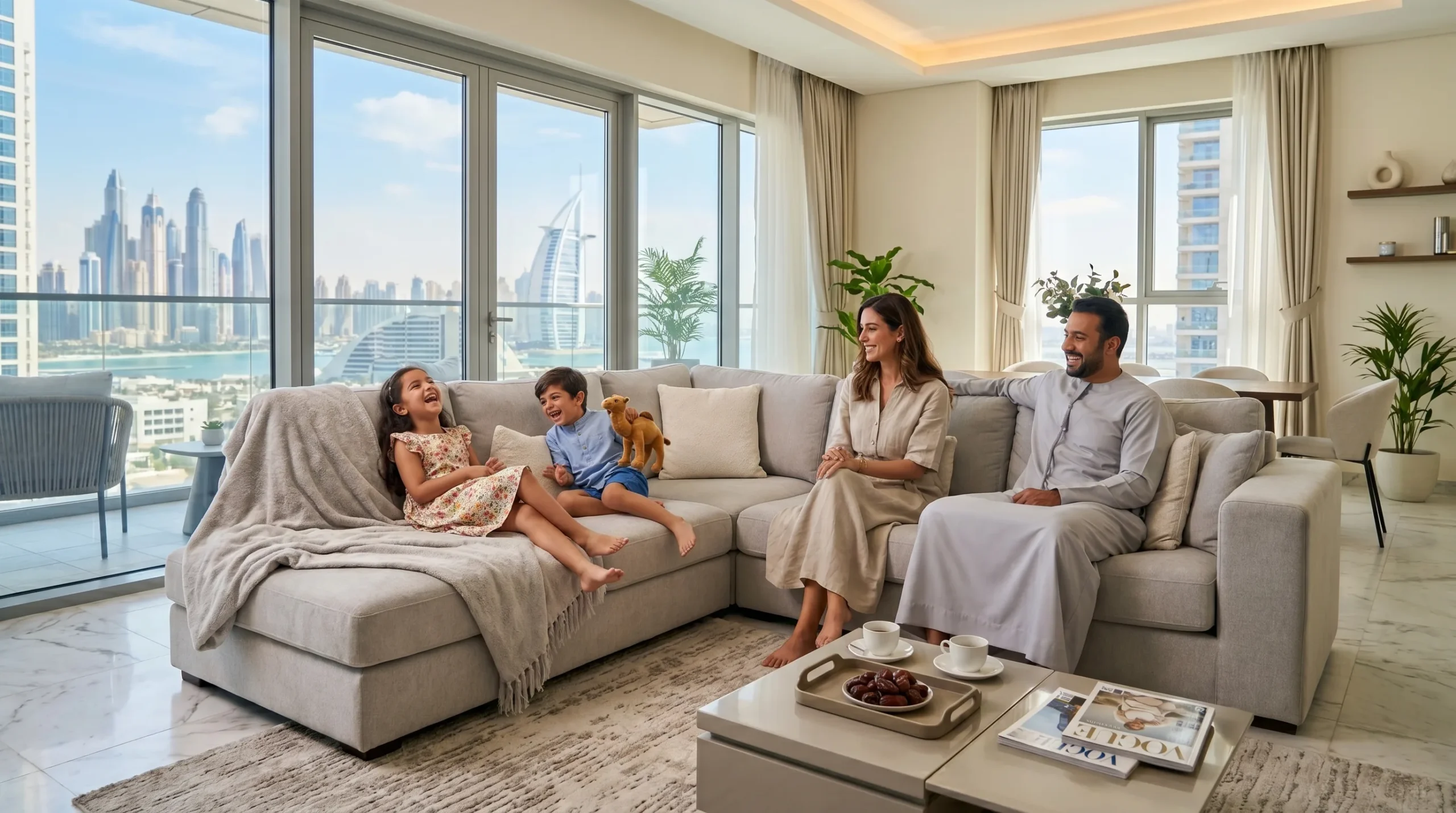
The Best Fabric Types for UAE Conditions
Not all fabrics are equal in this climate. Here is a frank breakdown of the main types and how they perform:
Microfiber / Microsuede: The most practical choice for most UAE families. These tightly woven synthetic fabrics resist staining, clean easily, handle temperature cycling well, and don’t fade significantly. They’re not the most luxurious feeling, but their durability-to-cost ratio is excellent. Expect to pay AED 2,500–8,000 for good quality microfiber sofas.
Performance Fabrics (Crypton, Sunbrella, similar): These are specifically engineered to resist stains, moisture, and UV — some are explicitly rated for outdoor use. In the UAE context, they are outstanding choices, particularly for families with children or for rooms with significant sun exposure. They come in beautiful textures and colours now — no longer the utilitarian look they once had. Typically AED 4,000–12,000 range.
Velvet: A growing trend in UAE interiors and surprisingly practical when the velvet is a synthetic (polyester) blend rather than natural velvet. Synthetic velvet is durable, does not absorb moisture readily, and vacuums clean beautifully. The lush aesthetic works well in both traditional Arabic-influenced and contemporary UAE interiors. It does show crush marks from use which need occasional steaming to restore. AED 3,000–10,000.
Linen and Natural Cotton: Beautiful, breathable, and very on-trend. However, in the UAE these require more care. They absorb spills readily, are harder to clean without leaving marks, and in humid coastal areas can feel slightly damp. If you love this aesthetic, a linen-blend (linen + polyester) gives you the look with better practical performance. Professional cleaning is more important for natural fabrics — budget AED 250–450 per clean annually.
Chenille: Popular for its softness and texture, chenille performs adequately in UAE conditions but is prone to snagging (particularly with pets or children) and can flatten and lose texture over time in high-use areas.
Fabric Sofas and Children: The Real Advantage
If you have young children — and many UAE families have multiple young children plus frequent visits from extended family — fabric sofas in performance or microfiber materials offer a practical advantage that is hard to overstate. Spilled juice, food crumbs, muddy hands: these are daily realities, and a fabric sofa that can be spot-cleaned or even have its covers professionally cleaned beats a leather sofa that shows every scratch from small fingernails.
Children’s nails and sharp toys can scratch leather permanently. Even top-grain leather shows scratches from daily family life with young kids. Fabric is significantly more forgiving, and many fabric sofas in the AED 3,000–8,000 range offer removable, washable covers — a feature worth specifically requesting when shopping.
Fabric Comfort in UAE Temperature Reality
Here’s something genuine leather advocates don’t always acknowledge: fabric sofas are more comfortable at a broader range of temperatures. In a UAE home where the AC has been off, leather becomes hot and sticky. Fabric breathes and remains relatively comfortable. In winter months when AC is reduced, fabric retains warmth in a way leather doesn’t.
For families using rooms throughout the day with varying AC levels — particularly in larger villas where not every room is always climate-controlled — fabric sofas are genuinely more comfortable across the full temperature range.
Side-by-Side: Fabric vs. Leather in UAE Conditions
| Factor | Fabric | Leather (Genuine) |
|---|---|---|
| UAE Heat/AC Cycling | Handles well | Requires conditioning |
| Coastal Humidity | Choose synthetic blends | Needs more conditioning |
| Sunlight/UV | Fades evenly; solution-dyed excels | Fades unevenly, harder to reverse |
| Kids & Scratches | Very forgiving | Scratches permanently |
| Spill Cleanup | Performance fabrics excellent; natural harder | Easy wipe-clean surface |
| Temperature Comfort | Comfortable across range | Can feel cold/hot at extremes |
| Longevity | 7–15 years quality fabric | 15–25 years full-grain |
| Maintenance Cost | Moderate (annual clean AED 250–450) | Moderate (conditioning + clean AED 400–600/yr) |
| Starting Price | AED 2,500 | AED 6,000 |
| Design Variety | Extensive colours/textures | Limited palette, consistent look |
Common Mistakes UAE Sofa Buyers Make
Over 35 years, we’ve had thousands of conversations with families returning to replace sofas that disappointed them. These are the mistakes that come up most consistently.
Mistake 1: Buying Bonded Leather Because It Looks Like Leather
This is the single most common sofa regret we hear. Bonded leather is sold widely in Dubai at attractive price points — AED 2,500 to 4,500 for what looks like a leather sofa. Within two to three years (sometimes less in UAE heat), the polyurethane coating begins peeling, flaking, and cracking. There is no repair. The sofa becomes unusable. You have spent AED 3,500 for three years of use. A genuine fabric sofa at the same price point will last ten or more years. Always confirm the leather type in writing.
Mistake 2: Choosing Fabric Based on Looks Alone, Not Durability Rating
Fabrics are rated by Martindale rub count — a measure of abrasion resistance. Residential use sofas should have a minimum of 15,000 rubs; for families with children, 25,000+ is advisable; heavy use or commercial settings require 50,000+. Many beautiful fabrics in showrooms have counts below 15,000 and will pill and wear within two or three years with regular family use. Ask for the Martindale rating before purchasing any fabric sofa.
Mistake 3: Placing a Sofa in Direct Sunlight Near Windows
We understand — UAE apartments often have beautiful light, and you want your sofa in the brightest part of the room. But sustained direct sun through glass will fade both leather and fabric significantly within one to two years. Position sofas at least 60–90 cm from windows, or invest in UV-filtering film for the glass (available throughout Dubai for AED 30–80 per square metre). It’s one of the best investments you can make for all your furniture, not just sofas.
Mistake 4: Ignoring Frame and Cushion Quality While Focusing on Upholstery
The upholstery is visible; the frame is not. But the frame determines whether your sofa is comfortable and structurally sound after five years. Kiln-dried hardwood frames (often beech or oak) resist warping in UAE humidity cycles far better than softwood or engineered wood alternatives. Serpentine spring support is adequate; eight-way hand-tied springs are superior. High-density foam (35kg/m³ or above) retains its shape and support significantly longer than low-density foam. A beautiful fabric over a poor-quality frame and cheap foam will sag and feel uncomfortable within two or three years regardless of upholstery quality.
Mistake 5: Underestimating Size for UAE Hospitality Culture
UAE families tend to host frequently and generously. A three-seater sofa that comfortably seats four in a European context may feel inadequate when your family gathers with relatives for Eid, or when Friday evening visits bring eight adults into the living room. In UAE homes — particularly villas — we consistently recommend erring larger than you think you need. A four-seater or L-shaped sectional at AED 5,000–9,000 serves daily family use and accommodates hosting without requiring additional seating.
Budget Guidance: What to Expect at Each Price Range
AED 2,000–4,000: Entry level. You can find decent quality fabric sofas in this range — particularly microfiber three-seaters. Avoid leather entirely at this price point as it will be bonded leather. Look for brands offering solid frames and adequate foam density.
AED 4,000–8,000: The sweet spot for most UAE families. Good quality fabric sofas in performance or velvet materials with solid hardwood frames. Sectionals start here. Entry-level genuine leather (corrected grain or lower-tier top grain) also appears in this range.
AED 8,000–15,000: Excellent fabric sectionals with premium performance fabrics, or genuine top-grain leather three and four-seaters. Solid investment pieces that should last 12–20 years with proper care.
AED 15,000+: Premium full-grain leather sofas, designer fabric pieces, custom upholstery options. For those investing at this level, proper maintenance is worth it — a AED 20,000 full-grain leather sofa properly cared for can be a 25-year investment that outlasts three or four budget alternatives.
Expert Tips from 35 Years of UAE Furniture Experience
1. Test AC conditions when shopping. Showrooms are always comfortable. Ask specifically how the material performs in a room that gets warm — any experienced sales consultant should be able to discuss this honestly.
2. Request fabric swatches to take home. Hold them against your wall colours in your actual light conditions. Showroom lighting is designed to flatter; your home lighting may tell a different story.
3. For families with children under 10, performance fabric is almost always the right call. Save the leather investment for when your children are older and the daily risk of scratches and spills decreases.
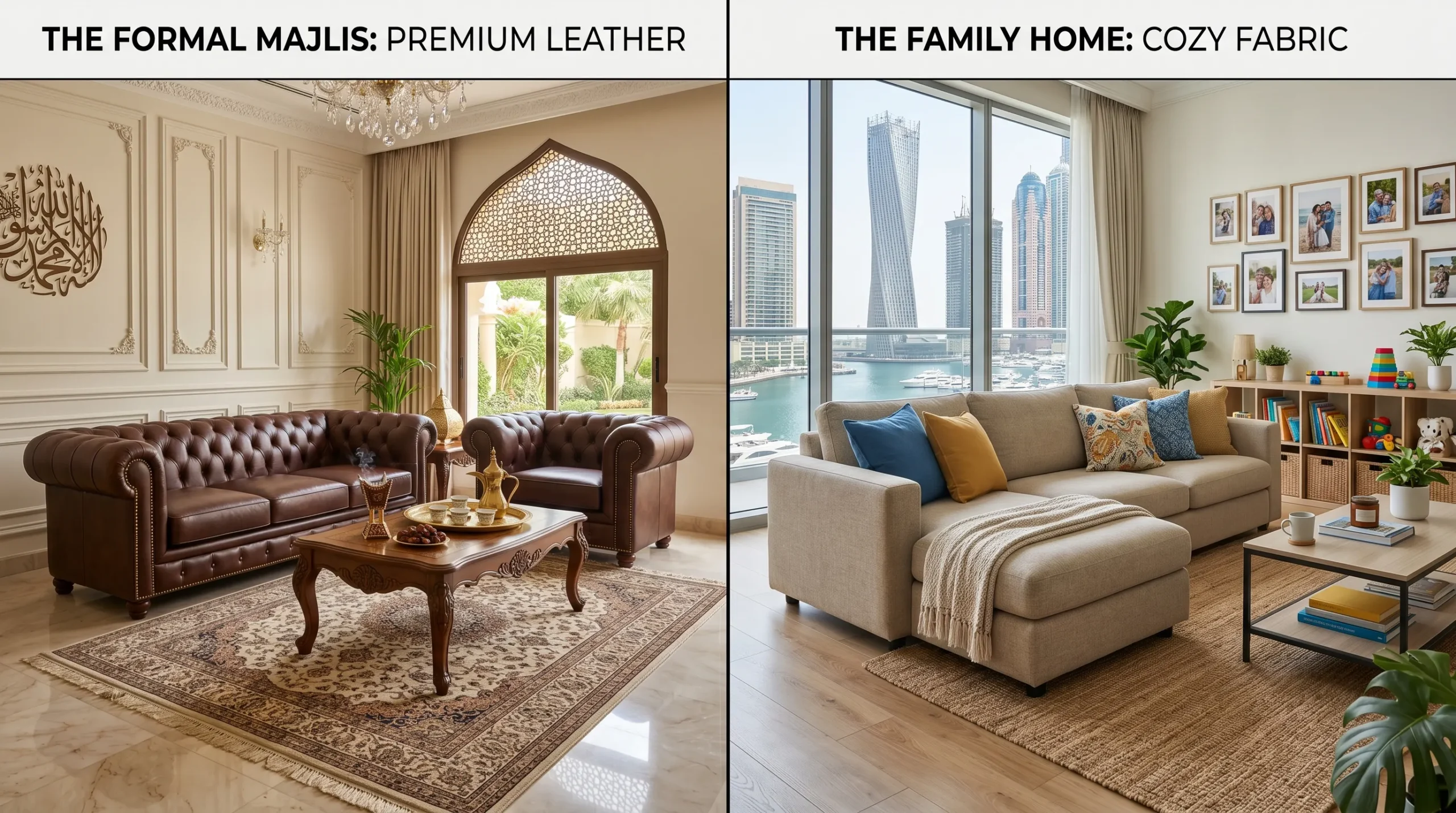
4. Consider your majlis separately from your family living room. Many UAE families maintain a formal majlis and a separate family sitting area. The majlis, used primarily for adult guests, is an appropriate place for a premium leather investment. The family TV room is where durable performance fabric earns its keep.
5. Removable covers are worth a premium. Several fabric sofa ranges offer fully removable and washable covers. In a UAE family home, this feature extends sofa life significantly and is worth paying an additional AED 500–1,500 for.
6. Annual professional cleaning pays for itself. AED 300–500 for a professional clean extends upholstery life by years, maintains appearance, and removes embedded dust and allergens — important in a region with significant dust in the air.
7. Don’t buy a sofa without sitting on it for at least five minutes. Comfort that feels fine for 30 seconds in a showroom may feel different after an hour of family viewing. Take your time in the showroom; a good furniture retailer will encourage this, not rush you.
8. Ask about the warranty and what it covers. A quality sofa from a reputable retailer should carry a minimum structural warranty of 2–3 years, with better brands offering 5 years on frame and mechanisms. Understand exactly what is and isn’t covered before purchasing.
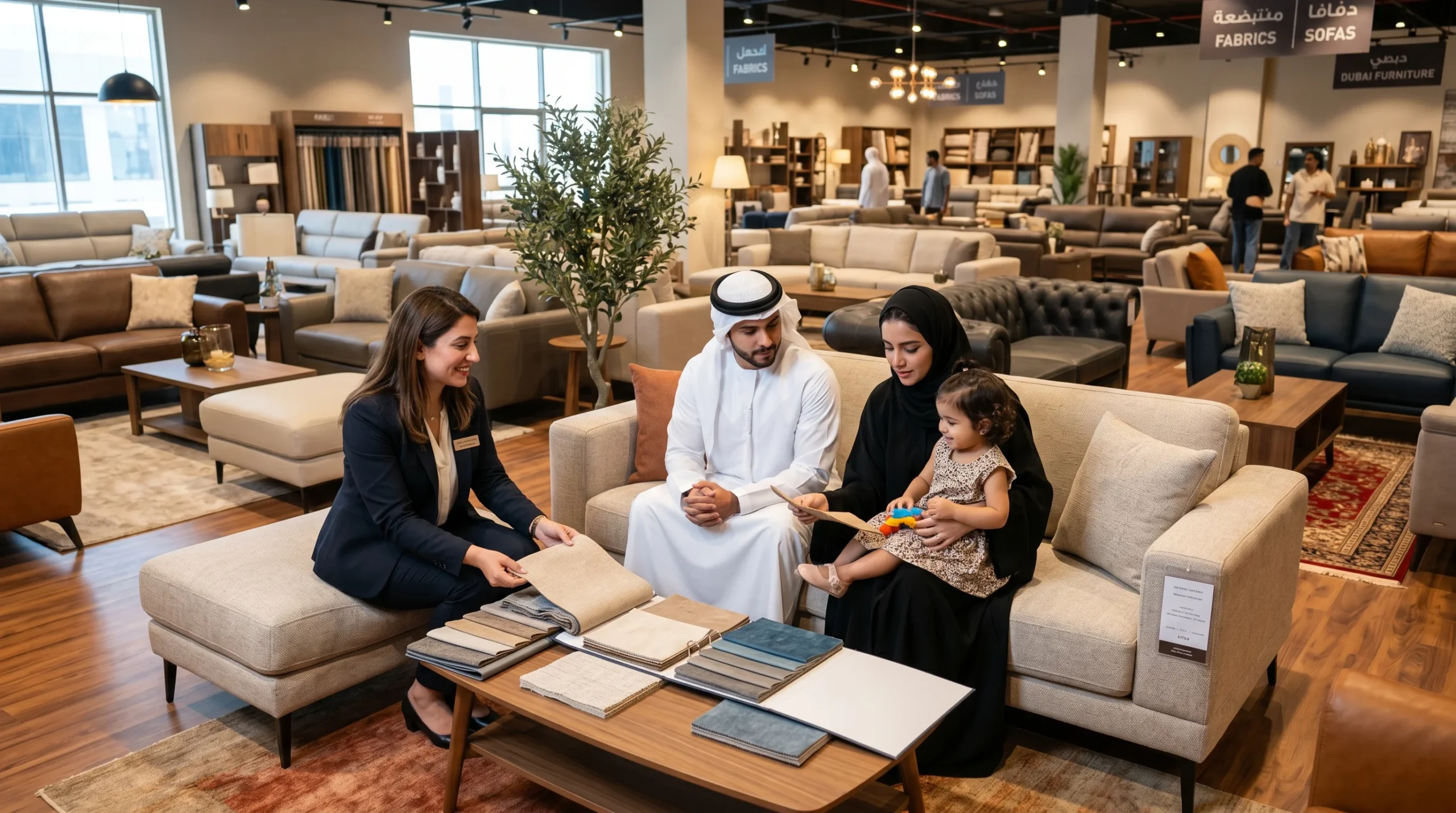
Conclusion: Making Your Decision
There is no universal winner between fabric and leather for UAE homes. The right choice depends on your specific situation — your home type, your family composition, your maintenance willingness, and your budget.
As a general framework from our 35 years of experience: if you have young children, choose a high-quality performance fabric sofa in the AED 4,000–9,000 range and invest the difference elsewhere. If you have a formal space with consistent air conditioning and older children or no children, a genuine top-grain or full-grain leather sofa is a beautiful long-term investment. If you’re in a coastal location with humidity, synthetic-blend performance fabric or well-conditioned top-grain leather (with a commitment to regular maintenance) are both solid choices.
Whatever your choice, buy the best quality frame and cushioning you can within your budget — upholstery can be reupholstered eventually, but a poor-quality frame cannot be rescued.
Key Takeaways:
- In the UAE, only invest in genuine full-grain or top-grain leather — bonded leather will disappoint you within three years regardless of initial appearance.
- Performance fabric and microfiber are excellent choices for UAE family homes, handling heat cycling, humidity, and family life more forgivingly than commonly appreciated.
- Frame quality, foam density, and cushion construction matter as much as the upholstery you can see — ask about these specifically.
- Position your sofa away from direct sun and maintain it regularly; both fabric and leather will last significantly longer with basic care.
- Consider your lifestyle honestly: young children, frequent hosting, and variable AC use all point toward high-quality fabric.
Frequently Asked Questions (FAQs)
Both materials have pros and cons in the UAE. Fabric sofas (specifically synthetic blends) handle the constant expansion and contraction from AC-to-heat cycles better than most materials. However, genuine full-grain leather is incredibly durable if conditioned every 3–4 months to prevent it from drying out in the intense indoor AC air. Avoid “bonded leather,” as the UAE heat causes it to peel within 2 years.
For families with children and frequent guests, performance fabrics (like microfiber or treated synthetic blends) are the top choice. They offer the comfort of fabric with the “wipe-clean” convenience of leather. While genuine leather is easy to wipe, it is susceptible to permanent scratches from toys or pet claws, whereas performance fabrics are much more forgiving for daily family use.
Yes. In high-humidity coastal areas, natural fabrics like 100% linen or cotton can absorb moisture and feel damp. For these locations, we recommend synthetic-blend fabrics or treated leather. If you live inland (like Arabian Ranches or Al Ain), the air is drier and dustier, making frequent vacuuming for fabric and regular conditioning for leather essential to prevent wear.
Even through double-glazed windows, UV rays in the UAE are intense. Solution-dyed fabrics (where the color is part of the fiber) are the most resistant to fading. To protect your investment, we recommend placing sofas at least 60cm away from windows and applying UV-filtering window film, which is a cost-effective way to extend the life of your furniture.
A high-quality sofa with a kiln-dried hardwood frame (like beech or oak) should last 10–15 years for fabric and 20+ years for genuine full-grain leather. To ensure this longevity in the UAE, look for a “Martindale Rub Count” of over 25,000 for fabric and ensure any leather is “top-grain” or “full-grain,” rather than bonded or corrected-grain.
أرائك القماش أم الجلد: الدليل النهائي للمنازل في الإمارات
عندما تدخل أي صالة عرض أثاث في دبي، ستواجه السؤال الأهم: قماش أم جلد؟ في “كرنك هوم”، ومنذ عام 1988، أدركنا أن الإجابة المثالية تعتمد كلياً على طبيعة الحياة في الإمارات. إن دورة التبريد المستمرة في منازلنا، حيث تنخفض الحرارة من 40 درجة مئوية في الخارج إلى 20 درجة بفضل المكيفات، تشكل تحدياً حقيقياً للأثاث. فبينما يضفي الجلد الطبيعي فخامة لا تضاهى ويسهل تنظيفه من السوائل، فإنه يحتاج إلى عناية دورية بالمرطبات في مناخنا الجاف لمنع التشقق.
على الجانب الآخر، تبرز أقمشة المفروشات كخيار عملي للغاية، خاصة الأنواع المتطورة مثل “الميكروفايبر” والأنسجة المقاومة للبقع، فهي تتحمل تقلبات درجات الحرارة ولا تتأثر بالانكماش والمد مثل المواد الطبيعية. إذا كان لديك أطفال، فإن القماش يوفر مرونة أكبر ومقاومة للخدوش التي قد تترك أثراً دائماً على الجلد. ومع ذلك، يظل الجلد ملك المجالس الرسمية لسهولة مسحه وطول عمره الافتراضي الذي قد يتجاوز 20 عاماً إذا كان من نوع “Full-grain”.
نحن في كرنك هوم نؤكد دائماً أن تصميم داخلي ناجح يبدأ باختيار الخامة التي تناسب موقع منزلك، سواء كنت في دبي مارينا حيث الرطوبة العالية، أو في المناطق الداخلية حيث الغبار والجفاف. تذكر دائماً أن جودة “الهيكل الخشبي” الداخلي لا تقل أهمية عن الغطاء الخارجي. لذا، ننصحك دائماً بالاستثمار في قطع تجمع بين المتانة والجمال لتناسب كرم الضيافة الذي تشتهر به عائلاتنا. سواء اخترت دفء القماش أو أناقة الجلد، فإن هدفنا هو ضمان راحتك لسنوات طويلة قادمة.
هل أنت مستعد لاختيار الأريكة المثالية لمنزلك؟
تفضل بزيارة صالة عرضنا اليوم لتجربة تشكيلتنا الواسعة من أرائك مودرن وكلاسيكية، أو تواصل معنا مباشرة عبر واتساب للحصول على استشارة مجانية من خبراء الأثاث لدينا.
Ready to Find the Perfect Sofa for Your UAE Home?
At Karnak Home, we carry an extensive selection of both genuine leather and premium fabric sofas chosen specifically with UAE homes and families in mind. Our showroom consultants have helped over 70,000 UAE families make decisions they’re still happy with years later not by selling, but by listening and giving honest guidance. Whether you want to browse our full sofa range online at your own pace or come in and spend time sitting on every option, we’re here to help you find exactly what works for your home and your family.
Explore our wide Range of Sofa Collection
Shop Online: karnakhome.com
Visit Our Showroom: Karnak Home, Dubai — Showroom Location & Hours
Talk to an Expert: Contact Our Furniture Consultants