
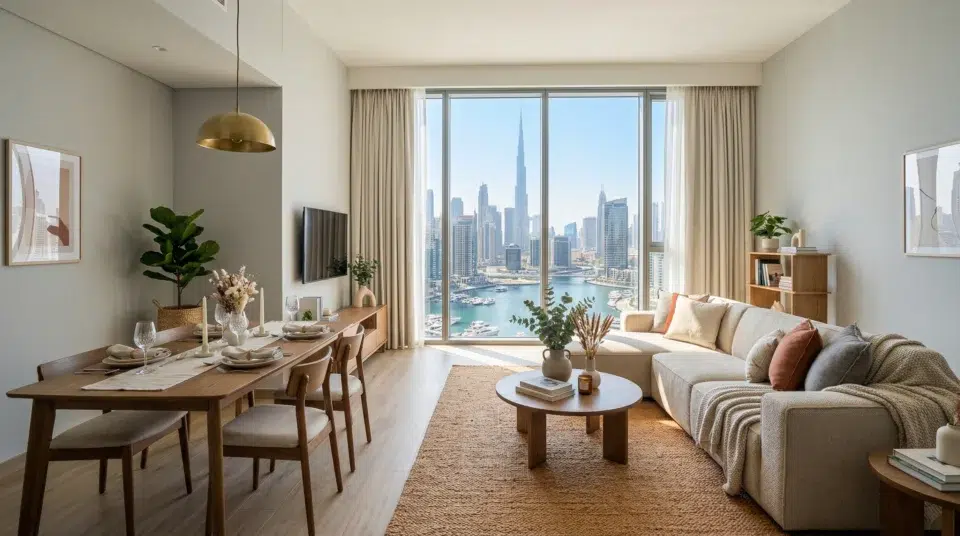
You’ve signed the lease, you’ve got the keys, and now you’re standing in an empty apartment wondering where on earth to begin. If you’ve just moved to Dubai — whether from London, Cairo, Mumbai, or Manila — the process of furnishing a new home in an unfamiliar city can feel genuinely overwhelming. What sizes work for UAE apartments? Where do you buy quality furniture without overpaying? How do you set up a home that handles Dubai’s climate and fits how families actually live here?
These are the exact questions that thousands of families have asked us since we opened our doors in 1988. Over 35 years and more than 70,000 families served across the UAE, we’ve helped everyone from newly arrived expats furnishing a one-bedroom in JLT to large families setting up a five-bedroom villa in Sharjah. This guide pulls together everything we’ve learned — practical, honest, room-by-room advice to help you furnish your Dubai home with confidence and without costly mistakes.
Understanding Dubai Apartments Before You Buy a Single Piece
Before you start measuring sofas and browsing dining tables, it’s worth understanding what makes Dubai apartments distinct — because furnishing here really is different from furnishing a home back in Europe, South Asia, or anywhere else.
Dubai apartments vary enormously. Studios and one-bedrooms in areas like Dubai Marina, JVC, or Business Bay tend to run smaller — often 500 to 800 square feet — while two and three-bedroom units in newer developments like Town Square, Damac Hills, or Arabian Ranches can be quite generous, easily 1,200 to 1,800 square feet. Older apartments in Deira or Bur Dubai often have quirky layouts with smaller bedrooms but large living areas. Knowing your actual room dimensions before you shop is not optional — it’s essential.
The UAE climate also has a real impact on furniture choices. Dubai’s combination of intense heat, air conditioning running almost year-round, and periodic humidity — especially during summer months and near the coast — affects certain materials significantly. Solid wood furniture can expand and contract with humidity fluctuations. Leather sofas feel uncomfortably hot against bare skin in a warm room. Certain fabric blends hold up far better than others in this environment. We’ll flag these considerations throughout this guide so you’re not learning from an expensive mistake six months down the road.
Finally, most Dubai apartments are rented rather than owned, which means two things: landlords typically provide nothing (no curtains, no light fittings, sometimes no kitchen appliances), and you may be moving again in one to three years. Furniture that assembles and disassembles cleanly, or pieces that are easy to move and re-sell, often make more practical sense than bespoke built-ins.
The Living Room: Your Home’s Anchor
The living room is almost always the right place to start. It sets the tone for everything else, and in UAE apartment living — where families spend considerable time indoors during the summer — it’s genuinely the heart of the home.
Choosing the Right Sofa for a Dubai Apartment
The sofa is the single most important furniture purchase you’ll make, and it’s also the one where people most commonly go wrong. The two mistakes we see constantly: buying a sofa that’s too large for the space, and buying one in a fabric or colour that doesn’t suit how the family actually lives.
For apartments up to 900 square feet, a standard three-seater sofa (roughly 200–220cm wide) or a compact L-shape with a shorter chaise works well. For larger apartments, a full L-shape or sectional in the 280–320cm range can anchor the space beautifully without overwhelming it. The key measurement most people forget: leave at least 45cm of clearance between the sofa and the coffee table, and 90cm of walkway around the main seating area.
Fabric choice matters enormously in Dubai. Pure linen looks beautiful but stains easily and doesn’t handle humidity well. Velvet feels luxurious but can feel oppressively warm. Our honest recommendation for most families — especially those with children — is a high-quality woven fabric or a performance fabric blend. These handle spills, regular cleaning, and the cycle of air conditioning and ambient warmth far better than most natural fabrics. If you love the look of leather, consider a high-grade PU leather or a bonded leather — they’re far more comfortable in this climate and easier to maintain.
Colour-wise, mid-tones — warm greys, beiges, soft terracottas, dusty blues — tend to work better in Dubai apartments than very light or very dark upholstery. Direct sunlight is intense here, and lighter fabrics can show UV fading after a year or two near uncovered windows.
Browse our sofa collection to find the right size and fabric for your space.
Living Room Layout Tips for UAE Apartments
One of the most common layouts we see in Dubai apartments is a long, narrow living room — typical in Marina and JLT towers. For this shape, resist the temptation to push all furniture against the walls. A sofa floating slightly into the room with a rug underneath actually makes the space feel larger and more intentional. Use a console table behind the sofa to add storage and visual layering.
If your living room connects directly to a dining area (open plan), define each zone with a rug rather than trying to separate them with furniture. A rug under the sofa and seating area, and a separate rug under the dining table, creates clear visual structure without blocking flow.
Coffee Tables, Side Tables and Storage
Dubai apartments often lack built-in storage, so your furniture choices need to work harder. A coffee table with a lower shelf or drawer adds practical storage without adding bulk. Nesting tables are an excellent choice for smaller apartments — they tuck away when you have guests and expand when you need surface space.
Wall-mounted entertainment units are increasingly popular in UAE apartments because they free up floor space and make rooms feel airier. If you’re renting, check with your landlord before drilling — many buildings allow it with the right fixings.
The Bedroom: Quality Sleep in a Demanding Climate
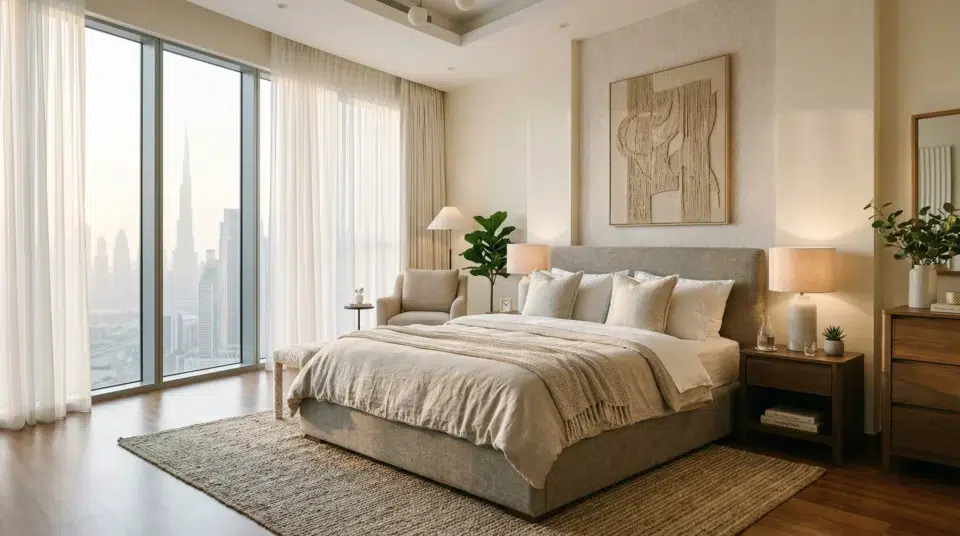
After the sofa, the bed is the second most significant purchase. And given how much time UAE residents spend indoors — air conditioning running through the long summer — the bedroom becomes a genuine sanctuary. It’s worth getting right.
Bed Frame Sizing in UAE Apartments
UAE apartments typically work with standard international sizing, but it’s worth clarifying: a King size bed in the UAE is generally 180cm × 200cm, while a Queen is 160cm × 200cm. Single beds run 90cm × 200cm and Super Single (popular for teens) at 107cm × 200cm.
For a standard master bedroom in a UAE apartment (typically 12–16 square metres), a King bed works well if you leave at least 60cm on each side for movement — that means your room needs to be at least 3.6 metres wide for a King to feel comfortable. If your bedroom is on the smaller side, a well-chosen Queen with proper bedside tables can actually feel more generous and proportionate.
Choosing a Bed Frame for Dubai’s Climate
Upholstered bed frames have become very popular in the UAE, and they work well here — they’re soft, look luxurious, and don’t conduct cold the way metal frames can in heavily air-conditioned rooms. Fabric upholstered frames in performance fabrics or microsuede are your most practical choice. Avoid pure velvet on bed frames for the same reason as sofas — it holds heat.
Wooden bed frames — whether solid wood or engineered wood — are a classic choice. Solid wood is premium and durable, but in rooms close to windows or with variable humidity, engineered wood (quality MDF or plywood core) actually holds its shape more consistently. Don’t let anyone tell you engineered wood is universally inferior — in the UAE climate, the right engineered wood piece can outlast solid wood that hasn’t been properly sealed or treated.
Wardrobes and Storage Solutions
This is where most Dubai apartment residents feel the pinch. Apartment wardrobes are rarely adequate for the way UAE families actually live — multiple seasons of clothes, formal and casual wear, prayer garments, children’s growing wardrobes. A good wardrobe purchase is genuinely one of the best investments you can make.
Sliding-door wardrobes are the practical choice for most bedrooms because they don’t require clearance in front — crucial when your bedroom is 12 square metres with a King bed. For a master bedroom, a wardrobe in the 250–300cm range with a combination of hanging space, shelves, and drawers covers most families’ needs. If budget allows, a corner wardrobe arrangement can dramatically increase storage without appearing bulky.
Explore our wardrobe range — including made-to-measure options for awkward spaces.
The Dining Area: Where UAE Families Actually Gather
In the UAE, the dining table is more than a place to eat. Iftar gatherings, family visits, Friday lunches that stretch for hours — the dining area in a UAE home carries significant cultural weight. It’s worth treating it seriously even if you’re in a compact apartment.
Choosing the Right Dining Table Size
The most common mistake: buying a dining table that’s too small because it looked proportionate in a large showroom. A four-person dining table (typically 120–140cm long) is genuinely only comfortable for four. If you regularly host, or if you have a family that sits together for meals, consider a six-person extendable table (starting at 160cm, extending to 220cm+) — it’s one of the best value-adds in apartment furnishing.
Round tables deserve more credit than they get. For apartments with a square dining alcove, a round table in the 120cm diameter range seats four comfortably and allows easier conversation than a rectangle. For UAE family culture where meals are communal and conversation flows, round tables often feel more natural.
For a table in direct sunlight or near a window — common in Dubai apartments with east or west-facing dining areas — glass-top tables can accumulate heat and feel uncomfortably warm to the touch. A wood-effect or matte ceramic top handles sun exposure far better and hides everyday marks more forgivingly.
Dining Chairs: Practical Choices for UAE Living
Dining chairs in UAE apartments take a beating. Guests arrive, children pull them around, they get exposure to spills and sticky hands. Upholstered chairs look beautiful but require more maintenance — fabric upholstery stains, and in a home with young children, you’ll be spot-cleaning regularly. Leatherette or PU-upholstered chairs offer the comfort and look of upholstered seating with dramatically easier cleaning.
Solid dining chairs in wood or metal with a cushion on a separate seat pad are another practical option — the pads can be removed and washed, or replaced inexpensively when they wear.
Browse our dining furniture collection — tables and chairs in coordinated sets and mix-and-match options.
Kids’ Rooms: Safe, Durable, and Room to Grow
For families moving to Dubai with children — and a significant proportion of Dubai’s expat population are young families — the kids’ room deserves careful thought. Children in the UAE spend a great deal of time indoors, making their bedroom a play space, study space, and sleep space all at once.
Safety First: What to Look For
All children’s furniture sold by reputable retailers in the UAE should comply with relevant safety standards — look for rounded corners on desks and wardrobes, guardrails on any elevated beds, and non-toxic finishes. With younger children (under 6), avoid furniture with large gaps where heads or limbs can get trapped, and always anchor tall wardrobes or bookcases to the wall — Dubai apartments can experience occasional vibrations from nearby construction.
Bunk Beds and Space-Saving Solutions
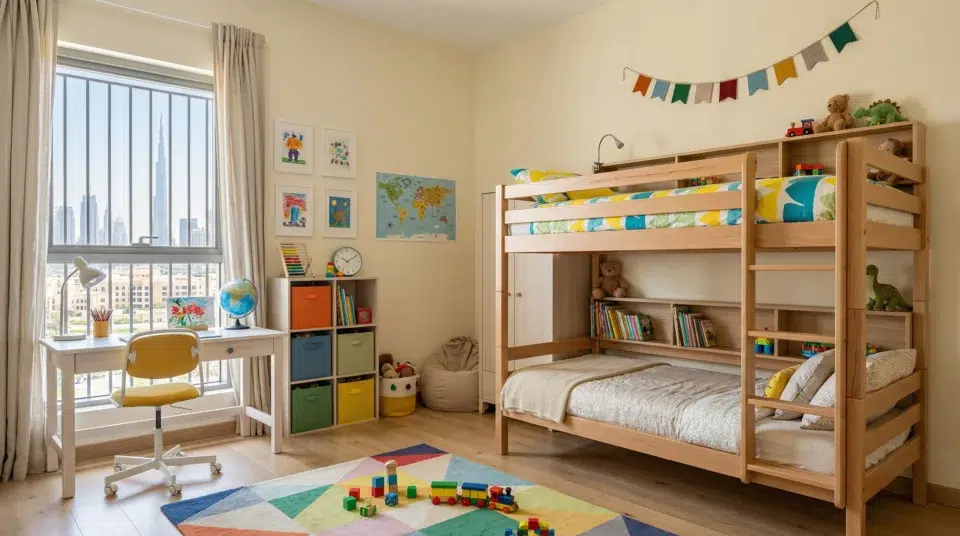
For families with two or more children sharing a room — very common in UAE apartments where a three-bedroom is split between a couple and two or three kids — bunk beds are an excellent solution. A solid bunk bed frees up the majority of the floor for play and study. Look for bunks with a weight rating clearly stated (most quality bunks rate the upper bunk for 80–100kg, which covers children through their teen years).
For a single child, a mid-sleeper with desk and storage underneath is one of the most practical pieces of furniture available. A quality mid-sleeper at 1,200–1,800 AED replaces a bed, a desk, and a bookshelf in one footprint.
Desks and Study Areas
With most UAE schools assigning substantial homework from Grade 2 or 3 onwards, a proper study setup matters from a relatively young age. A dedicated desk and ergonomic chair — even a youth-sized one — is a better investment than a shared family computer desk or a laptop balanced on a bed. Aim for a desk surface of at least 100cm wide, with a drawer for supplies. Good lighting (a desk lamp rather than relying solely on overhead lighting) reduces eye strain significantly.
See our full kids furniture range including beds, desks, and storage that grow with your child.
Home Office: A Real Consideration for Dubai Residents
Remote work, hybrid work, and side businesses are extremely common across Dubai’s expat community. Even if you don’t work from home full-time, a functional workspace in a UAE apartment makes a significant quality-of-life difference.
A dedicated home office corner requires less space than most people assume. A wall-mounted desk or a compact 120cm L-shaped desk in a bedroom corner, paired with a proper ergonomic chair, is genuinely adequate for most remote workers. The chair is the piece people most commonly underinvest in — a good ergonomic office chair at 800–1,500 AED pays for itself quickly in reduced back discomfort.
If you’re in a studio or one-bedroom apartment, consider a fold-away desk that mounts to the wall and folds flat when not in use. These work well in UAE apartments where every square metre matters.
Browse our office furniture for home office setups that work in any size apartment.
Common Mistakes to Avoid When Furnishing a Dubai Apartment
In 35 years of helping families furnish their UAE homes, we’ve seen the same errors repeated. Here’s how to avoid them.
Mistake 1: Buying Furniture Before Measuring the Room
This sounds obvious, but it remains the single most common problem. Showrooms are large — a three-seater sofa looks different in a 500 square metre showroom than in your 35 square metre living room. Always measure your room and sketch a rough floor plan before you shop. Note the positions of doors (and which way they swing), windows, air conditioning units, and any fixed features like pillars or niches.
Mistake 2: Choosing All Furniture From One Extreme of the Price Range
Buying everything cheap is a false economy — low-quality beds, sofas, and wardrobes often fail within two to three years in the UAE climate, and you end up spending more replacing them. But buying everything at premium pricing isn’t always necessary either. A smart approach: invest in the pieces you use most (bed, sofa, primary wardrobe) and be more value-conscious on decorative pieces, side tables, and accessories that you might replace as your taste evolves.
Mistake 3: Ignoring UAE Climate When Choosing Materials
As mentioned throughout this guide — fabric choice, wood type, and finish all behave differently in Dubai’s climate. Humidity near the coast (Dubai Marina, Palm Jumeirah, JBR) is noticeably higher than inland areas (Dubai South, Motor City). Solid wood furniture near coastal or heavily air-conditioned rooms without humidity control can warp over time. Ask your retailer specifically about material suitability for UAE conditions before buying.
Mistake 4: Buying Everything at Once
It’s tempting to furnish an entire apartment in a single weekend and a single shopping trip. The problem is that you won’t live in the space yet — you don’t know which corner gets the afternoon sun, which room your family actually uses most, where you really need storage. Prioritise the essentials (bed, sofa, dining table) and give yourself four to six weeks before committing to the remaining pieces.
Mistake 5: Underestimating Delivery and Assembly Timelines
In Dubai, furniture delivery from most retailers takes anywhere from same-week (in-stock items) to six to eight weeks (custom or imported pieces). If you’re moving into a new apartment and need to be operational quickly, confirm stock availability before you buy, not after. Many families make the mistake of ordering a bed on moving day and sleeping on the floor for three weeks.
Honest Budget Guidance: What to Expect in AED
One of the most searched questions for anyone new to Dubai: what does furnishing a home actually cost here? Here’s an honest breakdown based on current market realities.
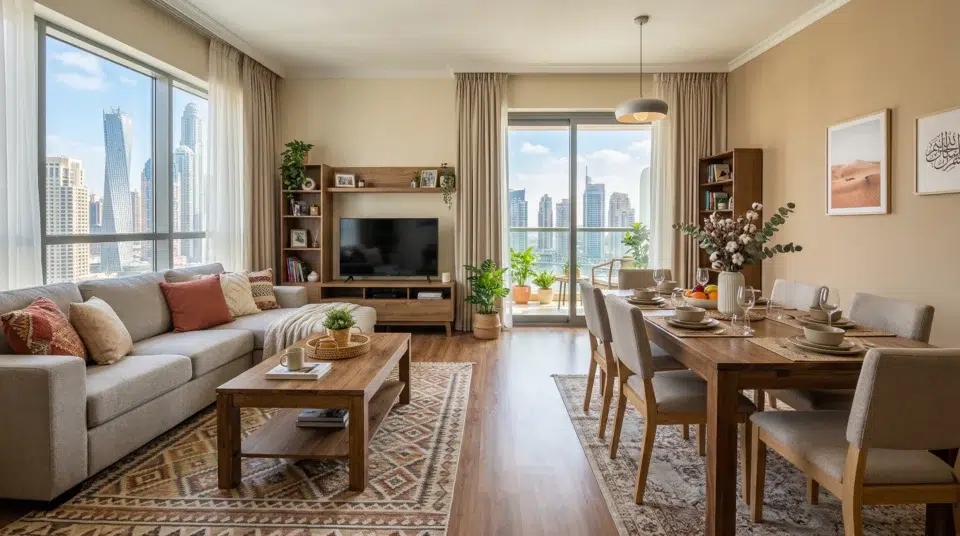
For a one-bedroom apartment (basic but quality setup): Living room (sofa, coffee table, TV unit): 4,000–9,000 AED Bedroom (bed frame, mattress, wardrobe, bedside tables): 5,000–12,000 AED Dining (table + 4 chairs): 1,500–4,000 AED Total: approximately 10,500–25,000 AED
For a two-bedroom apartment: Add a second bedroom set (single or double): 3,000–7,000 AED Total: approximately 13,500–32,000 AED
For a three-bedroom family apartment: Add kids’ room furniture: 2,500–6,000 AED Total: approximately 16,000–38,000 AED
These ranges represent good-quality, durable furniture — not ultra-budget flatpack, and not luxury bespoke. The lower end of each range is achievable by prioritising essentials and choosing well; the upper end reflects premium fabrics, solid wood options, and custom sizing.
Mattresses deserve a separate mention because they’re often bundled cheaply into bed deals and then regretted. A quality mattress at 1,500–3,500 AED for a King is a genuinely worthwhile investment for your health and sleep in Dubai’s demanding climate.
Expert Tips From 35 Years of Helping UAE Families
1. Measure twice, order once. Bring a tape measure to the showroom and measure anything you’re serious about. Confirm it against your room dimensions before placing an order.
2. Ask about fabric performance specifically. Don’t just ask if a sofa is “good quality” — ask whether the fabric has been tested for abrasion resistance, how it handles spills, and whether it’s recommended for homes with children or pets.
3. Consider modular furniture for rented apartments. Modular sofas, wardrobes with add-on components, and extendable dining tables all give you flexibility when your lease ends and you move to a different-sized space.
4. Invest in your mattress separately. The mattress that comes bundled with a discounted bed frame is almost never the best choice. Choose your bed frame and mattress as separate decisions.
5. Think about the second bedroom from day one. Many Dubai families arrive as a couple and start a family within two to three years. If you can, choose a second bedroom setup that can convert from a guest room to a nursery to a child’s room without a complete overhaul.
6. Don’t underestimate rugs. In Dubai apartments with marble or ceramic tile flooring — which is nearly everywhere — a good rug defines a space, adds warmth (both visual and acoustic), and makes an enormous difference to how homely a room feels.
7. Check delivery, assembly, and warranty before buying. A retailer’s after-sales service matters enormously in the UAE. Confirm what’s included in your purchase: does delivery include assembly? What’s the warranty period? Is there a dedicated customer service contact?
Conclusion: Making Your Dubai Home Feel Like Home
Furnishing a new apartment in Dubai doesn’t have to be stressful, expensive, or full of regret. With the right approach — measuring carefully, understanding the local climate’s demands on materials, prioritising the pieces you use most, and giving yourself time — you can create a home that works beautifully for your family and your lifestyle here.
The most important thing we tell every family who walks into our showroom or contacts us online: don’t rush. The furniture you buy in the first year of living in Dubai will still be with you in the fifth year. Choose with that in mind.
Key Takeaways:
- Measure every room before shopping — Dubai apartments vary widely in layout and size, and showroom pieces always look different in your space.
- Material choice matters in the UAE climate — consider humidity, air conditioning cycles, and sun exposure when selecting fabrics and wood types.
- Prioritise your most-used pieces (bed, sofa, wardrobe) for quality investment; be more flexible on decorative and secondary items.
Ready to Furnish Your Dubai Home?
Karnak Home has been helping UAE families furnish their homes since 1988 — more than 70,000 families across Dubai, Abu Dhabi, Sharjah, and beyond. Whether you want to browse from home or come in for a proper consultation, we’re here to help you make decisions you’ll be happy with for years.
Shop Online: karnakhome.com Visit Our Showroom: [1 Block C Office 110C – near Miracle Garden – Al Barsha South Third – Al Barsha South – Dubai] Speak to a Furniture Expert: [+971525554207]
Related Articles:
- How to Choose the Right Sofa Size for Your UAE Apartment
- Wardrobe Solutions for Dubai Apartments: Built-In vs Freestanding
- Setting Up a Kids’ Room in a UAE Apartment: Safety, Space, and Style
- Home Office Furniture in Dubai: What Actually Works in Small Spaces
Ready to Furnish Your Dubai Apartment? Explore Our Apartment-Friendly Collections
Now that you have the room-by-room guide compact sizes, climate-ready materials, space-saving solutions browse our range below. UAE-made, perfect for apartments, short leases, and family life. Free delivery & installation across all seven emirates.
- → All Living Room – Compact sofas, coffee tables, TV units
- → All Sofas – 2-seater & 3-seater for small spaces, starting AED 1,500
- → 2-Seater Sofas – Ideal for apartments in JBR, Business Bay, Downtown
- → 3-Seater Sofas – Family-friendly size for 1–2 bed units
- → All Bedroom – Beds, wardrobes, nightstands
- → Wardrobes – Sliding & fitted for small bedrooms
- → Kids Furniture – Beds, bunk beds, study desks
- → Mattresses – Pocket spring, memory foam for comfort
Special March Offer: Up to 50% off apartment-friendly pieces + free delivery & installation limited time.
WhatsApp for Free Apartment Advice & Quote
Shop All Furniture Now →