
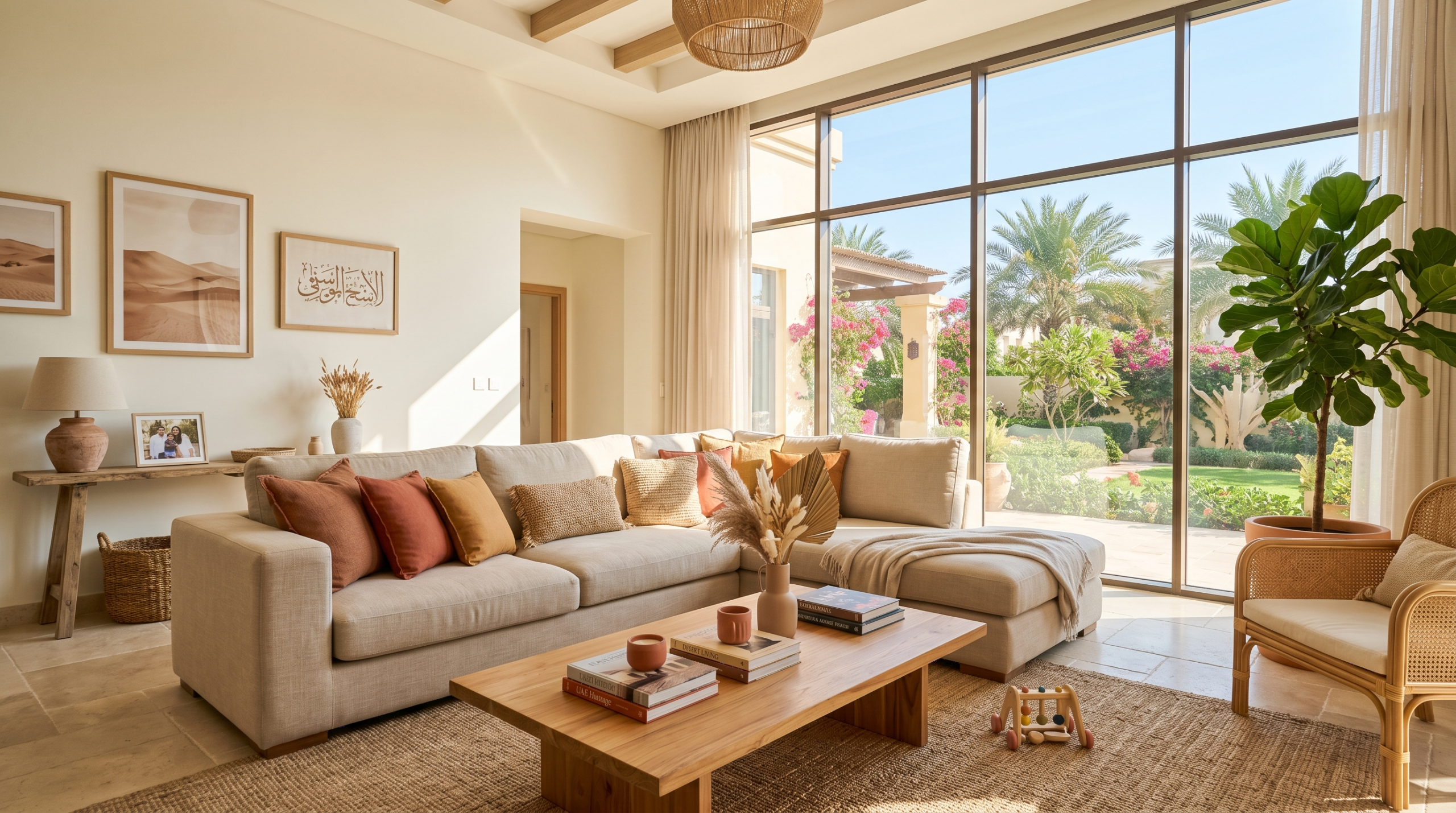
Have you ever bought a sofa that looked perfect in the store, then brought it home and wondered why it suddenly looked too dark, too cold, or somehow just… wrong? You’re not imagining things. The UAE’s extraordinary light — the sheer intensity of the sun, the golden quality of afternoon hours, the way light bounces off desert sand and white-rendered walls — changes everything about how furniture colors read inside your home.
At Karnak Home, we’ve been helping families across Dubai, Abu Dhabi, Sharjah, and all seven emirates furnish their homes since 1988. In that time — 35 years and over 70,000 families served — we’ve seen every color mistake and every color triumph. We’ve learned exactly which tones work beautifully in UAE interiors and which ones fight against the light instead of working with it. This guide gives you everything we know, so you can choose furniture colors you’ll love for years.
Why UAE Light Is Different — and Why It Changes Everything
Most interior design advice you’ll find online is written for European or North American homes. Those guides assume grey skies, limited daylight hours, and artificial lighting doing most of the heavy lifting. That advice doesn’t translate to the UAE. Here, we live with some of the most intense natural light on the planet for most of the year.
Dubai averages around 3,400 hours of sunshine annually. That means your furniture is sitting in powerful, warm-spectrum sunlight for most of its life. The light here has a golden, amber quality — especially in the late afternoon — that warms up certain colors beautifully and makes others look washed out, faded, or strangely orange. On top of that, many UAE homes feature large windows, open floor plans, and pale or white walls designed to reflect that brightness. All of this amplifies whatever color your furniture is.
Understanding this isn’t about following interior design trends. It’s practical. The wrong color choice doesn’t just look bad — it can make a room feel smaller, make furniture look cheaper than it is, and create a space that feels uncomfortable to spend time in. The right color choice, on the other hand, makes a room feel cool and calm in summer heat while still feeling warm and inviting when you want it to.
There’s one more UAE-specific factor worth mentioning early: UV exposure. The sun doesn’t just affect how colors look — it actively fades them over time. For more on how ultraviolet light breaks down dyes and materials through photodegradation, see this explanation from the Library of Congress. We’ll come back to this when we discuss materials and fabrics, because color choice and fabric choice are deeply connected when it comes to longevity in UAE conditions.
The Colors That Work Best in UAE Homes
Warm Neutrals: The Foundation of UAE Interiors
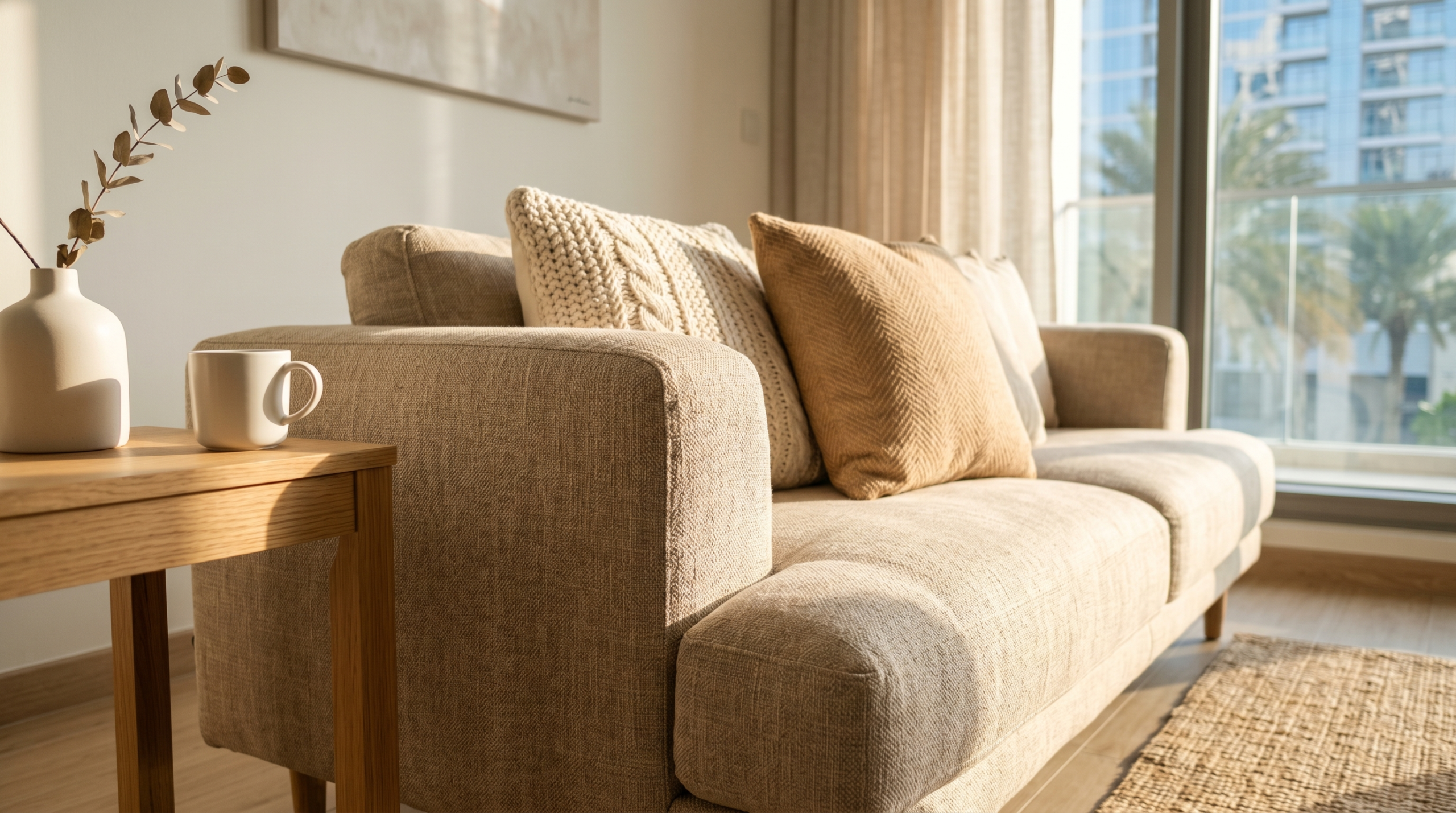
If there’s one consistent lesson from 35 years of furnishing UAE homes, it’s this: warm neutrals are almost universally reliable. By warm neutrals, we mean the palette that sits between pure white and light brown — creams, linens, warm beiges, greige (grey-beige), camel, and off-white tones.
These colors work so well in UAE interiors because they harmonize with the light rather than fighting it. The golden, warm-spectrum sunlight that fills your living room from late morning through afternoon finds a natural partner in these tones. A cream linen sofa in a sunlit Dubai apartment doesn’t look washed out or dull — it glows softly, creating exactly the calm, sophisticated atmosphere most families want.
There’s also a practical reason warm neutrals dominate UAE interiors: they reflect some of the intense brightness back into the room without creating glare. Deep, saturated colors absorb light and can make a space feel heavy and hot — which is the last thing you want in a country where temperatures exceed 40°C for several months of the year. Warm neutrals keep the visual temperature of a room comfortable even when it’s sweltering outside.
Greige: The Most Versatile Color in UAE Homes Right Now
Greige — that sophisticated blend of grey and beige — has become the dominant interior color across UAE villas and apartments for very good reason. It’s warm enough to feel inviting, cool enough to feel modern, and neutral enough to work with virtually any accent color you want to bring in.
In practice, greige furniture reads differently depending on your wall color and light conditions. And in a north-facing room with cooler, more diffused light (less common in the UAE but present in some apartment layouts), greige pulls slightly more grey and feels calm and contemporary. Moreover, in south or west-facing rooms flooded with warm afternoon light — which describes the majority of UAE living spaces — greige warms up beautifully and feels luxurious.
If you’re furnishing an open-plan space that’s common in Dubai apartments, a greige sofa anchors the living area without competing with the kitchen or dining zone. It’s also an extremely forgiving color in family homes — it shows less day-to-day dust than pure white and less obvious wear than deep colors.
Sandy and Terracotta Tones: Embracing UAE Heritage
There’s a reason that sand, terracotta, and earthy amber tones appear again and again in UAE interior design — they’re literally drawn from the landscape. These colors have a deep visual logic in this part of the world, and when they’re used well in furniture, they create interiors that feel rooted, warm, and authentically connected to the region.
Sandy tones on upholstery — think light camel-colored velvet on a dining chair or a sandy yellow-beige fabric sofa — catch the afternoon light in UAE living rooms and give off a warmth that feels genuinely different from what you’d get in a cooler climate. The light seems to understand these colors.
Terracotta works best as an accent rather than a dominant furniture color in most UAE spaces. A terracotta armchair in a living room with greige walls and cream sofas creates a point of visual interest without overwhelming the space. It’s particularly striking in villas in areas like Al Barsha, Arabian Ranches, or Khalidiyah in Abu Dhabi, where the interiors often have higher ceilings and more generous proportions that can handle the richness of the tone.
Deep Jewel Tones: When to Use Them and When to Avoid Them
Deep colors — navy, forest green, charcoal, burgundy — require careful handling in UAE interiors. They’re not wrong, but they need the right conditions to work well.
The challenge is that UAE sunlight is so powerful it can make deep colors look different throughout the day. A navy velvet sofa can look stunning and moody on a grey winter morning (yes, the UAE has those!) and look slightly heavy and absorbed by midday when the room is flooded with brilliant light. This doesn’t mean you should avoid deep colors entirely — it means you need to use them with intention.
Deep colors work best in UAE homes when they’re used in rooms with good light control. If you have blackout curtains or effective blinds that allow you to manage the light, a deep-colored sofa can anchor a room beautifully. Rooms that are deliberately lower-light — a study, a media room, a master bedroom — are also excellent candidates for richer, darker furniture tones.
Where deep colors fail in UAE interiors is when they’re used in bright, white, open-plan spaces without enough contrast or supporting elements. A dark charcoal sofa in a very bright white room doesn’t feel dramatic and sophisticated — it just feels jarring and mismatched with the light quality.
Matching Furniture Colors to Your Specific UAE Home
Villa vs. Apartment: Color Strategy Differences
The type of home you’re furnishing makes a significant difference to which color strategies work best. After three decades of visiting and furnishing homes across all seven emirates, we see very consistent patterns.
In villas — particularly in communities like Jumeirah, Meadows, Emirates Hills, Khalidiyah, or the villa-heavy areas of Sharjah and Ajman — spaces are typically larger, ceilings are higher, and natural light enters from multiple directions. These conditions are genuinely forgiving. You can use richer, deeper accent colors because the space can absorb them. A darker dining table works well when the room is large enough that it doesn’t dominate visually. Layered neutral tones — cream walls, warm beige sofa, camel rug, honey-toned wood — build beautifully in villa living rooms.
In apartments — whether in Downtown Dubai, JVC, Sharjah City, or Abu Dhabi Corniche towers — you’re often working with smaller spaces, fixed window positions, and light that comes from one direction only. Here, the instinct to use light, warm neutrals becomes even more important. Pale warm tones on sofas and beds visually expand the space. Going dark in a compact apartment bedroom doesn’t create cosy drama — it creates a room that feels smaller and more enclosed.
North-Facing vs. South/West-Facing Rooms
Not many people think about which direction their main windows face when choosing furniture colors, but it makes a noticeable difference.
South and west-facing rooms in the UAE receive the most intense, warm-spectrum light, especially in the afternoon and evening. These are the rooms where warm neutrals really sing. If your living room faces west, you’ll experience that golden evening light that makes linen sofas and wooden furniture look almost painterly. These rooms can also handle slightly cooler accents — a grey cushion or silver accessories — because the warm light naturally warms everything up.
North-facing rooms receive cooler, more diffused light. In the UAE context this isn’t dramatic — there’s still plenty of light — but it does mean that cool greys and certain blues can look slightly flat or cold. In a north-facing room, lean towards the warmer end of the neutral spectrum: biscuit rather than stone, warm white rather than cool white, honey tones in wood rather than pale ash.
Floor Colors and Furniture: The UAE Context
Most UAE homes feature light-colored marble, cream tile, or light wood flooring. This is practical — light floors reflect light and help keep the visual temperature of a space cool. But it does affect furniture color decisions.
Against light marble or cream tile, very pale furniture can disappear — everything starts to blur into one undifferentiated expanse of light. This is why adding some definition through furniture color matters. A warm beige sofa on a cream marble floor benefits from darker accent pieces: a walnut or teak coffee table, darker cushions, a patterned rug in slightly deeper tones that provides visual grounding.
Against light wood flooring — increasingly popular in UAE apartments and newer villas — the interaction is warmer and more natural. Light wood floors pair beautifully with any warm neutral furniture. The tones are sympathetic and the overall effect is relaxed and contemporary.
How UAE Climate Affects Your Furniture Color Choices Beyond Aesthetics
UV Fading: The Honest Conversation About Color Longevity
We’ve been honest with UAE families about this for 35 years: furniture color and fabric choice are inseparable when it comes to how long your pieces look good. Color choice affects fading. Full stop.
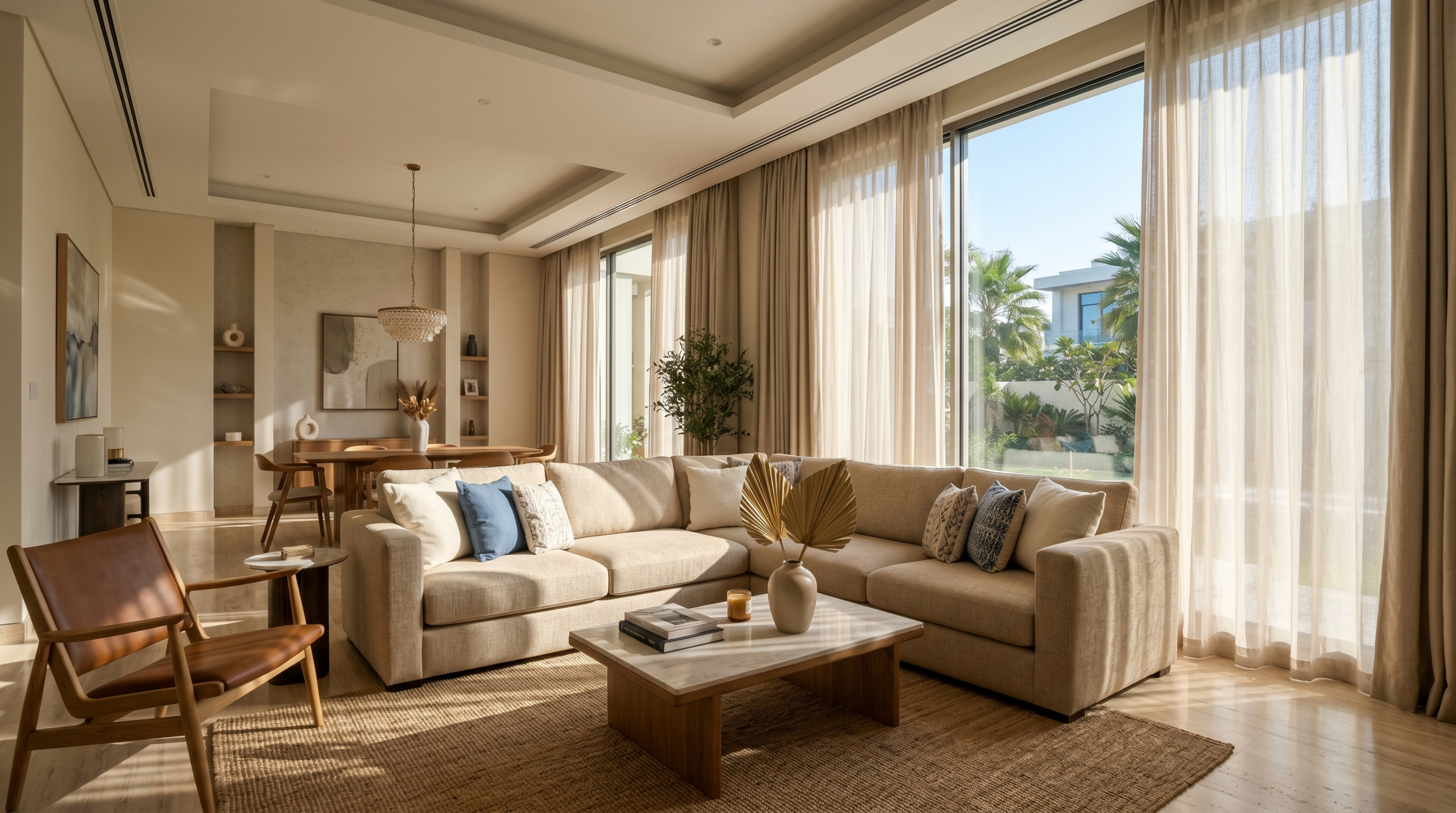
Lighter colors — cream, beige, warm white — show UV fading less dramatically than deeper colors. A cream sofa that fades slightly over several years still looks like a cream sofa. A deep burgundy or navy sofa that fades develops an uneven, washed-out appearance that’s harder to ignore. This is particularly relevant in rooms with large, uncovered windows — common in UAE villas and high-rise apartments with panoramic views.
The solution isn’t to avoid all deep colors forever. It’s to pair deeper color choices with UV-protective measures: quality window films, effective curtains or blinds, and furniture positioned away from direct prolonged sun exposure where possible. It’s also to choose quality fabrics. Performance fabrics — solution-dyed acrylics and high-grade polyesters — hold their color significantly better under UV exposure than standard natural fabrics.
Dust and Sand: Practical Color Considerations for UAE Families
Shamal season, desert dust, and the general sandiness of life in the UAE means furniture maintenance is part of the picture. Color affects how visible daily dust and the occasional sand incursion will be.
Very light colors — pure white, pale grey — show dust quickly. They’re beautiful but require commitment to regular cleaning. Very dark colors show dust almost as quickly — light-colored dust on dark fabric stands out clearly. The sweet spot, practically speaking, is mid-tone warm neutrals. Beige, warm greige, camel, and sandy tones are genuinely forgiving of everyday dust accumulation and don’t require daily attention to look presentable.
For families with young children — which describes a significant proportion of UAE households — this practical reality is worth taking seriously. We consistently advise families with children under 10 to lean toward mid-tone warm neutrals for main upholstered pieces. You’ll spend less time stressing and more time enjoying your home.
Furniture Colors by Room: Practical UAE Guidance
Living Room: Getting the Anchor Color Right
The living room is where furniture color decisions have the biggest impact. In most UAE homes, it’s also the space that receives the most natural light and sees the most family activity. Getting the anchor color — your main sofa — right sets the tone for everything else.
For most UAE living rooms, we recommend starting with a warm neutral sofa in the beige-to-greige range and building outward from there. This gives you maximum flexibility. You can introduce almost any accent color — terracotta, deep teal, warm gold, dusty pink — through cushions, rugs, and smaller accent chairs without creating a clash.
If you want a bolder sofa color, the UAE’s most reliable choices are dusty blues (not bright or cool blue — dusty, slightly grey-blue), deep olive green, and warm off-white. These colors have enough personality to be interesting but enough neutrality to work with UAE light conditions without looking garish in strong sunlight.
Explore our full sofa collection to see how these colors look in person — something we strongly recommend before purchasing, since showroom light is intentionally similar to UAE home conditions.
Bedroom: Color, Rest, and the UAE Summer
Bedroom color choices in UAE homes have a functional dimension that’s easy to overlook: the bedroom needs to feel restful even when it’s blazingly hot outside. Colors that feel calm in winter can start to feel agitating in summer if they’re too warm or too bright.
For bedrooms, we see the most satisfaction with cool-leaning neutrals balanced with warm wood tones. A soft grey-white wall, a warm linen or cream bedframe and headboard, and honey-toned bedside tables creates a bedroom that feels calm year-round. It doesn’t lean so warm that it feels hot in summer, and it doesn’t lean so cool that it feels impersonal in winter.
Check out our bedroom furniture collection — particularly our upholstered bed frames, which offer a range of fabric tones from warm cream to cool stone grey.
Dining Room: Color for Appetite and Gathering
Dining rooms are interesting spaces for color because they need to work in two conditions: bright daytime (family lunches, homework at the table) and evening (dinner with mood lighting). A color that reads well in one condition sometimes fails in the other.
Warm wood dining tables are the most reliable foundation in UAE homes precisely because they transition well between conditions. Honey-toned teak, warm oak, and walnut all look rich in natural daylight and glow warmly under artificial evening light. For dining chairs, warm neutrals again dominate — cream, warm beige, greige — but this is also where you can introduce a bolder accent color more safely. Four cream chairs and two terracotta accent chairs at the heads of the table is a classic UAE approach that works beautifully.
See our dining furniture range for current color options in both chairs and tables.
Kids’ Rooms: Color Without the Chaos
Parents in the UAE often want to bring color into kids’ rooms — which is genuinely wonderful — but the choices matter. Furniture color in a child’s room should be considered separately from wall color and accessories.
Our consistent advice: keep the furniture itself in calm neutrals or warm whites, and use bedding, rugs, curtains, and accessories for the fun colors. Furniture is a long-term investment and a child’s color preferences change dramatically between ages 3 and 13. A warm white wardrobe, a pale wood desk, and a cream or light grey bed frame will work through all those changes. The bright yellow bedspread and the superhero rug are easily swapped out.
Browse our kids’ furniture range — all designed with this versatility in mind.
Common Color Mistakes UAE Families Make
Mistake 1: Choosing Cool Greys Without Accounting for UAE Light
Grey is one of the most popular interior colors globally, and there’s nothing wrong with it — but cool greys (with blue or green undertones) frequently disappoint UAE homeowners. In the showroom, under controlled lighting, a cool grey sofa looks sleek and contemporary. At home, under warm UAE sunlight, the same sofa can look slightly dingy, slightly purple, or just oddly cold in a way that doesn’t feel right.
If you love grey, choose warm grey — greige is your friend. Look for greys with beige or tan undertones rather than blue or green. Test fabric swatches at home in your actual light before committing.
Mistake 2: Matching Everything to the Same Tone
UAE interiors that fall flat often do so because everything has been coordinated too closely. Cream sofa, cream walls, cream rug, cream curtains — the result is a space that feels washed out rather than elegant. Working with natural light requires some tonal contrast.
The fix is simple: vary the depth of your neutrals. A warm white wall, a slightly deeper beige sofa, a medium-tone camel rug, and a dark walnut coffee table creates a space that’s tonally coherent but has the visual interest that makes it feel designed rather than accidental.
Mistake 3: Ignoring the Floor-to-Furniture Relationship
Many UAE families make sofa and furniture decisions in isolation, without considering the floor. The result is sometimes a beautiful piece of furniture that seems to float awkwardly in the space because the tones clash or there’s no visual connection.
If you have light cream marble flooring — very common in UAE villas — furniture in the medium-warm tone range (warm beige, camel, honey wood) creates the best connection. It’s warm enough to stand out from the floor and relate to it simultaneously. Pure white furniture on cream marble can look beautiful but requires precise execution to avoid the room feeling like a hospital corridor.
Mistake 4: Buying Online Based Only on Product Photos
Product photography varies enormously. The same sofa can look completely different across different retailers’ photos depending on their studio lighting. We see this issue frequently: families purchase furniture based on a color they loved online, and it arrives looking darker, warmer, or cooler than expected.
Our strong recommendation: see fabric samples in person, and ideally bring a photo of your room and floor to the showroom. Our team will hold fabrics against your photo and give you an honest read on how they’ll likely work in your specific space. This is a completely free service and it saves genuine heartache.
Mistake 5: Underestimating How Much Flooring Light Changes in Afternoon
Many families view potential furniture colors at midday when they’re shopping, then find the afternoon light in their home dramatically changes how everything looks. West-facing UAE living rooms in late afternoon receive intensely warm, golden light that pushes every warm tone several shades deeper.
A warm beige that looked calm and neutral at noon can look distinctly orange-golden at 5pm in a west-facing room. This isn’t necessarily bad — it can be very beautiful — but it’s worth being aware of. If your main living space faces west, consider viewing your fabric and color choices in late afternoon light, or asking in our showroom how specific fabrics behave in that quality of light.
Budget Guidance: Furniture Color and Cost in the UAE
Color affects price — this is a fact of the furniture industry and worth being honest about. Here’s roughly what to expect:
Standard upholstered sofas in neutral tones (beige, cream, greige) from mid-range quality manufacturers typically range from AED 2,500 to AED 6,000 for a three-seater. These are your most affordable and most versatile options. You’ll find good selection in this range at Karnak Home both in our showroom and online.
Sofas in specialized or premium fabric colors — deep jewel tones, custom velvet, performance fabrics in premium colorways — range from AED 5,000 to AED 15,000+ depending on size and material. The higher price reflects both the cost of the fabric and, in many cases, the fact that these pieces are made in smaller runs. Quality at this level is generally significantly higher.
Dining tables in warm wood tones (oak, teak, walnut) range from AED 1,800 to AED 8,000+ depending on whether it’s solid wood, veneer, or engineered wood with high-quality laminate. Honest answer: solid wood in warm honey tones holds its color and character far longer than veneer alternatives, and the investment is usually justified for families who use the dining table daily.
Bedroom furniture in neutral upholstered frames ranges from AED 2,000 to AED 7,000 for a queen bed frame. Light neutral tones — warm white, cream, pale linen — are very consistent in this range.
Expert Tips From 35 Years of Furnishing UAE Homes
One: Always test fabric swatches at home. Most good furniture retailers will provide you with samples. Take them home, place them in your actual room, and observe them at different times of day — morning, midday, and afternoon. This single step prevents more disappointment than any other advice we can give.
Two: Buy the wood first, then the upholstery. If you’re furnishing a whole room, choose your wood tones — floor, table, shelving — before committing to upholstery colors. Upholstery is easier to work around wood than vice versa.
Three: Don’t paint walls and buy furniture simultaneously. If you’re renovating, get the walls done, live with them for two weeks in different light conditions, then select furniture. Wall paint color changes more in UAE light than almost anywhere else in the world.
Four: One bold color per room, maximum. A living room with a bold terracotta armchair, a bold navy sofa, and bold green cushions feels chaotic regardless of how good each individual piece is. Choose your one statement and support it with neutrals.
Five: Consider your window treatments as part of the color palette. Sheer white or cream curtains warm the light coming into a room. Grey curtains cool it. This affects how your furniture colors read throughout the day. Choose window treatments and furniture colors together.
Six: Performance fabrics are worth it in UAE conditions. Solution-dyed acrylic and high-grade microfibre hold their color significantly better under intense UV exposure than standard polyester or natural cotton. For sofas in sun-exposed rooms, the extra investment in a quality performance fabric pays back over years.
Seven: Dark furniture in storage pieces is fine; dark furniture in upholstery requires more care. A dark walnut wardrobe or a deep-toned bookshelf is easy to live with and shows dust less than dark upholstery. If you want darker tones in a room, channeling them into hard furniture rather than soft furnishings is often the wiser choice.
Eight: Revisit your color choices every 5-7 years. Families change, tastes evolve, and UAE interiors that were current in 2018 may benefit from refreshing. You don’t need to replace everything — often swapping cushions, a rug, and a few accent pieces updates a space significantly without the expense of new major furniture pieces.
Frequently Asked Questions (FAQs)
Furniture layout planning is especially important in UAE homes because most properties are unfurnished and require complete setup from scratch. Proper planning helps avoid common issues like blocked AC vents, poor airflow, and overcrowded spaces. It also ensures your furniture fits well within apartment or villa layouts, saving money on returns and replacements.
Before purchasing furniture, measure the full room dimensions, including length, width, and ceiling height. Also note door swings, window positions, AC units, and electrical points. Using tools like floor plan apps or a simple sketch helps you visualise how furniture will fit and ensures a smooth layout process.
The ideal sofa size depends on your room size. For most Dubai apartments, a 2–3 seater sofa (180–220 cm) works best in living rooms under 20 sqm. Larger spaces can accommodate L-shaped or modular sofas. Always maintain at least 90 cm of walking space for comfortable movement.
To maintain proper airflow and energy efficiency, avoid placing sofas, beds, or other large furniture directly in front of AC vents. Keep at least 50 cm distance from AC units to prevent airflow blockage, reduce electricity costs, and protect furniture from long-term damage.
Common mistakes include buying furniture without measuring, choosing oversized or undersized sofas, ignoring traffic flow, blocking AC vents, and not planning storage. These issues can make homes feel cramped, inefficient, and uncomfortable despite having good-quality furniture.
أفضل ألوان الأثاث للمنازل في الإمارات: دليل عملي للراحة والأناقة
عند اختيار ألوان الأثاث في الإمارات، هناك قاعدة ذهبية أثبتت نجاحها عبر السنوات: الألوان الحيادية الدافئة هي الأساس. درجات مثل الكريمي، البيج الدافئ، الرملي، و”الجريج” (مزيج الرمادي والبيج) تعمل بتناغم رائع مع طبيعة الإضاءة القوية في المنطقة. هذه الألوان لا تعكس الضوء فقط بشكل مريح، بل تخلق أيضًا إحساسًا بالهدوء والرقي داخل المساحات، وهو ما تبحث عنه معظم العائلات.
في تصميم داخلي إماراتي ناجح، تلعب الإضاءة دورًا كبيرًا. ضوء الشمس الذهبي، خاصة في فترة بعد الظهر، يجعل الألوان الدافئة تبدو أكثر حيوية وانسجامًا. لذلك، اختيار ألوان محايدة دافئة للأرائك أو الأسرة يمنح المساحة إشراقًا طبيعيًا دون أن تبدو باهتة أو مزعجة. كما أن هذه الألوان تساعد في تقليل الإحساس بالحرارة البصرية، وهو أمر مهم في مناخ تصل فيه درجات الحرارة إلى مستويات مرتفعة.
أما لون “الجريج”، فهو من أكثر الخيارات المرنة في تصميم المنازل في دبي وأبوظبي. يمكن تنسيقه بسهولة مع ألوان متعددة، ويتغير مظهره حسب الإضاءة، مما يجعله خيارًا عمليًا وأنيقًا في الوقت نفسه. كذلك، الألوان الترابية مثل التيراكوتا والرملي تضيف لمسة مستوحاة من البيئة المحلية، وتمنح المنزل طابعًا دافئًا وأصيلًا.
بالنسبة للألوان الداكنة، مثل الكحلي أو الأخضر الغامق، فهي تحتاج إلى استخدام مدروس. يفضل استخدامها كلمسات أو في غرف يمكن التحكم بإضاءتها، حتى لا تبدو ثقيلة تحت ضوء الشمس القوي.
اختيار ألوان الأثاث المناسبة لا يتعلق فقط بالجمال، بل أيضًا بالراحة اليومية وسهولة الصيانة، خاصة مع وجود الغبار والرمال. الألوان المتوسطة مثل البيج والجريج تعتبر عملية وتخفي آثار الاستخدام اليومي بشكل أفضل.
لرؤية هذه الألوان على الطبيعة وتجربتها في إضاءة مشابهة لمنزلك، ندعوك لزيارة صالة العرض لدينا أو التواصل معنا مباشرة عبر واتساب للحصول على استشارة مجانية تناسب منزلك تمامًا.
Conclusion: Making Your Decision
Choosing furniture colors for a UAE home is genuinely different from choosing colors for a home anywhere else in the world. The intensity of the light, the warmth of the desert palette, the practical realities of dust and UV exposure, and the way homes here move between blazing summer days and unexpectedly cool winter evenings all shape which colors work and which don’t.
The consistent theme across 35 years and 70,000 UAE families: warm neutrals rarely disappoint. They work with the light, they forgive practical realities, they age gracefully, and they give you flexibility to change your accents and personality of a space without replacing your main furniture investment. Start there, and add personality through carefully chosen accents.
Key Takeaways:
- Warm neutrals — cream, beige, greige, camel — are the most reliable foundation colors for UAE interiors because they work with intense natural light rather than against it
- Deep or bold colors work well in UAE homes when used as accents, in rooms with light control, or in naturally lower-light spaces like studies and media rooms
- Fabric quality and UV resistance matter as much as color choice — especially in rooms with significant sun exposure
- Always test fabric swatches in your actual home light before purchasing, observing them at multiple times of day
Ready to Find Your Perfect Furniture Colors?
At Karnak Home, our showroom is set up specifically to help UAE families see furniture in conditions that closely reflect real home lighting. Our team — many of whom have been advising UAE families for over a decade — can look at your space, understand your light conditions, and give you honest guidance on which colors and fabrics will work best. There’s no pressure, no hard sell, just expertise built across 35 years and more than 70,000 homes.
Browse our full collection online at karnakhome.com or visit us in person. Either way, we’ll help you get it right.
Shop Online: karnakhome.com
Visit Showroom: Karnak Home Showroom, Al Barsha South, Dubai