
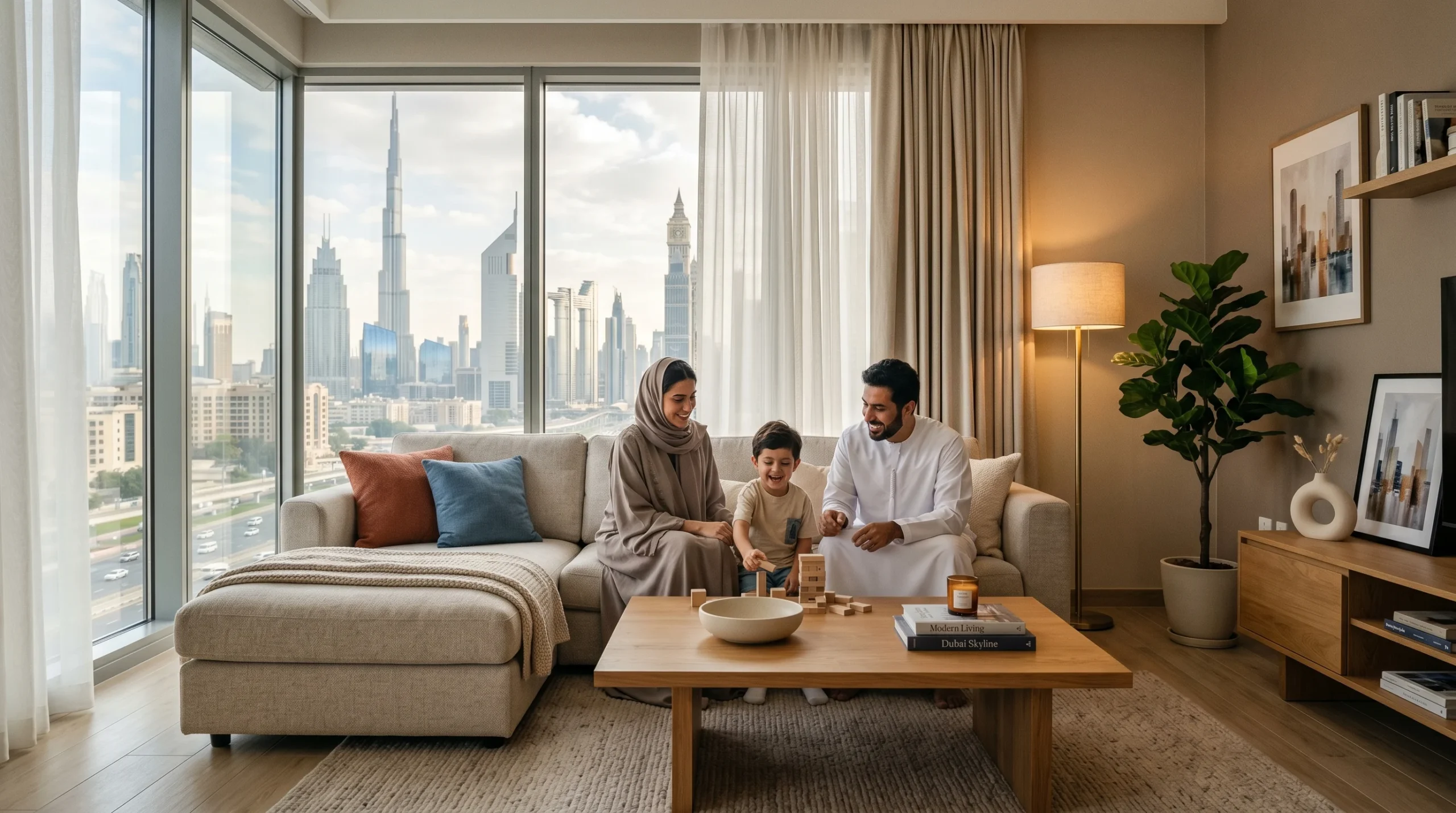
Here is a question we hear almost every week in our showroom: “Is this price worth it, or am I just paying for a brand name?”
It is one of the most honest questions a furniture buyer can ask — and it deserves an honest answer. At Karnak Home, we have been helping UAE families answer exactly that question since 1988. Over 35 years and more than 70,000 families served across Dubai, Abu Dhabi, Sharjah, and beyond, we have seen what holds up and what does not. We have seen families spend AED 800 on a sofa that collapsed in 18 months, and we have seen others invest AED 3,500 in a sofa that still looks great after a decade. The difference is almost never the price tag alone. It is knowing what you are actually buying.
This guide will walk you through everything that separates genuine value from cheap furniture dressed up with a high price. By the end, you will know exactly what to look for, what to avoid, and how to make furniture decisions that work for your family, your space, and the UAE lifestyle.
What “Value” Actually Means in Furniture — Especially in Dubai
Value is not the cheapest option, and it is not the most expensive one either. True value is the furniture that costs the least per year of good use. A sofa you replace every two years at AED 1,200 each time costs you AED 600 per year. A sofa you keep for ten years at AED 3,800 costs you AED 380 per year — and that is before factoring in the stress, logistics, and disposal costs of replacing furniture in Dubai.
This matters particularly in the UAE for several reasons. Dubai’s climate is hard on furniture. The combination of intense air conditioning (which dries out wood and leather), high humidity in coastal areas like Dubai Marina or Jumeirah, and intense heat when furniture is moved or stored means materials need to be genuinely durable — not just look durable in a showroom. Additionally, UAE families tend to have larger households with regular guests, kids, and extended family, which puts real daily stress on furniture that more occasional-use pieces simply do not face.
Understanding value through this lens — cost per year of quality use in real UAE conditions — completely changes how you should shop.
How to Assess Furniture Quality: What the Experts Actually Check
The Frame: Where Quality Lives or Dies
The single most important quality indicator in upholstered furniture — your sofas, armchairs, beds — is the frame. Everything else can be repaired or replaced. A poor frame cannot. When we train our team, the frame is the first thing we teach them to evaluate.
Solid hardwood frames (beech, rubberwood, and oak are common in quality furniture) are the gold standard. They resist warping, hold screws firmly over years of use, and flex rather than crack under stress. In practice, a well-made sofa with a solid beech frame in a Dubai villa with three kids and regular guests should comfortably last eight to fifteen years.
The alternative — and this is where buyers often get caught — is frames made from particleboard, MDF, or softwood pine. These materials are not inherently bad in every application, but in a sofa frame that needs to handle repeated weight, movement, and the stress of a busy household, they degrade quickly. Screws loosen, joints weaken, and eventually the sofa starts to lean, creak, or sag. This typically happens within two to four years of regular use.
How do you check in a showroom? Lift one corner of the sofa. A solid-framed piece should feel heavy — a quality three-seater might weigh 55 to 75 kg. Sit in a corner and push sideways. There should be no flex. If you can wobble the frame noticeably with light pressure, the joinery is weak. Also look under the sofa — quality manufacturers are not embarrassed by the underside of their furniture.
Cushioning and Comfort Over Time
This is where many buyers make their most common mistake. Showroom sofas are at their best. The question is what they feel like after 50,000 sit-and-rise cycles — which is roughly what a family sofa in active use accumulates over five years.
Foam density is the key specification to ask about. High-quality seating foam typically runs at 30 to 40 kg per cubic metre density (written as 30D or 35D on spec sheets). Lower density foams (20D or below) feel fine initially but compress and flatten significantly within one to two years. If a retailer cannot tell you the foam density of their sofas, that itself is information.
Some quality sofas combine high-density foam with a layer of fibre wrapping or memory foam on top — this gives a softer initial feel without sacrificing long-term support. Pocket springs in the seat base, used in many of our sofa ranges at Karnak Home, provide additional longevity and a more responsive sitting experience. Springs also handle the UAE’s weight variation better over time compared to foam-only construction.
For families with young children, the firmness of cushion edges matters too. Children jump, climb, and sit on armrests. Sofas with a defined, firm edge cushion hold their shape much better under this kind of lateral stress than fully cushioned, pillow-arm designs that flatten and deform over time.
Fabric and Upholstery: Reading Beyond the Surface
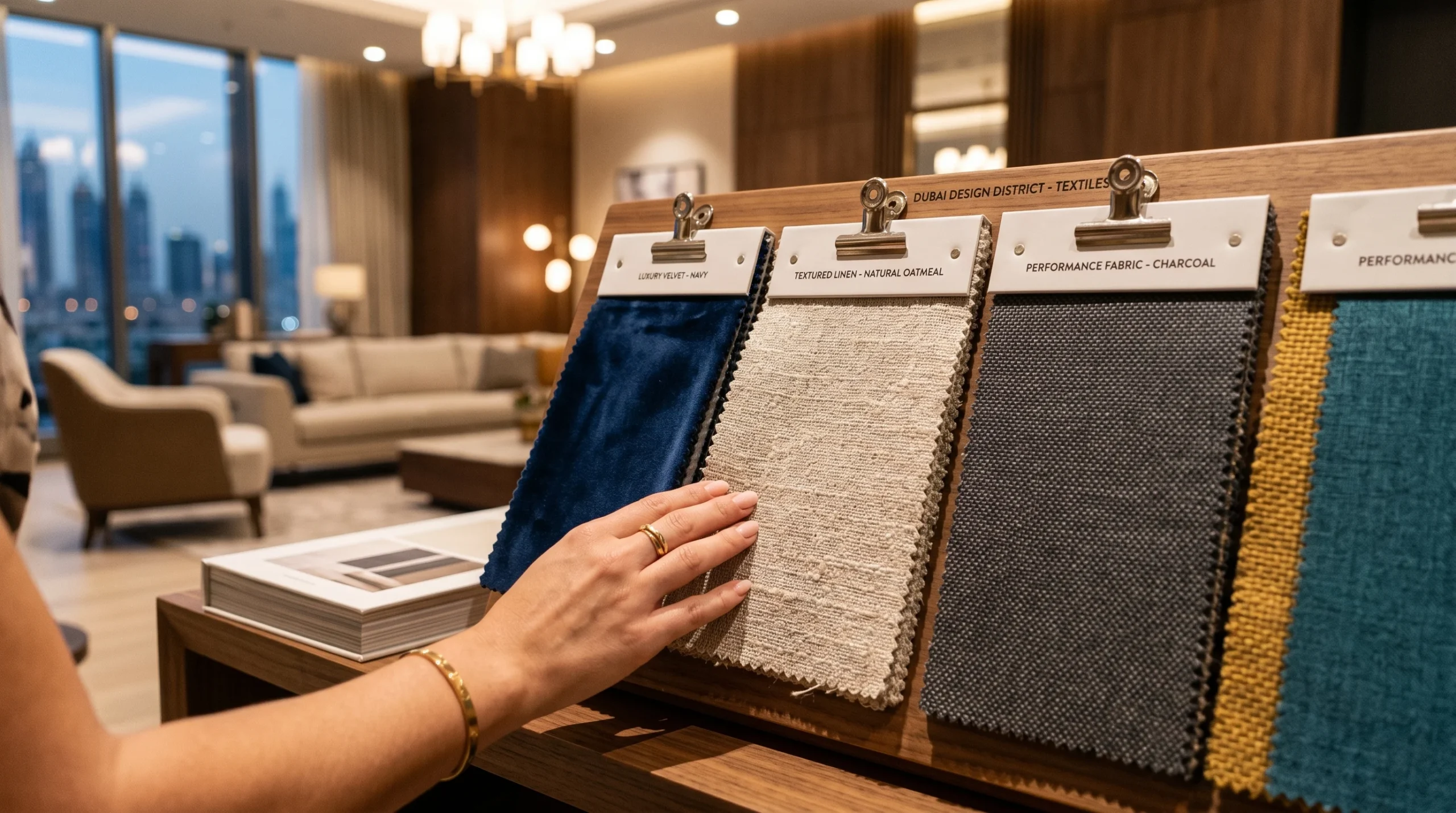
Fabric is the part of a sofa most people evaluate — and often the easiest place for manufacturers to hide cost savings. The rub count (or Martindale abrasion rating) tells you how durable a fabric is. For a busy family living room, you want a minimum of 25,000 rubs. Performance fabrics start at 30,000 rubs. For a formal sitting room used occasionally, 15,000 rubs may be perfectly adequate.
In Dubai’s air-conditioned homes, fabric type also affects comfort significantly. Pure linen and natural cotton feel beautiful but absorb moisture and can be difficult to clean. Performance fabrics with stain-resistant treatments are increasingly practical for families — they handle the inevitable spills from children, guests, and the UAE’s culture of eating and socialising in the living room. Many of our bestselling fabric sofas use a blended weave with a stain-resistant finish that maintains the look of natural linen while being genuinely washable.
Leather is its own conversation. Genuine full-grain leather develops character over time and can last 20 or more years with correct care. Bonded leather (which looks similar in a showroom) is a composite of leather scraps pressed onto a backing — it typically starts to peel and crack within three to five years, particularly in Dubai’s air-conditioned environment where dry air accelerates the degradation of the adhesive layer. This is one of the most important distinctions we help customers understand, because the price difference between bonded and genuine leather in a showroom can be deceptively small.
Joinery and Finish in Wood Furniture
For dining tables, wardrobes, bedroom furniture, and shelving, the construction quality shows in the joinery. Dovetail joints and mortise-and-tenon construction are the traditional marks of quality carpentry — they interlock mechanically and do not rely solely on glue or staples to hold. In contrast, furniture assembled entirely with dowels and glue is faster to manufacture but less durable under daily use and movement.
For veneer furniture — which covers a significant portion of the market — the quality of the substrate matters as much as the veneer itself. A quality wood veneer over solid wood or high-density MDF is a legitimate and long-lasting choice. A thin veneer over low-density particleboard will chip, swell, and delaminate, particularly if exposed to the moisture variations common in UAE kitchens or bathrooms.
Check drawer slides. Quality drawers run on full-extension metal runners with a soft-close mechanism. They should open smoothly at any weight, close gently, and not wobble laterally. Drawers on plastic runners or simple wooden grooves are a reliable indicator of where cost was cut in the manufacturing process.
Understanding Pricing in the Dubai Furniture Market
What AED Ranges Actually Mean
The Dubai furniture market spans an extraordinary range, and navigating it requires some honest anchors. Here is a straightforward guide to what pricing typically signals across key categories.
Sofas (3-seater): Under AED 1,500 typically means compromised frame or foam, or both. AED 1,500 to AED 3,000 is the broad mid-range where quality varies significantly depending on the specific piece. AED 3,000 to AED 6,000 covers genuinely well-constructed sofas with solid frames, quality foam, and durable fabrics. Above AED 6,000 you are increasingly paying for brand, imported design, and premium materials — still worthwhile for some buyers, but with diminishing quality returns.
Find your perfect spot. Shop our extensive sofa range.
Beds (frame, without mattress): AED 800 to AED 1,800 covers functional basic frames. AED 1,800 to AED 4,500 includes well-made platform and storage beds suitable for most families. AED 4,500 and above brings in upholstered beds, solid wood construction, and design-led options.
Rest easy. Discover our beautiful range of beds built for every sleeper.
Dining Tables: AED 600 to AED 1,500 for basic functional tables. AED 1,500 to AED 3,500 for quality wood veneer or solid wood tables suitable for daily family use. Above AED 3,500 for solid hardwood, extension mechanisms, or premium materials.
The centerpiece of every meal: Discover our exclusive range of handcrafted dining tables.
Wardrobes: AED 800 to AED 2,000 for flat-pack with basic fittings. AED 2,000 to AED 5,000 for assembled furniture with quality internal fittings, soft-close mechanisms, and better substrate quality. Custom-built options beyond that.
Organization, elevated. Browse our exclusive wardrobe collection.
These ranges reflect Dubai’s market as of early 2025. The point is not to anchor you to a price but to help you calibrate expectations. A dining table at AED 800 can be good value for a first apartment. The same table in a family villa hosting weekly gatherings may need replacing in two years — making the AED 2,800 alternative significantly better value over a five-year period.
The “Made in” Factor — and Why It Is Not the Whole Story
Furniture is sourced from many countries in the UAE market — China, Malaysia, Italy, Turkey, India, and local manufacturers. Country of origin alone is not a reliable quality indicator. We have seen excellent quality from Chinese factories that supply major European retailers, and poor quality from any number of origins. What matters is the specific manufacturer, the materials specified, and the quality controls in place.
At Karnak Home, our sourcing is based on factory assessments and specific material specifications — not just origin. We visit suppliers, test samples, and have quality standards that pieces must meet before they reach our showroom. When shopping elsewhere, the equivalent question to ask is: what are the specific frame materials, foam density specifications, and fabric rub counts? Any quality retailer should be able to answer these clearly.
Villa vs. Apartment: How Your Space Affects Value Decisions
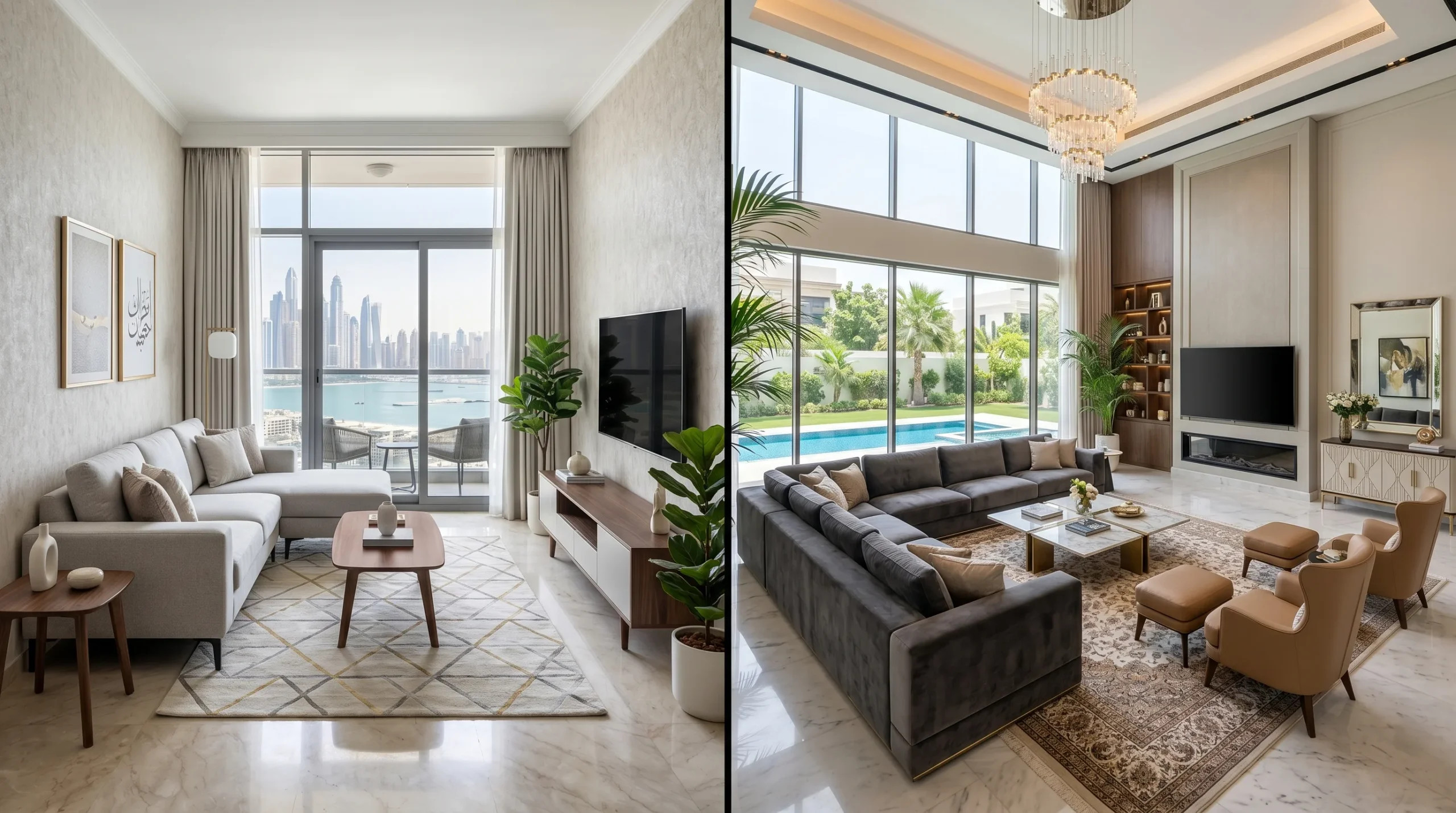
This is a dimension of furniture value that rarely appears in generic buying guides, but it is critical in Dubai’s market where households move between apartments and villas, and where furniture needs to adapt accordingly.
In apartments — particularly the one- and two-bedroom layouts common in Business Bay, JLT, or Silicon Oasis — scale is everything. Oversized sofas in compact rooms feel oppressive and make daily movement difficult. A well-chosen compact sofa at AED 2,200 that fits the room properly delivers better daily value than a sprawling sectional at AED 4,500 that dominates the space. For apartments, prioritise pieces with clean lines, lighter visual weight, and multi-function capability (storage ottomans, sofa beds for guests, extendable dining tables).
In villas — the four- and five-bedroom layouts in Mirdif, Arabian Ranches, The Springs, or Jumeirah Village — scale requirements reverse. Under-furnishing a large villa creates a cold, echoey environment. Here, investing in appropriately proportioned pieces pays off in both comfort and resale/rental value of the property. A well-furnished villa shows significantly better than an under-furnished one, which matters for the significant portion of UAE families in the expatriate market who may be relocating in three to five years.
One practical note: the UAE rental and relocation reality means some families consciously choose more modest furniture expecting to leave it behind or sell it. If this is your situation, the calculus changes — mid-range furniture that looks good without a premium investment makes sense. If you are purchasing for a long-term home, the value equation tilts decisively toward quality.
Common Mistakes That Cost UAE Families Money
Mistake 1: Buying for the Showroom, Not for Daily Life
Furniture looks its absolute best in a showroom. Lighting is warm and flattering, pieces are brand new, and you are not seeing them surrounded by children, pets, daily clutter, and the specific dimensions of your actual room. The discipline required is to evaluate furniture on its construction specs and materials — not on how it looks under showroom spotlights. Ask for fabric samples to take home. Check dimensions against your room plan. Sit on the sofa for five minutes rather than a polite thirty seconds.
Mistake 2: Ignoring Dimensions
This happens more often than you might expect. A sofa that is 280cm wide sounds reasonable in a large showroom but may leave only 40cm of walking space in an apartment living room — which is genuinely unusable. Before any furniture visit, measure your room carefully: the wall width available, the distance from sofa to coffee table you want (60 to 75cm is comfortable), and critically, the width of your front door, elevator, and any stairwells the furniture will need to pass through. Many a Dubai apartment has required a sofa leg to be removed to fit through a doorway — or worse, has resulted in a return.
Mistake 3: Prioritising Aesthetics Over Durability in High-Use Areas
Velvet sofas are beautiful. White dining chairs look stunning. Light-coloured rugs complete a look perfectly. And all of these are completely reasonable choices — in the right context. In a household with children under ten, or with regular large family gatherings, the maintenance demand of high-aesthetic, low-durability choices is genuinely significant. Performance fabrics in darker or mid tones in the living room, darker or stain-resistant upholstery for dining chairs, and washable covers where available are not compromises — they are the smarter choice that lets you actually enjoy the room without anxiety.
Mistake 4: Skipping the Warranty Conversation
In the UAE, warranty terms on furniture vary enormously. Some retailers offer twelve months on manufacturing defects only. Quality retailers offer two to five years covering frame and structural integrity. At Karnak Home, our warranty terms reflect our confidence in the construction quality of what we sell. Before purchasing anywhere, understand exactly what is covered, for how long, and what the claims process looks like. A retailer that makes warranty claims difficult is telling you something important about how they expect their furniture to perform.
Mistake 5: Buying Everything at Once Under Pressure
Moving into a new home in Dubai often comes with a lease start date, a desire to get settled quickly, and well-meaning pressure from family. The result is frequently furniture bought in one rushed visit that does not quite work together, does not quite fit the space, and includes several pieces that get replaced within two years. Where possible, prioritise the essential, high-use pieces first — sofa, bed, dining table — and give yourself time to understand the space before completing the room. Your living room will tell you what it needs after you have lived in it for a few weeks.
Expert Tips from 35 Years of Furniture Experience in the UAE
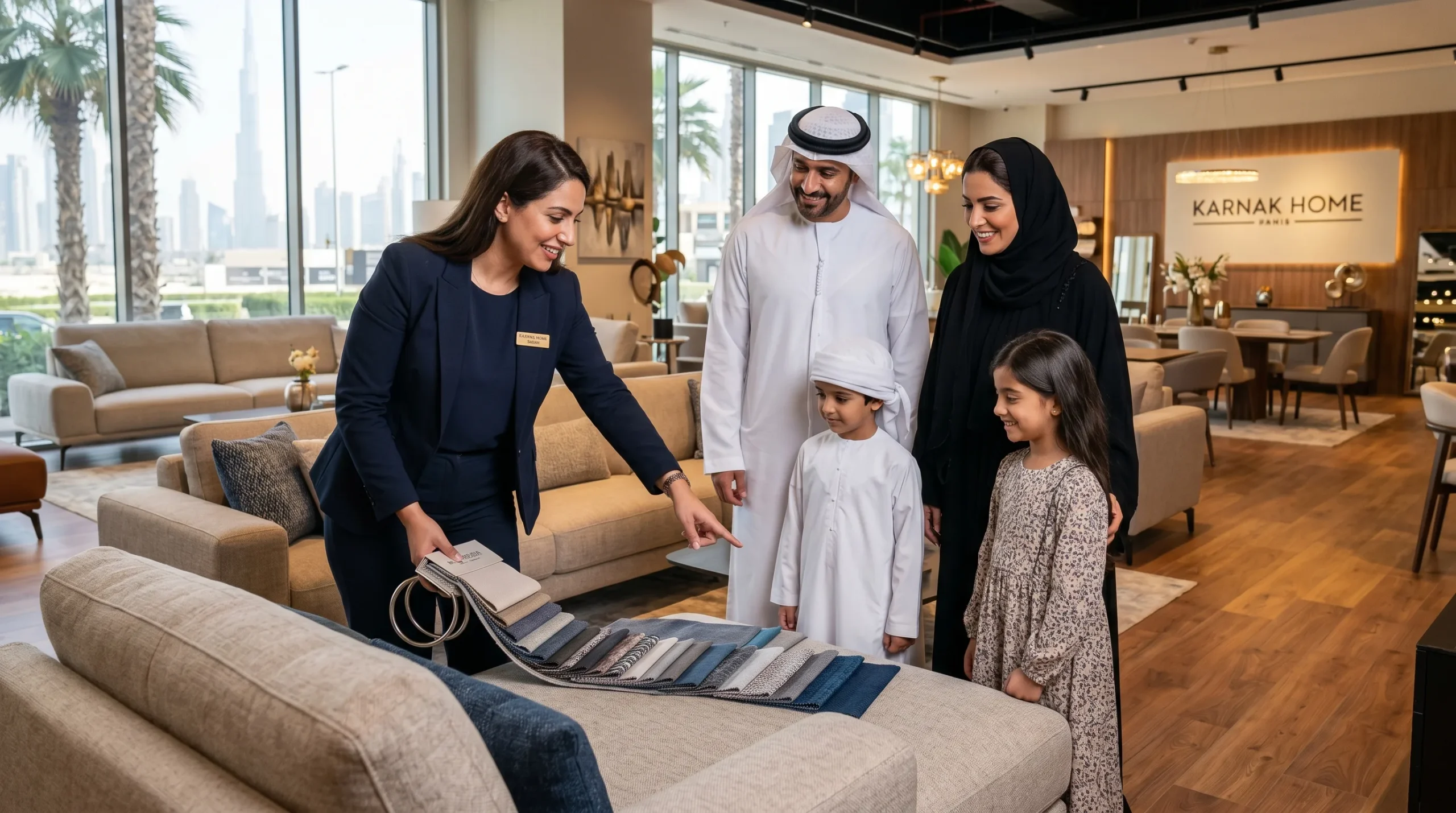
1. Rotate cushions from day one. Most fabric sofas come with reversible or removable cushions. Making a habit of rotating them weekly extends the life of the foam significantly by distributing wear evenly. This is one of those ten-second habits that adds years of life to a piece.
2. Protect wood furniture from air conditioning. This surprises many customers, but prolonged exposure to strong air conditioning — especially cold, dry air — can cause solid wood to crack or warp over time. Maintaining a room humidity level above 40% (a basic humidifier helps) and not positioning wooden furniture directly in front of air conditioning vents will significantly extend the life of your dining tables, bed frames, and wooden cabinets.
3. Use furniture pads under legs on marble and tile. UAE homes very commonly have marble or tile flooring. Furniture without pads scratches these surfaces over time — but more importantly, furniture on hard tile floors moves slightly with every use, which gradually loosens joints and weakens frames. Quality felt or rubber pads protect both the floor and the furniture.
4. Treat leather properly from the first month. If you invest in a genuine leather sofa, apply a quality leather conditioner within the first month and then every three to six months thereafter. Leather that dries out — which happens quickly in Dubai’s heavily air-conditioned interiors — becomes brittle and cracks. A bottle of conditioner costing AED 60 to 100 can extend a leather sofa’s life by years.
5. Measure twice, order once — and check the delivery route. Every experienced customer has a story. Measure your room, your furniture, your doorways, your elevator, and then measure them again. For larger pieces being delivered to an apartment, share these measurements with us at point of sale and we can advise on delivery before it becomes a problem.
6. Ask about after-sale service before you buy. The transaction does not end at point of purchase. If a leg is damaged in delivery, if a drawer runner fails in month three, if the fabric develops an unexpected issue — how does the retailer respond? With 35 years in this market, our reputation is built on exactly these moments. Ask the question directly: “What happens if I have a problem after delivery?”
7. Consider the total room, not individual pieces. Value furniture decisions are room decisions. A beautiful sofa surrounded by pieces that clash in scale, material, or colour delivers less satisfaction than a cohesive room where every piece works together. Our showroom consultants help customers plan rooms as a whole — it is one of the more useful services we offer, and it is free.
Furniture for Growing Families: A Specific Word on Kids and Safety
For families with children, furniture value has an additional dimension: safety. Children climb on furniture, pull drawers open, swing on wardrobe doors, and use sofas as trampolines — and furniture needs to handle all of this without creating hazards.
Look for wardrobes and tall units that can be wall-anchored. This is non-negotiable for children’s rooms — a wardrobe tipping forward onto a child is a serious risk, and wall anchoring eliminates it entirely. Our kids furniture range at Karnak Home is designed with this in mind and includes anchor fittings as standard.
Bed heights matter for young children — both the sleeping surface height and the height of any storage or bunk elements. Children’s beds should allow a child to get in and out safely, and bunk beds should have solid, well-attached guard rails. Check that guard rails are secured mechanically, not just by tension.
For sofas and upholstered pieces, fabric performance is particularly important in family rooms. Easy-clean fabrics, removable and washable covers where available, and darker tones in the main living areas all reduce the maintenance burden significantly.
Frequently Asked Questions
This is usually due to the frame material and the UAE’s specific indoor environment. Many budget-friendly pieces use particleboard or softwood pine which struggle with the constant “drying effect” of heavy air conditioning and the stress of active household use. For a piece to last a decade in the UAE, you should look for solid hardwood frames (like beech or oak). If a sofa frame wobbles when you push it sideways in the showroom, it likely won’t survive the transition to a busy family villa.
The “value” is found in the technical specifications, not the label. Ask the retailer for two specific numbers: Foam Density and Fabric Rub Count. High-quality seating should have a density of at least 30kg to 40kg per cubic metre (30D/35D). Anything 20D or below will flatten quickly regardless of the brand. For fabrics, ensure a Martindale rating of at least 25,000–30,000 rubs to handle the frequent socializing and guest hosting common in UAE culture.
Yes, but it requires specific maintenance. While bonded leather often cracks and peels within three years due to the dry, AC-cooled air breaking down the adhesives, genuine full-grain leather can last 20 years. However, because Dubai’s interiors are so dry, you must apply a leather conditioner within the first month and every few months thereafter to keep it from becoming brittle.
The blog highly recommends against “panic buying” everything at once. Scale is the biggest challenge in the UAE market—what fits a compact Business Bay apartment will look “lost” in a Mirdif or Jumeirah villa. Prioritize high-use essentials (sofas, beds, dining tables) first. Live in the new space for a few weeks to understand the natural flow of the room before choosing secondary pieces like accent chairs or storage units.
Ignoring the “path of travel.” Many families measure the wall where the sofa will go but forget to measure the width of the apartment elevator, the stairwell turns, or even their own front door. In Dubai’s high-rise buildings, this often results in furniture being returned at the doorstep. Always measure your entry points and share those dimensions with the showroom team before finalizing the order.
Conclusion: Making Smart Furniture Decisions in Dubai
Finding the best value furniture in Dubai is not about finding the cheapest option, or about spending the most. It is about understanding what genuinely determines quality — frame construction, foam density, fabric durability, joinery quality — and using that knowledge to make decisions that serve your family for years, not months.
The Dubai market offers genuine quality at honest prices. The challenge is developing the knowledge to find it amid a very wide range of options. We hope this guide gives you a meaningful starting point for that evaluation.
After 35 years and 70,000+ families, we can say with confidence: the families who are happiest with their furniture are the ones who bought thoughtfully, not impulsively. They took time to understand the space, asked the right questions, and chose pieces built to last in real UAE conditions.
We would love to help you do exactly that.
Key Takeaways:
- True furniture value is calculated in cost per year of use — not the purchase price alone
- Frame construction and foam density are the most important quality indicators in upholstered furniture, and any quality retailer should be able to tell you exactly what is in their pieces
- Dubai’s climate, family lifestyle, and villa-versus-apartment living all affect which furniture choices deliver real value in the UAE context
Ready to Find the Best Value Furniture for Your Home?
Visit our Dubai showroom and speak with one of our furniture consultants — no sales pressure, just genuine guidance from a team that has been doing this for 35 years. If you prefer to browse first, our full range is available online at karnakhome.com, with detailed specifications, real customer photography, and transparent pricing across every category.
Shop Online: karnakhome.com
Visit Our Showroom: Karnak Home, Al Barsha South – Dubai – United Arab Emirates
Contact Us: +971504656780
Whatsapp Chat : Karnak Home
كيف تختار الأثاث المثالي لمنزلك في الإمارات لعام 2026
يعتبر اختيار الأثاث في دبي والشارقة قراراً يتجاوز مجرد الشكل الجمالي؛ فهو استثمار في الراحة والاستدامة. مع تطور أنماط الحياة في الإمارات، أصبح البحث عن القطع التي تجمع بين الجودة العالية والسعر المنطقي ضرورة لكل عائلة. نحن في “كرنك هوم” ندرك أن السوق الإماراتي يتميز بخصوصية تامة، بدءاً من تأثير التكييف المستمر على الأخشاب الطبيعية، وصولاً إلى الحاجة لقطع تتحمل الاستخدام اليومي المكثف في الفلل والمنشآت السكنية الحديثة.
إذا كنت تبحث عن التميز، فإن اختيار كرسي إكسنت دبي 2026 يمكن أن يغير شكل غرفة المعيشة بالكامل، حيث توفر هذه الكراسي لمسة فنية فريدة تعكس ذوقك الشخصي. ومع تزايد الطلب على التصاميم العصرية، تبرز أفضل كراسي مميزة الإمارات كخيار مثالي لربط مساحات المنزل ببعضها البعض، سواء في الشقق الأنيقة في “بيزنس باي” أو الفلل الواسعة في “مردف”. إن السر في القيمة الحقيقية لا يكمن في السعر المرتفع، بل في كثافة الإسفنج وجودة القماش المستخدم وقوة الهيكل الخشبي الذي يضمن لك سنوات طويلة من الخدمة دون تراجع في مستوى الراحة.
عند تسوقكم للأثاث، نوصيكم دائماً بالنظر إلى ما وراء المظاهر؛ اسألوا عن “عدد دورات الاحتكاك” للقماش واختبروا ثبات الهيكل بأنفسكم. نحن هنا في “كرنك هوم” نفتخر بخبرتنا التي تمتد لأكثر من 35 عاماً في خدمة المجتمع الإماراتي، ونحرص على توفير قطع مصممة لتتحمل مناخنا الفريد وتلبي تطلعاتكم للرفاهية.
تفضلوا بزيارة صالة عرضنا اليوم لاكتشاف أحدث التشكيلات، أو تواصلوا معنا مباشرة عبر الواتساب للحصول على استشارة مجانية من خبرائنا وتنسيق قطعكم المثالية بكل سهولة.