
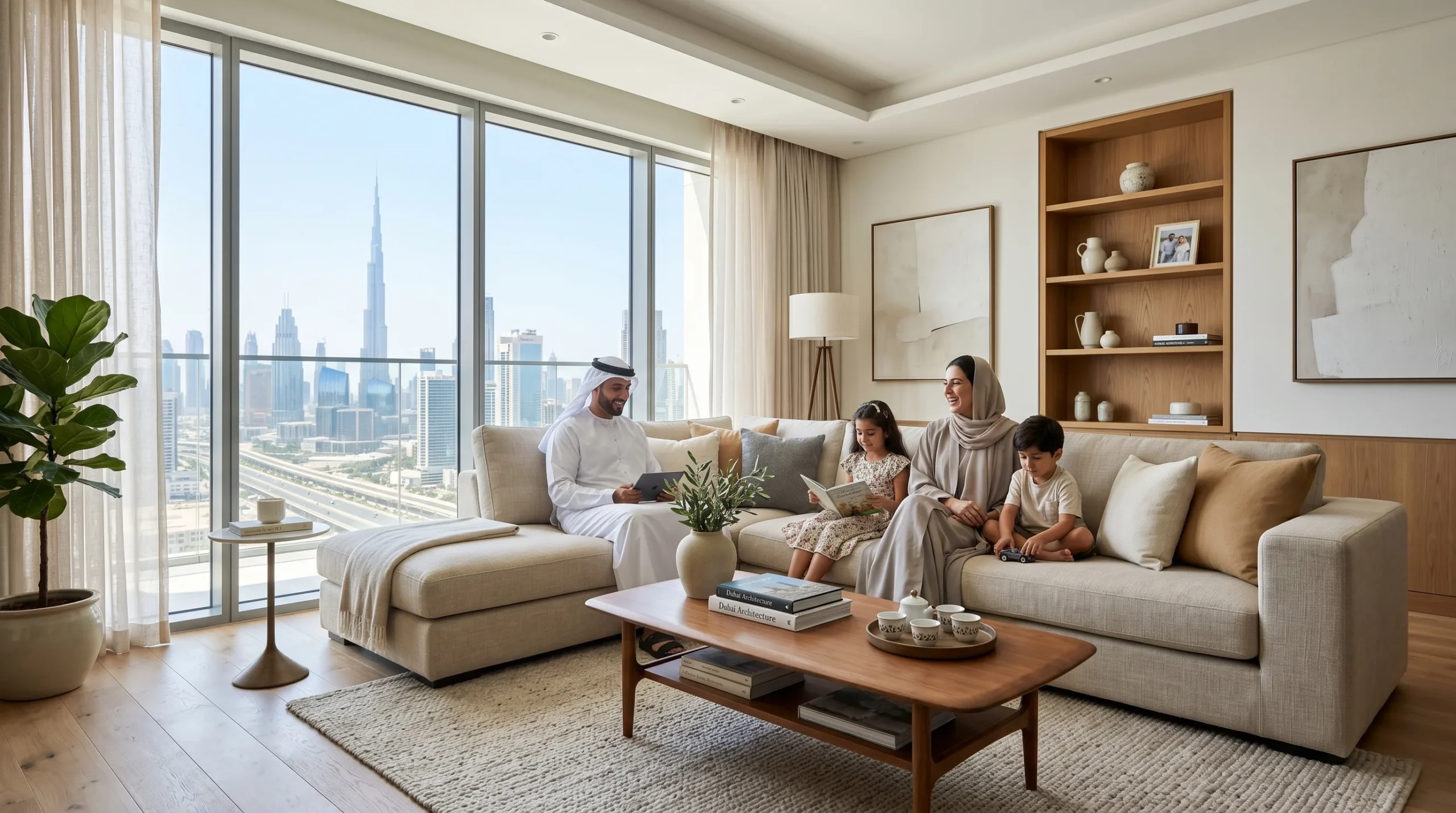
After 35 years and more than 70,000 families served across the UAE, the team at Karnak Home has seen virtually every furniture mistake imaginable. A sofa too large to fit through the front door. A dining table that seats four when the family regularly hosts twelve. A mattress that sags within a year because the buyer prioritised price over construction quality. Wardrobes that look beautiful in the showroom but simply don’t work for how a real family gets dressed in the morning.
These aren’t rare stories. They happen constantly — and almost every single one of them is avoidable with the right information upfront. That’s exactly why we’ve written this guide. Not to sell you anything specific, but to give you the same advice our in-store consultants give families every day: honest, practical, and grounded in decades of real UAE homes experience. For a broader perspective on consumer decision-making and purchasing behaviour, you can also refer to research-backed insights from McKinsey & Company.
The UAE context matters here. Homes in Dubai and Abu Dhabi range from compact studio apartments in JVC to sprawling six-bedroom villas in Jumeirah and Saadiyat Island. Families entertain differently here — larger gatherings, regular guests, domestic staff considerations, and a climate that is genuinely brutal on certain materials. What works in a European home catalogue often fails in a UAE setting. For additional insight into how climate impacts material durability and home choices, research published by National Geographic offers useful context. Let’s walk through the ten mistakes we see most often, and exactly how to sidestep them.
Mistake 1: Not Measuring Before You Shop
This is, without question, the most common — and most painful — furniture mistake we witness. A customer falls in love with a sectional sofa in the showroom, purchases it, and then discovers it is physically impossible to manoeuvre around the corner of their apartment corridor. Or it fits the room, but overwhelms it completely, leaving barely any floor space.
Measure the Room, the Furniture, AND the Route
Before you visit any showroom or open any website, spend twenty minutes with a tape measure. You need three distinct sets of measurements:
The room itself. Note the full dimensions — length, width, and ceiling height. Mark where doors, windows, and AC units sit. In many UAE apartments, split AC units are positioned low on walls, and a tall wardrobe or bed headboard can block airflow or be damaged by condensation over time.
The furniture footprint. It seems obvious, but many buyers only check whether the piece fits in the room — not whether it leaves the room functional. A good rule of thumb: your sofa should take up no more than two-thirds of the main wall it faces. For a standard Dubai apartment living room (roughly 4m x 5m), a three-seater sofa of 220-230cm wide is usually the maximum comfortable fit. Anything larger starts to crowd the space.
The access route. Measure your elevator dimensions, building lobby width, stairwell clearance if relevant, and the doorway into the room itself. Most standard UAE apartment doors are 80-90cm wide. A sofa wider than 100cm may need to be dismantled for delivery — and not all sofas can be. Always confirm with your retailer whether a piece can be delivered in sections.
What To Do Instead
Sketch a rough floor plan on paper or use a free app like RoomSketcher before you shop. When you find a piece you like, request the exact dimensions from the retailer and map it into your sketch. At Karnak Home, our consultants can also provide dimensioned product specs and help you visualise pieces in your space before purchase.
Mistake 2: Choosing Fabric Based on Looks Alone
The UAE climate is genuinely tough on upholstery. With humidity levels spiking dramatically in summer months — particularly in coastal cities like Dubai, Sharjah, and Abu Dhabi — and air conditioning running almost continuously indoors, certain fabrics simply degrade faster here than they would in temperate climates.
The Fabric Reality in UAE Homes
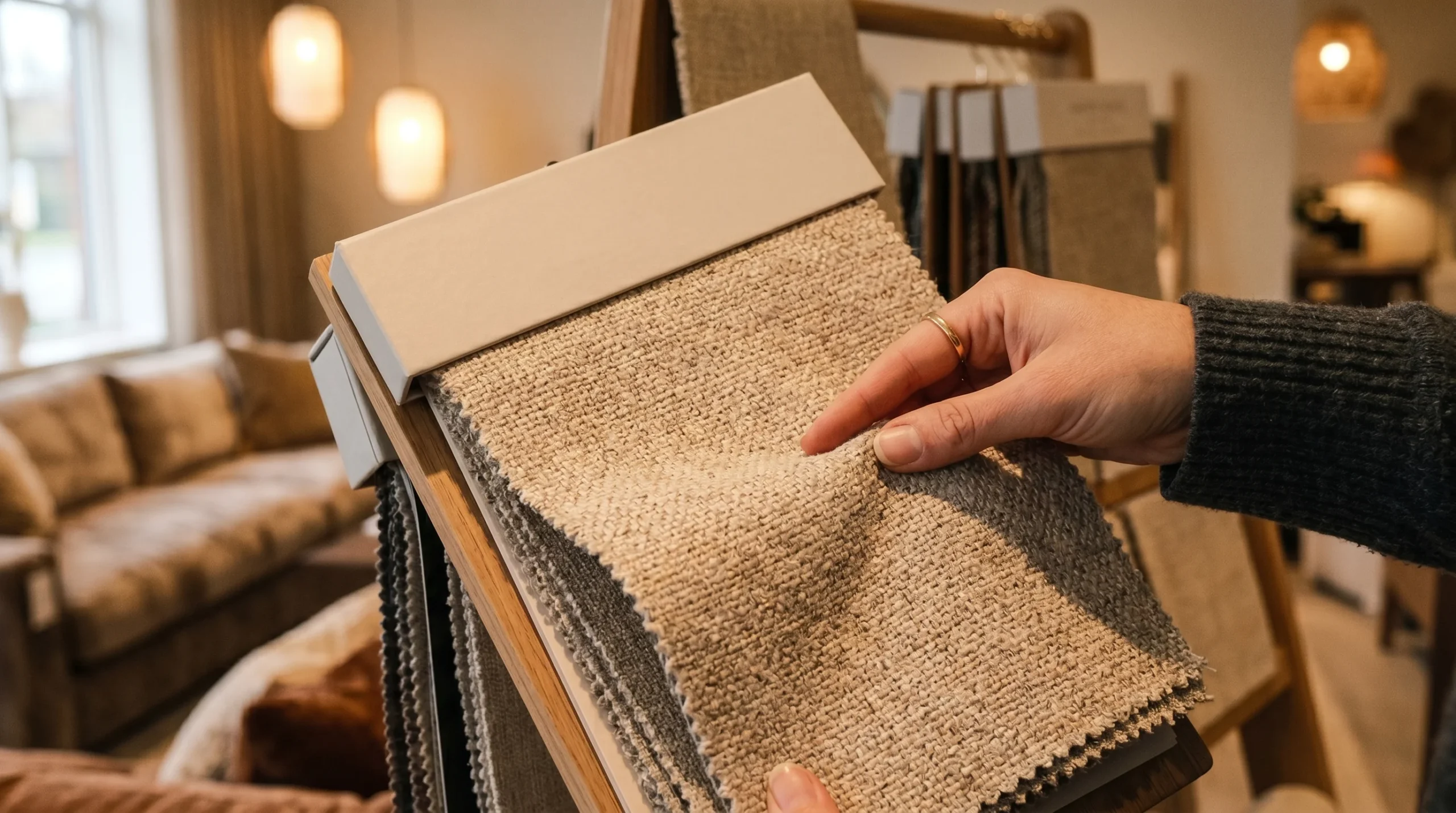
Velvet looks stunning but traps dust — a real issue in a desert environment where fine dust infiltrates even well-sealed homes. Light-coloured linen is gorgeous but stains permanently with minimal effort, and if you have children, it rarely survives a school year. Pure silk upholstery in direct or indirect sunlight fades noticeably within one to two years.
What actually performs well in UAE conditions? Performance fabrics — microfibre, performance velvet (tightly woven, stain-treated), and quality faux leather — are far more practical for family living. Genuine leather sofas perform well in temperature-controlled spaces but can dry and crack if positioned near a window or AC vent. If you’re set on genuine leather, ask specifically for full-grain or top-grain leather rather than bonded leather, which tends to peel within two to three years in any climate.
For families with young children, look for fabrics with a rub count above 30,000 (this refers to the Martindale abrasion test — your retailer should be able to provide this on request). At Karnak Home, we clearly indicate durability ratings on family-appropriate upholstery, so you’re not guessing.
The Colour Question
Darker colours and mid-tones (charcoals, warm greys, navy, cognac) are far more forgiving in family homes than whites or creams. That said, if a light sofa is your dream, look at performance fabrics specifically treated for stain resistance — some are now genuinely impressive, allowing spills to bead and wipe clean.
Mistake 3: Ignoring How You Actually Live
Showrooms are staged to look beautiful. Your home is lived in. The gap between these two realities is where many furniture regrets are born.
A family with three children under ten does not need a glass coffee table with sharp corners and a polished chrome base. A couple who works from home needs more than a decorative desk — they need a proper workspace with storage. A household that entertains large extended family gatherings every Eid needs a dining table that either extends significantly or can be accompanied by additional seating.
Practical Questions to Ask Yourself
Before any significant furniture purchase, run through these honestly:
Who uses this piece daily, and how? A sofa that everyone sits on for two hours every evening needs to be built differently — and upholstered differently — than one in a formal sitting room used twice a week. Think about your actual daily rhythms, not an idealised version of how you wish you lived.
How long do you plan to stay in this home? If you’re in a rental and likely to move in two years, modular or freestanding pieces that adapt to different spaces make far more sense than built-in wardrobes or oversized sectionals. Many UAE families — particularly expats — move every three to five years, and furniture should reflect that reality.
Do you have a domestic worker living in? Many UAE family homes include a maid’s room, and patterns of daily usage are quite different from homes without live-in support. Storage needs, dining capacity, and sofa durability requirements often increase significantly.
Mistake 4: Underestimating Storage Needs
Storage is almost always underestimated. Families buy a beautiful wardrobe, live with it for six months, and discover it’s half the capacity they actually need. They purchase a stylish bed frame without a storage base and immediately run out of places to put extra linens and seasonal clothing.
Think in Categories, Not Just Cubic Metres
The mistake isn’t just buying too little storage — it’s buying the wrong kind. A wardrobe with two long hanging rails is useless if your household has mostly folded clothing and accessories. A wardrobe with all shelves and no hanging space frustrates anyone with formalwear.
Before buying any wardrobe or storage furniture, audit your actual belongings. How many hanging garments? How many folded items? Do you need shoe storage, and how many pairs? Is there jewellery, accessories, or bags that need specific compartments? In UAE homes where abayas, kanduras, and formal occasion wear are everyday wardrobe components alongside casual clothing, getting the internal configuration right makes an enormous practical difference.
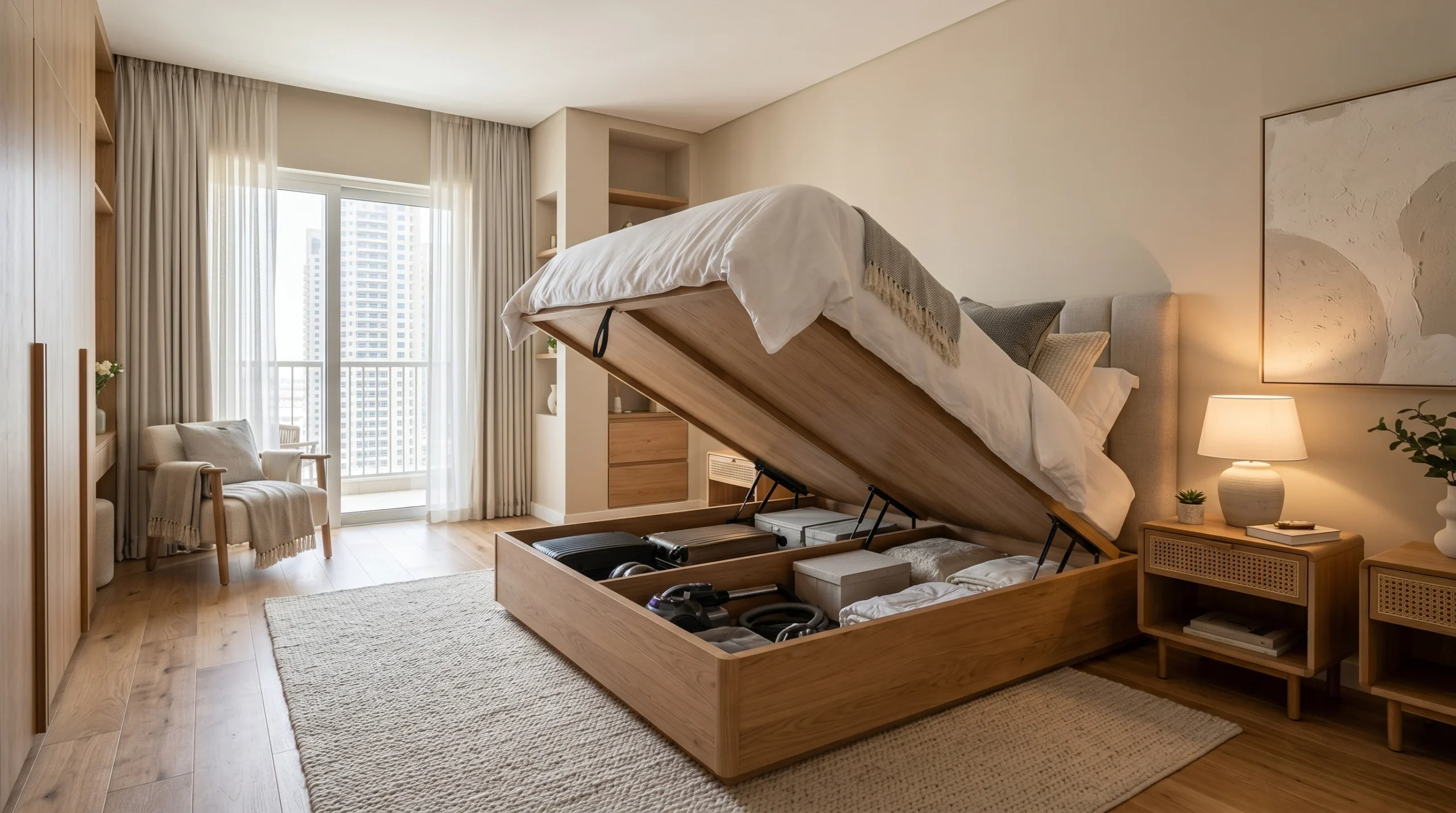
For bedrooms, a hydraulic storage bed (where the entire mattress platform lifts on gas struts to reveal a deep storage cavity) can replace the need for additional storage furniture entirely — important in smaller apartments where every square metre matters.
Wardrobe Sizing for UAE Homes
As a general guide: a couple sharing a bedroom wardrobe should look for a minimum of 200cm wide, 60cm deep, and 220cm tall. For a family of four sharing storage in a villa, a fitted wardrobe system of 300cm or more becomes practical. If your bedroom can’t accommodate that, a combination of a freestanding wardrobe and an under-bed storage solution usually bridges the gap.
Mistake 5: Buying Furniture Piecemeal Without a Coherent Plan
This is especially common when families move into a new home and furnish room by room over time, buying whatever is on sale or catches their eye in the moment. The result, two years later, is a home that feels visually chaotic — mismatched wood tones, clashing styles, proportions that fight each other rather than working together.
A Cohesive Home Doesn’t Mean Matching Sets
You don’t need to buy a sofa-and-three-armchairs set with matching cushions, or a bedroom suite where every piece is identical. In fact, furniture that’s too matched often looks dated. What you need is coherence — a consistent colour palette, complementary material tones, and proportions that feel intentional.
Decide on two or three key decisions before you start buying anything: your primary wood tone (light oak, dark walnut, whitewashed, etc.), your upholstery colour family (neutrals, warm tones, cool blues and greys), and your overall aesthetic direction (contemporary, transitional, classical, Scandinavian, Arabic-inspired). Every piece you buy should pass a simple test: does this fit those three decisions?
If you’re furnishing a new home and need to buy multiple rooms at once, many UAE retailers — including Karnak Home — offer consultations to help plan across rooms so everything works together. This service is worth taking advantage of, particularly for larger villas where multiple living spaces need to feel connected.
Mistake 6: Prioritising Price Over Construction Quality
This is a difficult conversation to have, but it’s an important one. The UAE furniture market is enormous and competitive, and there is a significant amount of furniture available at very attractive price points that is not built to last. We’re not talking about budget furniture generally — there is genuinely good value furniture available at moderate prices. We’re talking about furniture that looks equivalent to quality furniture but is constructed from materials that degrade quickly.
What to Look For Inside the Furniture
Sofa frames should be kiln-dried hardwood or high-grade engineered wood — not soft pine or chipboard. Ask the retailer what the frame is made from. A quality sofa frame, if you knock on it, sounds solid rather than hollow. Seating cushions should use high-resilience (HR) foam rated above 35kg/m³ for regular use — lower density foam compresses permanently within a year of daily use.
For beds, ask specifically whether the slat system is solid wood or plywood slats, and how many there are. A bed with fewer than 14 slats across a standard 160cm wide base provides inadequate support for the mattress and will accelerate mattress deterioration significantly.
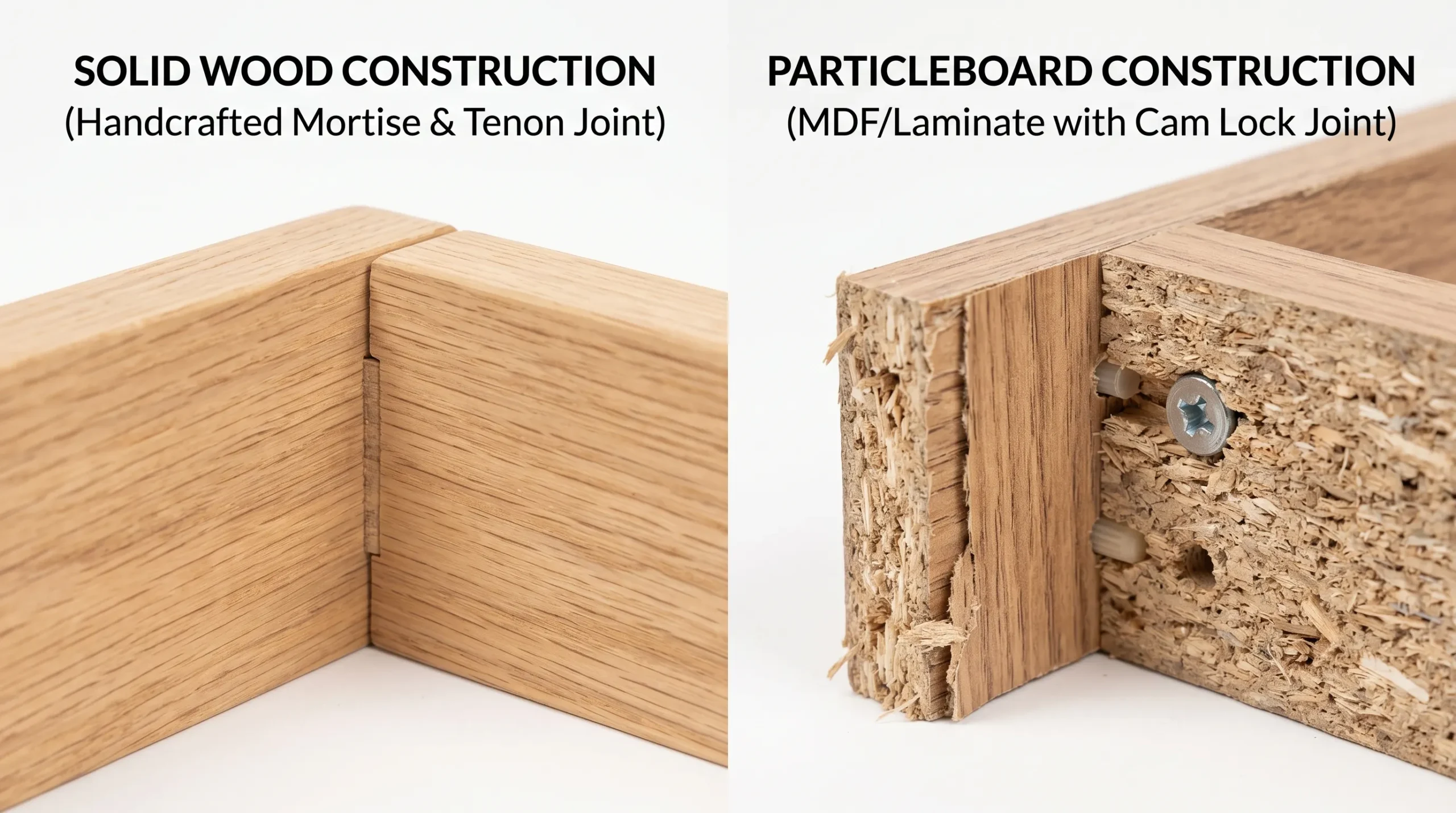
For wardrobes and dining tables, the difference between solid wood and MDF or particleboard core is significant in the UAE climate. High humidity cycling — from outside heat to indoor air conditioning — causes particleboard to swell and warp over time. Solid wood breathes and adapts. Quality MDF with a good veneer or lacquer finish can also perform well if properly sealed, but raw particleboard is the weakest option.
What Things Cost in the UAE
For context: a quality fabric sofa built to last eight to ten years with daily family use should cost somewhere in the range of AED 3,500–8,000. Anything significantly below that range warrants close examination of the construction. Quality leather sofas typically begin around AED 5,000. A well-built solid wood dining table for six should fall in the AED 2,500–5,000 range. These are not luxuries — they are the prices at which durable, properly constructed furniture is available in the UAE market. Spending significantly less than these thresholds usually means compromising on the materials that determine longevity.
Mistake 7: Buying the Wrong Bed Size for Your Space
UAE apartments and villas vary enormously in bedroom dimensions, and a mistake we see frequently is families defaulting to the largest bed they can imagine — a 200cm x 200cm Super King — without checking whether the room can actually accommodate it comfortably with other necessary furniture.
Bedroom Furniture Layout Rules
A bed should never be the only thing in a bedroom. You need clearance on both sides (minimum 60cm to walk comfortably, ideally 80cm), clearance at the foot of the bed (minimum 90cm to open wardrobe doors and move freely), and space for bedside tables. Map this out before deciding on bed size.
For a typical Dubai apartment master bedroom of around 4m x 4m, a King size bed (180cm x 200cm) is usually the practical maximum. A Super King (200cm x 200cm) is better suited to villa bedrooms of 5m x 5m or larger. A Queen (160cm x 200cm) is perfectly comfortable for a couple and much more practical in a mid-sized bedroom where storage furniture is also needed.
Don’t let cultural pressure around bed size override practical spatial planning. A King bed in a room with proper clearance and functional layout is a far better experience than a Super King that makes the room feel cramped and impossible to clean.
Mistake 8: Forgetting About Light and Placement
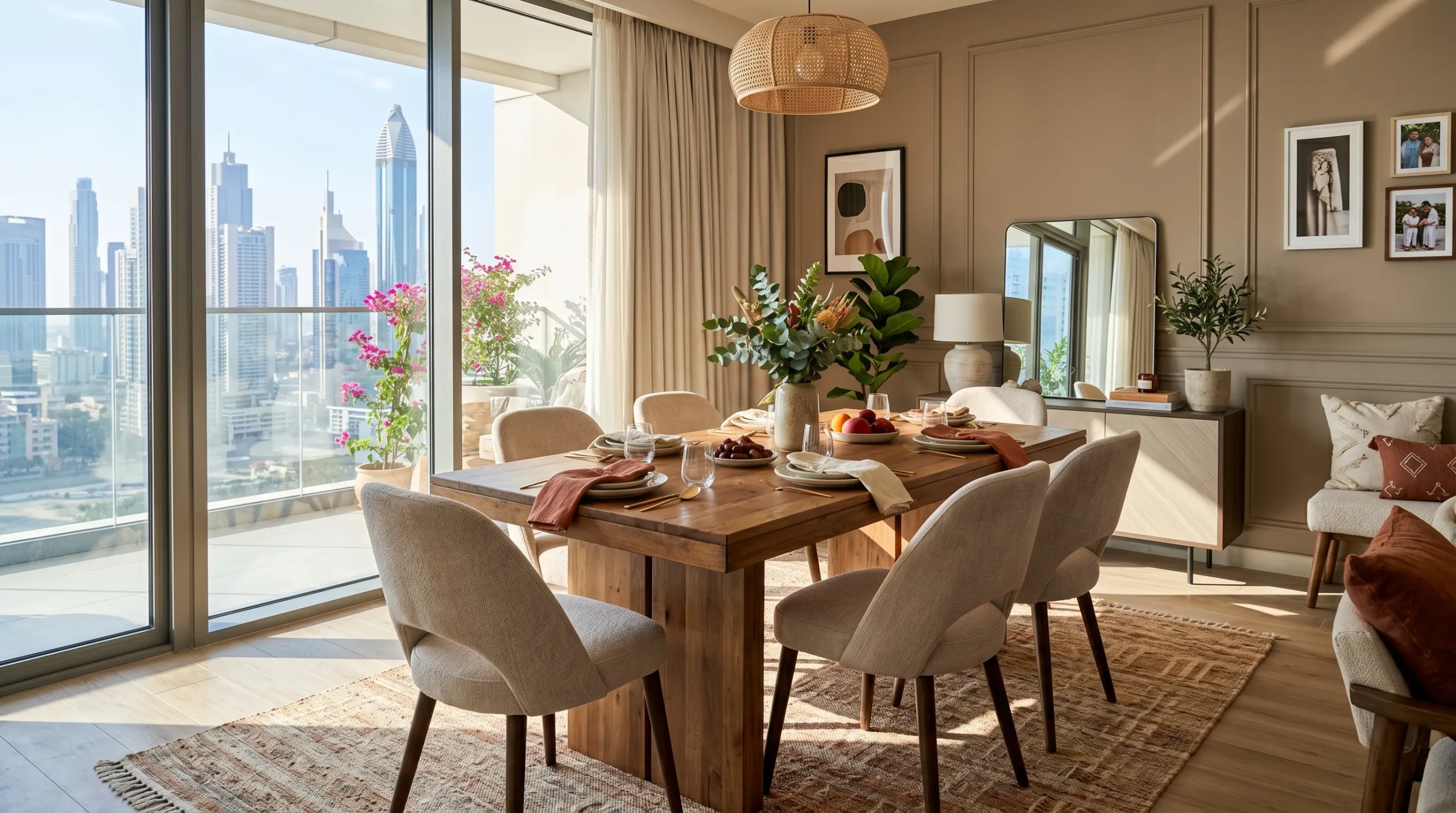
Furniture looks different — sometimes dramatically so — in different lighting conditions. A sofa that appeared warm and inviting under showroom lighting can look cold and grey in a north-facing apartment with limited natural light. A dark wood dining table that seemed rich and elegant in the showroom can make a small dining area feel oppressive.
Practical Lighting Checks
Ask your retailer if you can view the piece under different lighting settings if the showroom allows it — or at least step outside with a fabric swatch in natural daylight. Pay attention to which direction your windows face. South-facing rooms in Dubai (which receive strong afternoon sun) need UV-resistant fabrics and finishes to prevent fading. North-facing rooms benefit from lighter-toned furniture and reflective surfaces to maximise available light.
Also consider where the furniture will sit relative to your AC vents. In a UAE home, air conditioning is running for eight to ten months of the year. Leather furniture positioned directly under a vent will dry out faster. Wooden furniture in the path of cold air cycling can develop surface cracking over several years.
Mistake 9: Not Accounting for Maintenance Requirements
Every furniture choice is also a maintenance commitment. A beautiful solid marble dining table requires sealing and careful cleaning. A white fabric sofa requires professional cleaning every six months in a family home to remain presentable. A high-gloss lacquer finish shows fingerprints constantly in daily use.
None of these are reasons to avoid these pieces — but they are reasons to go in with clear eyes about what upkeep they demand. In busy UAE family homes, particularly where both parents work and children are active, a piece that requires intensive maintenance often ends up looking neglected within a year, causing frustration.
Ask your retailer specifically: what does this piece need to look good for five years? What products should I use, and what should I avoid? A knowledgeable retailer should be able to answer this without hesitation. If they can’t, that’s informative in itself.
Furniture Care in UAE Climate Conditions
Wood furniture near exterior walls can absorb moisture during the brief high-humidity season (August to September particularly). A thin layer of quality furniture wax or oil applied annually provides significant protection. Upholstery should be vacuumed regularly — desert dust is fine and settles into fabric fibres quickly, acting abrasively over time.
For rattan or wicker furniture used on covered outdoor terraces (common in Dubai and Abu Dhabi villa living), UV-resistant synthetic rattan performs dramatically better than natural rattan in direct sunlight and should be your default choice for any outdoor application.
Mistake 10: Shopping Without a Trusted Retailer Relationship
This last mistake is perhaps the most underrated: buying furniture from whoever has the best current discount, rather than building a relationship with a retailer whose quality and after-sales service you trust.
Furniture is not a fast-moving consumer good. When something goes wrong — a manufacturing defect, a damaged delivery, a piece that needs repair after a few years — your experience is entirely determined by who you bought from. A retailer with a genuine warranty policy and a committed service team is worth a great deal more than the 10% saving you might find by shopping around without discernment.
At Karnak Home, we’ve been serving UAE families since 1988, and a significant part of our business is repeat customers and family referrals. When you buy from us and something isn’t right, we fix it. That’s not marketing language — it’s the reason families who bought their first sofa from us in the 1990s are still shopping with us for their grown children’s homes today.
Expert Tips: 35 Years of Furniture Advice Condensed
Based on experience across tens of thousands of UAE homes, here are the most consistently valuable pieces of advice our team offers:
Tip 1: Buy the sofa and bed last, not first. These are your most important and expensive pieces. Furnish the room around them conceptually first, confirm measurements and style direction, then purchase.
Tip 2: Always request a written quote with exact product codes. This protects you if pricing changes between quote and delivery, and ensures you receive exactly what you chose in the showroom.
Tip 3: Ask about delivery lead times before you commit. Some furniture — particularly custom orders or imported pieces — has lead times of six to twelve weeks in the UAE. If you’re moving into a new home on a specific date, this matters enormously.
Tip 4: Invest disproportionately in your mattress. Across all furniture categories, the mattress has the single most direct impact on your daily quality of life. Don’t compromise here to save money elsewhere.
Tip 5: If you’re unsure between two sizes, go one size smaller. In almost every case, furniture that’s slightly smaller than maximum capacity feels more comfortable and functional than furniture that’s slightly too large.
Tip 6: Treat showroom visit time as an investment. Sit on every sofa you’re considering for at least ten minutes — not thirty seconds. Open every drawer. Test every mechanism. A showroom visit is the one chance to experience furniture before it’s in your home.
Tip 7: Ask about the warranty specifically. Understand what is covered, for how long, and what the claims process involves before you purchase. A quality piece should carry at minimum a one-year warranty on manufacturing defects; many reputable retailers offer two to three years on structural components.
Frequently Asked Questions (FAQs)
The most common mistake is not measuring properly before buying furniture. Many UAE apartments and villas have tight entryways and specific layouts. Always measure your room size, furniture dimensions, and delivery access (doors, elevators) to avoid costly fitting problems.
The best sofa fabrics for UAE homes are performance fabrics, microfiber, and high-quality faux leather. These materials handle heat, humidity, and dust better than delicate options like linen or silk. For families, choose stain-resistant fabrics with high durability ratings.
Start by considering your room size and layout. In most UAE homes, maintain at least 60–80cm of walking space around furniture. Avoid oversized sofas or beds, especially in apartments, to keep your home comfortable and functional.
Durable materials for UAE homes include solid wood, high-quality MDF, and kiln-dried hardwood frames. These materials handle humidity and air conditioning better. Avoid low-quality particleboard, as it can warp or weaken over time.
Choose furniture based on how you actually live. UAE families often need extra storage, durable seating, and flexible dining options. Storage beds, large wardrobes, and extendable dining tables are practical choices for daily use and hosting guests.
دليل تجنب أخطاء شراء الأثاث في منازل الإمارات
بعد خبرة تمتد لأكثر من 35 عاماً وخدمة عشرات الآلاف من العائلات، أصبح من الواضح أن معظم أخطاء شراء الأثاث ليست معقدة، بل نتيجة غياب التخطيط والفهم لطبيعة الحياة اليومية. في الواقع، اختيار الأثاث المناسب لا يتعلق فقط بالشكل الجمالي، بل بالتوازن بين اختيار الأثاث المناسب واحتياجات الأسرة الفعلية داخل المنزل.
في بيئة مثل الإمارات، حيث تختلف أنماط السكن بين شقق مدمجة وفلل واسعة، تصبح مسألة تصميم داخلي عملي ضرورة وليست رفاهية. على سبيل المثال، القياسات الدقيقة للمساحات والمداخل أمر أساسي قبل شراء أي قطعة، لأن تجاهل ذلك قد يؤدي إلى مشاكل مكلفة وغير قابلة للحل بسهولة. كذلك، يجب الانتباه إلى تأثير المناخ على المواد، فاختيار أقمشة مقاومة للحرارة والرطوبة يضمن عمرًا أطول للأثاث ويحافظ على مظهره.
من الأخطاء الشائعة أيضاً التركيز على الشكل فقط دون التفكير في الاستخدام اليومي. العائلات الكبيرة أو التي تستقبل ضيوفاً باستمرار تحتاج إلى حلول ذكية مثل طاولات قابلة للتمديد أو أثاث متعدد الاستخدامات. كما أن التخزين غالباً ما يتم التقليل من أهميته، رغم أنه عنصر أساسي في الحفاظ على تنظيم المنزل وراحته.
الجودة كذلك تلعب دوراً حاسماً. الاستثمار في جودة الأثاث المنزلي يوفر عليك الاستبدال المتكرر ويمنحك راحة طويلة المدى. لا يعني ذلك شراء الأغلى، بل فهم المواد والتصنيع واختيار ما يناسب نمط حياتك.
في النهاية، المنزل الناجح هو الذي يجمع بين الجمال والوظيفة. التخطيط المسبق، وفهم احتياجاتك، والتعامل مع جهة موثوقة كلها عوامل تصنع الفرق.
للحصول على استشارة متخصصة ومشاهدة الخيارات المناسبة لمنزلك، ندعوك لزيارة صالة العرض لدينا أو التواصل معنا مباشرة عبر واتساب لمساعدتك خطوة بخطوة.
Conclusion: Making Your Decision with Confidence
Buying furniture for a UAE home involves real complexity — the climate, the diversity of home types, the range of family sizes and lifestyles, and a market that spans everything from exceptional quality to furniture that won’t survive a second summer. The ten mistakes outlined here aren’t hypothetical — they’re the real experiences of real families, distilled into guidance that we hope saves you from the same frustration.
The core principle underneath all of it is simple: slow down, measure carefully, ask honest questions, and buy from people who know what they’re talking about and stand behind what they sell.
Key Takeaways:
- Always measure your room, your access route, and your furniture footprint before purchasing anything.
- Choose fabrics and materials based on your actual UAE lifestyle — climate, family activity levels, and maintenance capacity — not just visual appeal.
- Prioritise construction quality over price point; the UAE furniture market has strong value at the mid-range, but below certain thresholds you are almost always buying a short-lived piece.
Ready to Find the Right Furniture for Your Home?
The Karnak Home showroom gives you the space and time to make decisions properly — with experienced consultants available to help you plan, measure, and choose without pressure. Our online store at karnakhome.com allows you to browse the full range, check dimensions, and read material specifications from home before you visit. Whether you’re furnishing a studio apartment in Dubai Marina or a six-bedroom villa in Al Ain, we have the range, the experience, and the after-sales commitment to make your furniture purchase one you won’t regret.
Shop Online: karnakhome.com
Visit Our Showroom: Dubai, UAE
Speak to an Expert: Call or WhatsApp for personalised guidance