
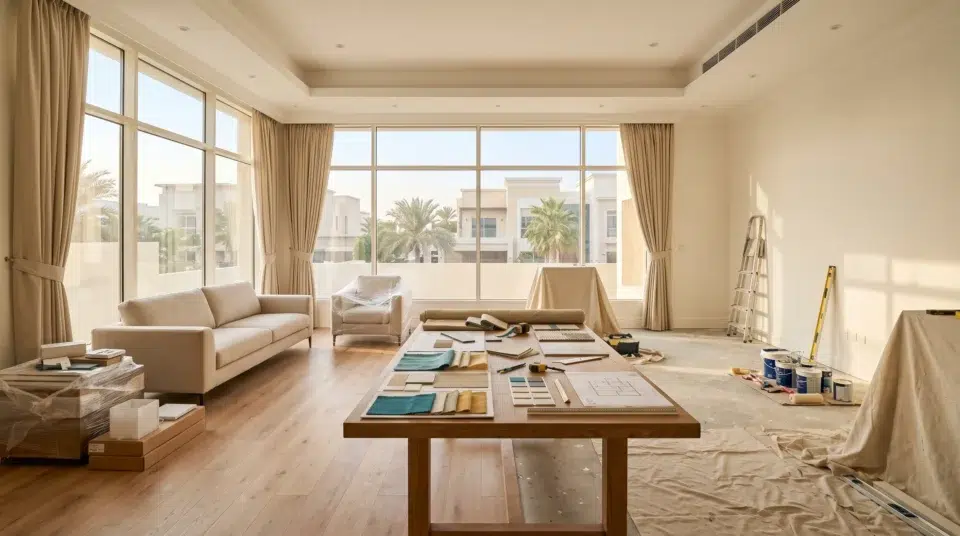
You bought the apartment in JVC two years ago, and the kitchen tiles are already lifting. The grout between the bathroom mosaic is greying faster than you expected, and the built-in wardrobes in the master bedroom creak every morning. You are not alone. Across Dubai, from Palm Jumeirah penthouses to affordable apartments in Jumeirah Village Circle, thousands of UAE homeowners and long-term renters face the same reality every year: living spaces wear faster here than anywhere else on Earth, and the cost of waiting is always higher than the cost of acting now.
Karnak Home has served more than 70,000 families across the UAE since 1988. In those 36 years, our teams have delivered furniture and fit-out solutions to every postcode in Dubai, Abu Dhabi, Sharjah, Ajman, Ras Al Khaimah, Fujairah and beyond. We have watched the renovation services market in Dubai change dramatically: regulations have tightened, material quality has improved, and the expectations of UAE residents, whether they are Emirati homeowners in Arabian Ranches, Indian expat families in Silicon Oasis, or Western professionals in DIFC, have risen sharply. That firsthand experience informs every word of this guide.
In the next 20 to 24 minutes, you will learn exactly how renovation services in Dubai work in 2026: what permits you actually need, what licensed contractors are legally required to provide, what the most common and expensive mistakes look like, how to read a renovation quote, what quality materials perform best in the UAE climate, how to match your renovation budget to your home type, and how Karnak Home’s furniture and fit-out packages make the entire process faster, smoother and significantly less stressful. This is the definitive resource on renovation services in Dubai, and it will save you real money.
Why Renovation Services in Dubai Are Different from Anywhere Else in 2026
Renovation planning advice written for homes in London, Toronto, or Sydney rarely applies cleanly to the UAE. The physical environment, the legal landscape, and the social fabric of UAE living create a set of genuinely unique renovation challenges. Understanding those differences before you start is the single most powerful way to protect your budget and your timeline.
1.1: Apartment Sizes and Open-Plan Expectations in Dubai
The average one-bedroom apartment in Dubai Marina or Downtown Dubai measures between 650 and 850 square feet. In Business Bay, studios regularly sit at 400 to 500 square feet. These are not small spaces by choice; they are small spaces by market design, intended for single professionals and young couples. Yet the UAE’s culture of hospitality means that the same 700-square-foot apartment in JLT must function as a reception space, a dining room, a home office, and a comfortable bedroom for visiting family. Renovation services in Dubai must therefore solve a spatial problem that is fundamentally different from what contractors face in European or American markets. Every renovation choice, from floor material to fitted storage to wall colour, must serve multiple functions simultaneously.
1.2: Villa Layouts and the Majlis Consideration
In Mirdif, Arabian Ranches, Al Furjan and Jumeirah, villas typically range from 2,000 to 5,000 square feet across two or three floors. The majlis, the formal reception room that is central to Emirati and Gulf Arab hospitality culture, is a non-negotiable feature of any serious villa renovation. A renovation plan that does not treat the majlis as a distinct, high-priority zone will not serve UAE villa owners well. Karnak Home’s majlis furniture collection is designed specifically for this context: low seating profiles, wide upholstered benches, robust frames that accommodate extended family gatherings, and fabric choices that resist the humidity and foot traffic of regular entertaining.
1.3: The Renter Reality and What It Means for Your Renovation
According to Dubai Land Department data, approximately 78 percent of Dubai residents are renters. For tenants, renovation is a different conversation entirely. Most tenancy contracts in the UAE prohibit structural modifications without written landlord approval, meaning the majority of renovation services Dubai tenants actually need are non-structural: repainting, replacing fixtures, installing curtains and blinds, fitting bespoke wardrobes and closets, and refreshing soft furnishings. Even with shorter timelines and landlord permissions to navigate, these interventions can transform a rental unit dramatically. Karnak Home’s fit-out and furniture teams understand the renter context completely.
1.4: UAE Climate and What It Does to Renovation Materials
Dubai averages 350 days of sunshine per year. Summer temperatures reach 45 degrees Celsius. Humidity on the coast, particularly in areas like Dubai Marina, Palm Jumeirah, Al Raha Beach in Abu Dhabi and Corniche apartments in Sharjah, regularly exceeds 80 percent from June through September. These are not cosmetic concerns for renovation planning. They are structural ones. Vinyl flooring that lacks a UV-stable wear layer will fade within 18 months. Timber that is not kiln-dried to UAE humidity standards will warp. Paint without anti-fungal additives will mildew in coastal bathrooms within one season. Any contractor offering renovation services in Dubai who does not lead with climate-appropriate material selection is not giving you a complete service.
1.5: Dubai Municipality Rules and What They Require in 2026
Renovation work in Dubai that involves structural changes, changes to load-bearing walls, kitchen and bathroom relocations, or electrical upgrades must be registered with Dubai Municipality and carried out by a licensed contractor. In 2026, the process has become more streamlined digitally through the Dubai REST and DM apps, but the legal requirement has not changed. Unlicensed renovation work can result in fines, forced restoration orders and complications with your property’s Title Deed. Always insist on seeing a contractor’s Dubai Municipality trade licence before signing any renovation agreement.
1.6: The Expat Move-In Window and Why Timing Matters
Expat families in the UAE relocate more frequently than almost any residential demographic in the world. Industry estimates suggest the average UAE expat moves home every two to three years. This creates a specific renovation pattern: the intense move-in period, typically the first four to six weeks in a new property, when everything must be done simultaneously. Flooring, painting, curtains, furniture delivery, appliance installation, and wardrobe fitting all land in the same narrow window. Renovation services Dubai providers who can coordinate all these elements in a single project, as Karnak Home does through its complete fit-out packages, give families something genuinely valuable: time.
The 8 Core Elements of a Complete Renovation in UAE Homes
A full home renovation in Dubai, Abu Dhabi, or Sharjah is not a single project. There are eight distinct workstreams that must be sequenced correctly, or the delays, costs, and frustrations compound quickly. Understanding each element and how they interact will give you complete control over your renovation.
Flooring: The Foundation of Every UAE Renovation
Flooring accounts for roughly 20 to 35 percent of most UAE home renovation budgets and has the largest visual impact of any single element. In 2026, the three dominant choices for residential renovation services in Dubai are:
Luxury Vinyl Tile (LVT): The fastest-growing category in UAE renovation, and for good reason. Premium LVT is waterproof, UV-resistant, dimensionally stable in high humidity, realistic in appearance, and significantly more affordable than natural stone. In a 1,200-square-foot Dubai apartment, LVT flooring, including installation, runs between AED 18 and AED 45 per square foot depending on thickness, wear layer rating, and brand. Karnak Home stocks a curated range of LVT flooring that has been tested specifically for UAE conditions.
Porcelain and Ceramic Tile: Still the dominant choice in UAE bathrooms and kitchens, and increasingly popular in living rooms where large-format tiles (900x900mm or 600x1200mm) create a dramatic, low-maintenance surface. Cost ranges from AED 15 per square foot for standard ceramic to AED 80 or more per square foot for imported Italian large-format porcelain, excluding installation.
Engineered Timber and Parquet: Beautiful, warm, and increasingly sophisticated, but requires careful selection for UAE conditions. Engineered hardwood with a thick real-wood veneer over HDF core performs well in air-conditioned interiors. Solid wood is not recommended for UAE coastal properties. Karnak Home carries parquet flooring options engineered specifically for the Gulf climate.
UAE-specific tip: Always allow 10 to 15 percent wastage on tile and flooring orders. UAE buildings, particularly older properties in Deira, Bur Dubai, and Ajman, often have irregular room dimensions that increase cutting waste beyond standard European estimates.
2.2: Kitchen Renovation: The Highest Cost Per Square Foot
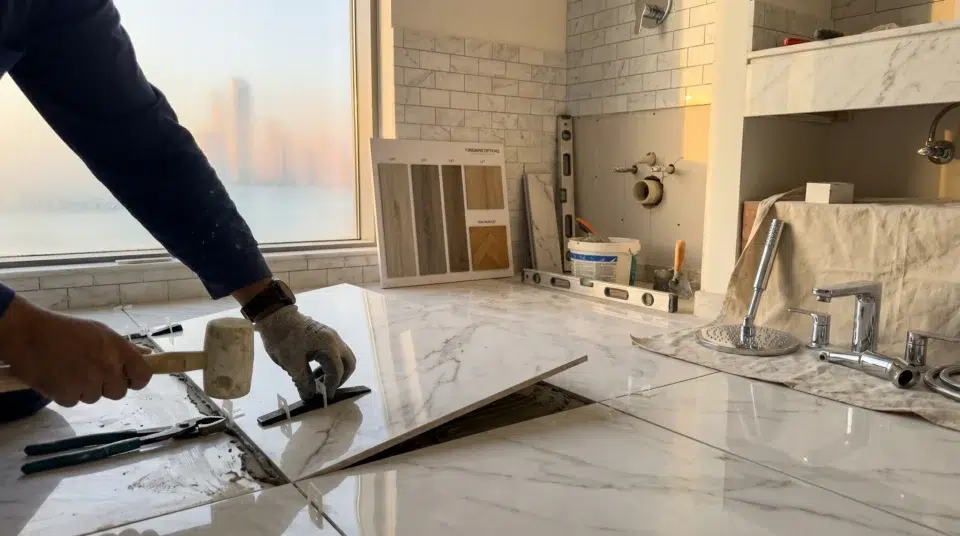
Kitchen renovation in UAE homes is consistently the most expensive element relative to space. A full kitchen remodel in a Dubai Marina apartment, including new cabinetry, worktops, splashback, appliances and plumbing modifications, typically ranges from AED 25,000 for a budget refresh to AED 120,000 or more for a premium European-style kitchen. The key variables are cabinetry (local manufacture versus imported), worktop material (laminate, engineered stone or natural marble), and whether any plumbing or electrical layout changes are required. Dubai Municipality approval is mandatory for any layout change that moves plumbing or electrical points.
2.3: Bathroom Renovation in Dubai Properties
A standard bathroom renovation in a Dubai apartment, covering retiling, new sanitaryware, vanity, mirror and accessories without moving plumbing, costs between AED 8,000 and AED 35,000 depending on materials and bathroom size. The most common mistake is selecting wall tiles that are too small for the room. In a 60-square-foot Dubai bathroom, 30x30cm tiles make the space feel cramped. Large format 60x120cm tiles on walls and floor make the same room feel twice as spacious.
2.4: Painting and Wall Finishes in the UAE Heat
Interior paint in UAE homes must cope with extreme temperature differentials, particularly in villas where outside walls are exposed to direct sun. Cheap emulsion applied without a proper primer coat will crack and peel within one summer. In coastal properties in Jumeirah, Umm Suqeim, and Palm Jumeirah, an anti-mould and anti-condensation primer is essential before any topcoat. Premium paint from established brands costs approximately AED 35 to AED 75 per square metre, including labour. Feature walls with decorative finishes such as microcement, venetian plaster, or textured wallpaper cost AED 90 to AED 200 per square metre.
2.5: Fitted Storage and Wardrobes
The UAE’s rental culture means that most tenants cannot rely on built-in wardrobes being adequate for their needs. Custom-fitted wardrobes, designed to work within specific room dimensions and accommodate the wardrobe requirements of families who often bring belongings from multiple countries, are one of the highest-value renovation investments a UAE resident can make. Karnak Home’s custom wardrobe and closet service provides design, manufacture, and installation in a single managed process.
2.6: Window Treatments and Light Control in Dubai
In a city where summer sun can be brutal and east-facing windows in Business Bay or Deira pour heat into a room before 9 AM, window treatments are not decorative. They are functional. Blackout roller blinds, UV-filtering sheer curtains and motorised blinds for larger window spans are all standard in quality UAE renovation projects. Karnak Home’s curtains and blinds service covers supply, custom tailoring, and professional installation across all Dubai, Sharjah, and Abu Dhabi locations.
2.7: Lighting Design for UAE Interiors
UAE homes almost universally use recessed downlighting as their primary source, which creates a flat, institutional quality of light unless supplemented with layered accent sources. The renovation standard in 2026 is three-layer lighting: ambient (downlights on dimmer), task (under-cabinet in kitchens, bedside in bedrooms) and accent (LED strip behind feature walls, picture lights in living spaces). Lighting renovation in a 1,000-square-foot apartment, including new fittings and smart dimmer switches runs between AED 4,000 and AED 15,000, depending on specification.
2.8: Furniture as the Final Renovation Layer
Even the most expertly executed renovation can feel incomplete without the right furniture. This is where many UAE families overspend at the end of a project because they have exhausted their planning energy. Karnak Home’s furniture packages are designed specifically for this moment: complete room solutions combining sofas, dining sets, bedroom furniture, storage, and accessories, available in cohesive styles and delivered with free assembly. With current Karnak deals, complete apartment furnishing packages represent outstanding value compared to buying individual pieces elsewhere.
2026 Renovation Trends That Actually Work in UAE Homes
The renovation trends gaining real traction in Dubai, Abu Dhabi, and across the Emirates in 2026 are not driven by global Pinterest boards. They are driven by the specific functional demands of UAE living and the genuine design evolution happening in this market.
3.1: Biophilic Design Adapted for the Desert
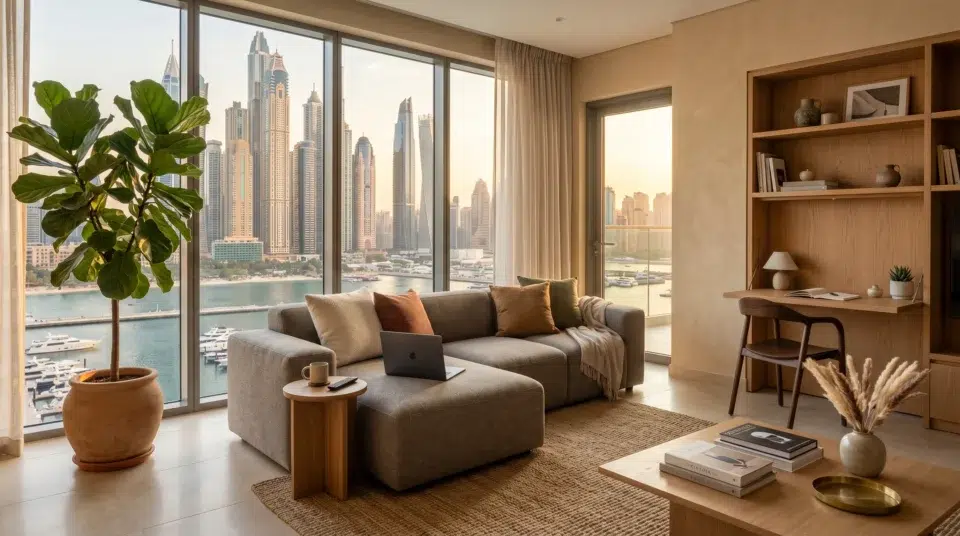
Bringing nature indoors is a global trend, but in the UAE, it has a specific interpretation. Rather than the northern European model of large windows and forest views, UAE biophilic design relies on indoor plants that survive air-conditioned spaces (pothos, snake plants, ZZ plants, fiddle-leaf figs), natural stone surfaces, warm timber accents, and carefully placed water features that add humidity to parched indoor air. In villas from Mirdif to the Springs, this approach creates a living quality that genuinely counteracts the harshness of the outdoor environment.
3.2: Flexible Multi-Use Living Spaces
The post-pandemic normalisation of home working has permanently changed how Dubai apartment dwellers think about space. A dedicated Zoom corner, a pull-out study desk that folds away when guests arrive, a sofa bed in the second bedroom that converts back to a workspace: these are not compromises. They are intelligent responses to the reality of 700-square-foot urban living in one of the world’s most expensive rental markets.
3.3: Warm Neutral Palettes Replacing Cold White
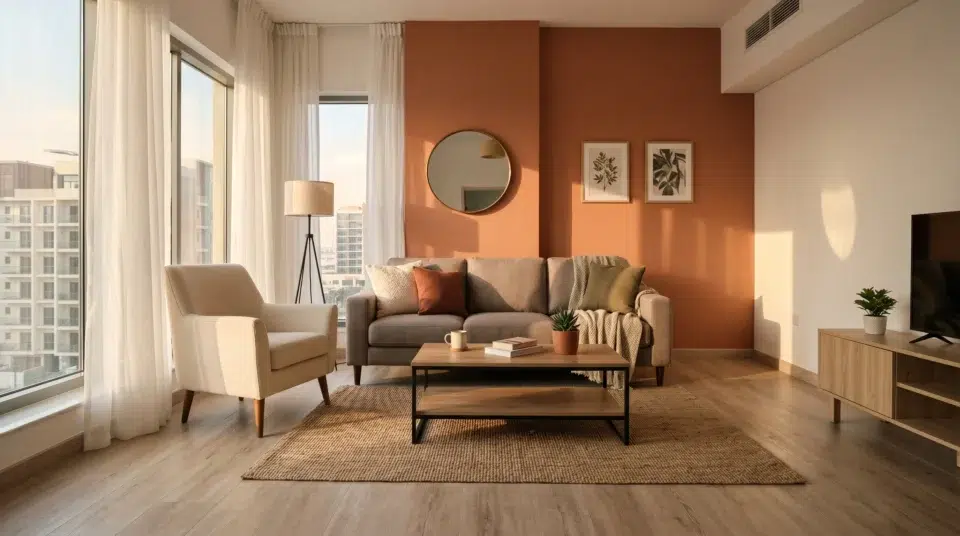
The all-white-and-grey aesthetic that dominated UAE interiors from 2015 to 2022 is giving way to warmer palettes: sand, terracotta, dusty rose, warm sage, and earthy caramel. These colours work particularly well in the UAE context because they are sympathetic to the natural landscape, they perform better visually in the intense directional light of Gulf interiors, and they create a warmth that the starkly modern architecture of Dubai’s newer buildings often lacks.
3.4: Bespoke Storage Solutions as Design Features
In compact Dubai apartments, storage is not a back-of-mind consideration. It is the central design challenge. In 2026, the renovation trend is to treat storage as architecture: floor-to-ceiling display units, bookcases that double as room dividers, buffets and sideboards that provide both storage and a display surface in dining rooms. When storage is designed in rather than added on, UAE apartments feel dramatically more spacious and livable.
H3 3.5: Majlis-Modern Fusion in Villa Renovations
The most exciting design development in UAE villa renovation right now is the deliberate blending of traditional Gulf design codes with contemporary materials and furniture profiles. Low-slung modern seating in rich jewel tones, mashrabiya-inspired laser-cut metal panels as room dividers, hand-knotted carpets against polished concrete floors: this is an aesthetic that resonates powerfully with Emirati homeowners in Jumeirah, Al Wasl and Arabian Ranches, and increasingly with the broader UAE resident community who appreciate the cultural depth of the Gulf tradition.
3.6: Smart Home Integration During Renovation
The most sensible moment to integrate smart home technology, from motorised blinds and smart lighting to networked air-conditioning control and video door systems, is during a renovation, not after. Adding smart systems to a finished room almost always involves surface-mounted cable trunking, which looks amateurish and reduces the value of the renovation. Planning for smart technology at the fit-out stage typically adds only 15 to 20 percent to the electrical budget but adds permanent, meaningful value to a UAE home.
3.7: UAE Outdoor and Balcony Renovation
Dubai Marina balconies, Abu Dhabi sea-facing terraces in Al Reem Island, and villa gardens in Umm Suqeim represent renovation opportunities that are often overlooked. Outdoor tiles rated for UAE temperature cycling, UV-stable outdoor furniture fabrics, shade sail systems, and vertical planting walls have transformed how UAE families use their outdoor spaces. A 150-square-foot Dubai Marina balcony renovation can deliver one of the highest satisfaction-per-dirham returns of any project in a home.
Materials and Fabrics Built for the UAE Climate in 2026
Selecting renovation materials for a UAE home without considering the specific climatic demands is one of the most expensive mistakes you can make. Here is what the climate actually requires from each major material category.
4.1: Flooring Materials: Performance in UAE Conditions
| Material | UAE Heat Performance | Humidity Resistance | UV Stability | Cost Range (AED/sqft installed) |
|---|---|---|---|---|
| Porcelain tile | Excellent | Excellent | Excellent | 25 to 65 |
| Premium LVT | Very good | Excellent | Good to excellent (UV-stable layer) | 20 to 50 |
| Engineered timber | Good (in AC) | Fair | Fair | 35 to 90 |
| Solid hardwood | Poor | Poor | Poor | Not recommended |
| Carpet tiles | Fair | Poor in coastal areas | Good | 15 to 35 |
| Natural stone (marble) | Excellent | Good (sealed) | Excellent | 50 to 150 |
Karnak Home carries carpet tiles that are suitable for the UAE climate conditions when used in air-conditioned spaces without coastal humidity exposure.
4.2: Upholstery Fabrics for UAE Households
UAE households present an unusually demanding set of upholstery requirements. Air-conditioning creates dry air that accelerates fabric degradation and causes leather to crack. Coastal humidity causes mildew in natural fabrics used in poorly ventilated rooms. Children, pets, and the culture of indoor sandal removal mean flooring and low furniture surfaces receive extraordinary daily wear. The fabrics that perform best in UAE homes are:
Performance microfibre and polyester blends: The top choice for UAE family homes with children or pets. Cleanable, fade-resistant, dimensionally stable, and now available in aesthetics that rival premium woven fabrics. Karnak Home’s accent chairs and sofa collections feature performance fabrics rated specifically for Gulf conditions.
Indoor-treated leather and faux leather: Full-grain leather requires consistent conditioning in UAE air-conditioned environments to prevent cracking. High-quality faux leather (PU or split-grain) has improved dramatically in recent years and is now a practical and attractive choice for UAE families who need the easy-clean surface leather provides without the maintenance burden.
Outdoor-grade fabric for balconies and service areas: Solution-dyed acrylic is the standard. It is UV-resistant, mildew-resistant, and maintains colour integrity through UAE summer temperatures.
4.3: Frame and Structural Materials for UAE Furniture
Solid hardwood frames (beech, rubberwood, Malaysian hardwood) outperform engineered wood frames significantly in UAE humidity cycling conditions. The expansion and contraction of low-grade particle board in a beach-facing Dubai apartment can compromise joints within three to four years. When investing in furniture as part of a renovation project, frame material matters as much as surface fabric.
4.4: Paint and Wall Finish Specifications
For UAE walls, the minimum specification for any quality renovation is: alkali-resistant primer on new plaster, minimum two coats of washable matte or eggshell emulsion with a sheen level that allows cleaning. For bathrooms and kitchens: specialist moisture-resistant paint or full tile coverage to ceiling height. For feature walls: only use materials explicitly rated for UAE temperature differentials. Microcement in particular must be installed by a trained applicator to prevent cracking in UAE thermal cycling.
Eight Mistakes UAE Renovation Buyers Make in 2026
These are the eight mistakes our teams see most often across 36 years of deliveries and fit-out projects across Dubai, Sharjah, Abu Dhabi, Ajman, Ras Al Khaimah, and beyond. Each one costs real money and causes real delays.
Mistake 1: Not checking the contractor’s licensing status before signing
Dubai Municipality requires all renovation contractors carrying out structural, electrical or plumbing work to hold a valid trade licence in the relevant category. Every year, UAE homeowners pay deposits to unlicensed operators who cannot obtain permits, leaving the project legally stranded. Fix: Before signing any contract, verify the contractor’s licence on the Dubai REST app or DM portal. For projects above AED 50,000, also request proof of professional indemnity insurance.
Mistake 2: Underestimating the UAE renovation timeline
A kitchen renovation that takes three weeks in a European city can take six to eight weeks in Dubai because of permit lead times, material delivery from international suppliers through Jebel Ali port, and the reduced working intensity during Ramadan and peak summer months. Fix: Add a 30 percent buffer to any contractor timeline estimate. Begin planning your renovation at least three months before your intended move-in date.
Mistake 3: Choosing materials without seeing the UAE performance references
Tiles, flooring, and paint that look stunning on a European specification sheet can fail within one UAE summer. Fix: Ask any contractor or supplier to show you a UAE installation that has been in place for at least two years using the same material. Karnak Home’s showroom in the Industrial Area, Sharjah, maintains a live sample wall specifically for this purpose.
Mistake 4: Ignoring Ejari and RERA renovation approval for renters
Tenants who carry out renovation work, even non-structural work like painting and tiling, without written landlord approval registered through Ejari risk losing their security deposit in full and facing dispute resolution complications at RERA. Fix: Get written landlord approval before any work begins, specifying the scope, timeline, and restoration agreement at lease end.
Mistake 5: Buying furniture before confirming final room dimensions
Dubai apartments are rarely built to the exact developer-advertised dimensions. A three-seater corner sofa that fits perfectly in a showroom may not pass through a narrow Dubai apartment building corridor or fit in a room where a structural pillar reduces the usable length. Fix: Always measure your actual room dimensions, including door swing radius, pillar positions, and ceiling height, before ordering any large furniture piece.
Mistake 6: Skipping the flooring substrate check
Many Dubai apartment buildings, particularly those from the pre-2010 construction boom in areas like Discovery Gardens, International City, and Deira, have existing flooring installed over a substrate that is cracked, uneven or contains previous adhesive residues. Tiling or LVT over a poor substrate will crack or delaminate regardless of material quality. Fix: Insist on a floor preparation stage in any flooring quotation. Budget AED 8 to AED 15 per square foot for proper substrate preparation.
Mistake 7: Over-renovating for a rental property’s market tier
Installing AED 80-per-square-foot Italian marble in a mid-tier JVC apartment will not increase rental yield proportionally. It will, however, significantly increase your renovation budget and your anxiety about wear and tear. Fix: Research the rental rate ceiling for your building and community before specifying materials. Match your renovation standard to your property’s market position.
Mistake 8: Treating the furniture budget as an afterthought
Many UAE families spend 90 percent of their renovation budget on hard finishes and arrive at move-in day with no budget left for furniture. The renovation then looks incomplete for months while they save for sofas and beds. Fix: Allocate a minimum of 25 to 30 percent of your total home project budget to furniture from the planning stage. Karnak Home’s bedroom furniture sets and living room packages include delivery and installation, making the furniture phase as smooth as the construction phase.
2026 Budget Guide for Renovation Services in Dubai (AED)
The following three-tier framework reflects real UAE market pricing for renovation services in Dubai as of early 2026. Figures include materials and labour but exclude Dubai Municipality permit fees, which typically add AED 2,000 to AED 8,000 for projects requiring formal approval.
| Renovation Element | Budget Tier (AED) | Mid-Tier (AED) | Premium Tier (AED) | Best For |
|---|---|---|---|---|
| Flooring (per sqft, installed) | 20 to 30 | 35 to 60 | 65 to 150 | Budget: JVC/DSO apartments; Mid: Springs/Marina; Premium: Palm/Downtown villas |
| Kitchen full remodel (1BR apt) | 20,000 to 35,000 | 40,000 to 75,000 | 80,000 to 150,000 | Budget: Tenant-grade; Mid: Owner refresh; Premium: Custom European kitchen |
| Bathroom renovation (per room) | 7,000 to 15,000 | 18,000 to 35,000 | 40,000 to 80,000 | Budget: Tile and fixture refresh; Mid: Full remodel; Premium: Designer fit-out |
| Painting (per sqft wall area) | 3 to 5 | 6 to 10 | 12 to 25 | Budget: 2-coat emulsion; Mid: Premium wash + feature wall; Premium: Plaster/microcement |
| Custom wardrobes (per unit) | 3,500 to 7,000 | 8,000 to 18,000 | 20,000 to 50,000 | Budget: Basic fit; Mid: Soft-close, mirror doors; Premium: Walk-in, Italian hardware |
| Curtains and blinds (per room) | 500 to 1,200 | 1,500 to 3,500 | 4,000 to 12,000 | Budget: Blackout roller; Mid: Linen sheers + roller; Premium: Motorised drapes |
| Full 1BR apartment (furniture) | 15,000 to 30,000 | 35,000 to 65,000 | 70,000 to 150,000 | Budget: Essential pieces; Mid: Styled living set; Premium: Designer complete package |
| Full villa renovation (3BR) | 120,000 to 250,000 | 280,000 to 500,000 | 550,000 to 1,200,000 | Budget: Cosmetic; Mid: Full remodel; Premium: Architectural + interior design |
Ten Expert Tips from 36 Years of UAE Renovation Deliveries
In our 36 years of serving families across this country, we have seen renovations go brilliantly, and we have seen them go badly. Here is what we have learned.
Tip 1: Start with your floor plan, not Pinterest
In our experience, the most successful UAE home renovations begin with a scaled floor plan drawn before a single purchase is made. A scaled plan reveals traffic flow problems, storage opportunities, and furniture positioning constraints that no amount of visual inspiration can compensate for. We give every Karnak Home client a free room planning consultation before any furniture or fit-out order.
Tip 2: The delivery corridor is always the forgotten measurement
In 36 years of delivering furniture across the UAE, the most common complication we encounter is a piece of furniture that cannot navigate the building’s lift, stairwell, or corridor. This is particularly common in older buildings in Deira, Al Nahda, Sharjah, and Bur Dubai. Always measure the lift car interior dimensions (height, width, depth) and corridor width before ordering any large sofa, bed frame, or wardrobe unit.
Tip 3: Renovate in phases if the budget is tight
A full simultaneous renovation is not always financially possible. In our experience, the optimal phasing for a UAE home is: first, flooring and painting (the hard finishes that transform the space); second, kitchen and bathroom (the high-use areas); third, furniture and window treatments (the layers that make a house a home). This sequence ensures each phase adds immediate liveable value.
Tip 4: Match your upholstered bed to your mattress selection, not vice versa
We see this mistake regularly: a beautiful bed frame ordered and delivered before the mattress has been selected, only for the mattress depth to interact awkwardly with the headboard height or the base platform height. Select your mattress type first, confirm its depth, then select your bed frame with that depth factored into the headboard and base proportions.
Tip 5: Climate-control your renovation timeline
Renovation work that involves painting, tiling adhesive or flooring adhesive should ideally be scheduled between October and April, when UAE temperatures and humidity levels are lower. High summer humidity, particularly in coastal properties in Dubai Marina, Jumeirah and Abu Dhabi’s Al Bateen, can extend adhesive curing times significantly and affect paint drying quality. If you must renovate in summer, ensure air conditioning is running continuously throughout the work period.
Tip 6: Get three quotes but evaluate them correctly
The cheapest quote is rarely the most economical. In our years of experience, the most useful comparison between renovation quotes is not the total figure but the line-by-line material specification. A quote at AED 45,000 using 8mm LVT with a 0.5mm wear layer is not comparable to a quote at AED 52,000 using 12mm LVT with a 0.7mm commercial wear layer. Ask every contractor to specify the material brand and grade on the quote.
Tip 7: Protect your renovation investment with the right furniture quality
We have seen families invest AED 80,000 in beautiful hard finishes and then furnish with the cheapest available sofas and beds, watching the furniture deteriorate within two years while the renovation remains pristine. The finishes and the furniture must be balanced in quality. A renovation that costs AED 60,000 deserves furniture that will last as long as the tiles. Our living room furniture range includes options at every quality and price point to match any renovation investment level.
Tip 8: Kids and pets require specific renovation decisions
For UAE families with young children or pets, certain renovation choices are non-negotiable. LVT flooring over natural stone in living areas (warmer, more forgiving for falls, easier to clean). Performance fabric upholstery over woven natural fibres. Rounded corners on coffee tables. Enclosed lower cabinets on TV media units to protect electronics. Kids’ furniture that is built to Gulf safety standards with anti-tip fittings and non-toxic finishes.
Tip 9: The dining table is never just for dining
In UAE apartments where space is limited, the dining table functions as a homework desk, project table, craft surface, and overflow workspace. Specify a dining table with a scratch-resistant and heat-resistant finish, not one chosen purely for aesthetics. A table that requires coasters and care instructions is a table that will create daily stress in a busy UAE household.
Tip 10: Plan for multigenerational visiting patterns
Gulf family culture, and increasingly the broader expat family culture in the UAE, involves regular extended family visits. Parents from India, Pakistan, the Philippines, Egypt, the UK, and elsewhere come to stay for weeks at a time. A renovation that does not plan for guest sleeping arrangements is a renovation that will cause its owner stress within the first year. Day beds and guest beds that serve as stylish seating by day and comfortable sleeping by night are one of Karnak Home’s highest-demand categories for exactly this reason.
Frequently Asked Questions
Whether you need formal Dubai Municipality approval depends entirely on the scope of work. Non-structural cosmetic work, such as repainting, replacing floor tiles over the existing substrate, installing new fixtures, and replacing cupboard doors, generally does not require a permit. However, any work that moves or modifies plumbing, electrical distribution boards, load-bearing elements, or changes the room layout requires a licensed contractor and a formal DM permit. For villa renovations in Jumeirah or Arabian Ranches, even significant landscaping changes may require HOA approval. When in doubt, consult a licensed contractor before beginning work. Browse Karnak Home’s home furniture range for the non-structural elements of your renovation.
A full renovation of a 900-square-foot one-bedroom apartment in Dubai, covering new flooring, full repaint, kitchen refresh, bathroom retile, and new fixture installation, professional curtains, and a basic furniture package, ranges from approximately AED 55,000 to AED 120,000 at mid-market quality. A budget-conscious renovation covering cosmetic changes only can be accomplished for AED 20,000 to AED 40,000. Premium renovations with imported materials and designer furniture can exceed AED 200,000 for the same apartment size. Karnak Home’s furniture packages start from AED 15,000 for a complete one-bedroom set, including delivery and installation.
A comprehensive three-bedroom villa renovation in Dubai, covering all rooms, including structural modifications and full furniture installation, takes between 10 and 20 weeks from permit approval to completion. Factors that extend the timeline include Dubai Municipality permit processing (typically 2 to 6 weeks), material procurement lead times (particularly for imported items through Jebel Ali), and subcontractor availability in peak seasons. Allow extra time for projects beginning between June and September when construction productivity is lower due to UAE heat restrictions on outdoor working hours. Plan your project with Karnak Home’s fit-out team for a clear timeline from day one.
Yes, but with strict conditions. UAE tenancy law and RERA regulations require tenants to obtain written landlord approval before undertaking any renovation work, regardless of whether it is structural or cosmetic. The approval should specify the scope of work, the contractors to be used, and any restoration obligations at lease end. Landlords are not legally obligated to approve renovation requests, and tenants who proceed without approval risk losing their security deposit and facing dispute proceedings. Some landlords in Dubai proactively offer a renovation allowance to long-term tenants as an incentive to sign extended leases. Explore Karnak Home’s office furniture range for home office renovation options that are easily reversible at lease end.
For UAE families with pets and children, luxury vinyl tile (LVT) is the clear first choice. Premium LVT with a 0.5mm or thicker wear layer is scratch-resistant, 100 percent waterproof, dimensionally stable in UAE humidity and temperature cycling, soft enough underfoot to reduce fall injury risk, and hygienic because it has no grout lines to harbour bacteria. Porcelain tile is a durable alternative, but harder underfoot. Avoid natural timber, carpet, and low-grade laminate in high-traffic family areas of UAE homes. Karnak Home’s flooring advisors can help you select the right specification for your specific home, family, and budget at our Sharjah showroom.
The fastest way to verify a contractor’s licensing status in Dubai is through the Dubai REST app (Dubai Real Estate Self Transaction), where you can search by trade licence number, or through the Dubai Municipality e-services portal at dm.gov.ae. A legitimate renovation contractor in Dubai will hold a valid trade licence in the fit-out or interior decoration category, be registered with Dubai Municipality as a fit-out contractor, and be able to provide this documentation before you sign any contract. Never pay a renovation deposit exceeding 10 percent of the total contract value to a contractor whose licensing status you have not verified. For furniture elements of your renovation, Karnak Home’s office furniture and home furniture collections are backed by a full warranty and 36 years of UAE trading history.
According to UAE property market analysis and our own 36 years of delivery experience across the Emirates, the renovation elements that add the most resale and rental value to a Dubai property are: kitchen remodelling (the highest value-add per dirham spent), bathroom upgrades, flooring replacement with premium materials, and the addition of fitted storage solutions. For rental yield specifically, air-conditioning system upgrades and window treatment improvements also rank highly because tenants prioritise energy efficiency and heat management in UAE properties. Karnak Home’s bedroom furniture and living room collections are also key to presenting a property at its best for sale or rental photography.
Yes. Karnak Home provides a complete range of furniture, fit-out, flooring, curtains, and custom wardrobe solutions that cover all phases of a UAE home renovation from first furniture delivery to final installation. Our furniture packages are available for one-bedroom apartments, two-bedroom and three-bedroom apartments, and villas, with free delivery and free installation across Dubai, Sharjah, Abu Dhabi, and all other UAE emirates. Our showroom in the Industrial Area, Sharjah, is open Saturday to Thursday from 9 AM to 9 PM. You can also browse our full range at karnakhome.com or WhatsApp our team at +971 58 908 8107 for a personalised package quotation.
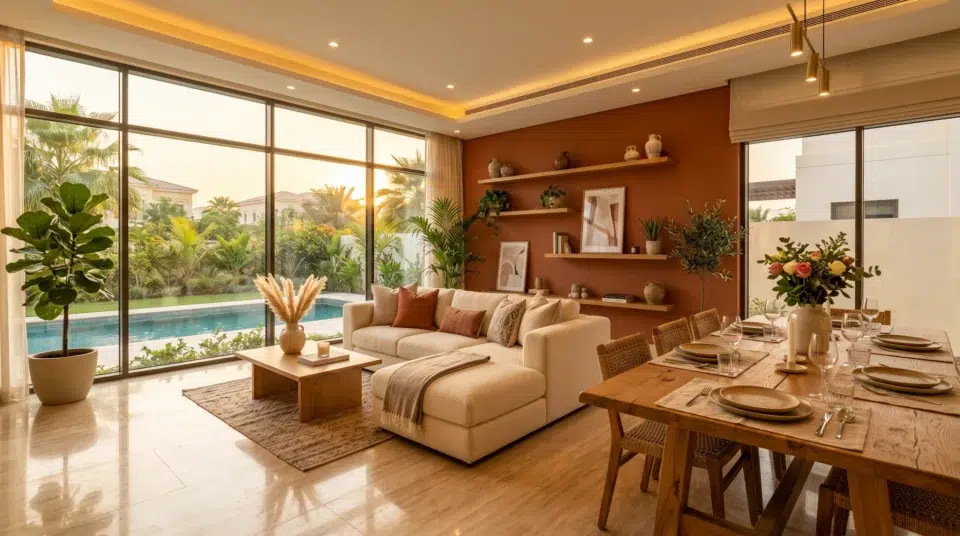
Three truths stand above everything else in this guide: first, renovation services in Dubai reward planning and penalise rushing; second, material selection in the UAE climate is not the same decision it would be anywhere else in the world; and third, the furniture you choose at the end of your renovation is as important to the final result as the tiles and paint you chose at the beginning.
The UAE is a demanding environment for homes and the families inside them. Whether you are a family from Amman who has been in Dubai for three years and just secured your first owned apartment in Business Bay, a couple from Karachi who have rented in Al Barsha for five years and want to finally make the space feel like yours, or an Emirati family in Arabian Ranches preparing the villa for the next generation, you are navigating the same fundamental challenges: limited space, intense climate, high rental mobility, demanding family and social expectations, and a market full of renovation contractors and furniture suppliers whose quality is extraordinarily variable. This guide exists to help you navigate all of that with clarity.
Karnak Home has been at the centre of UAE home life since 1988. Our showroom in the Industrial Area, Sharjah, is open Saturday to Thursday from 9 AM to 9 PM. Browse our complete range of home and office furniture online at karnakhome.com, WhatsApp our consultants at +971 58 908 8107 for measurements, fabric swatches, and quotations, or call us directly on +971 58 908 8107. Free delivery and free installation across all UAE emirates. Your home deserves to be exactly right.
Ready to Transform Your UAE Home?
Explore Renovation Furniture Online: Complete Home Furniture UAE — Karnak Home
Browse Our Flooring Range: LVT, Parquet, and Carpet Tiles for UAE Homes
Visit Our Showroom: Industrial Area, Sharjah, UAE (Saturday to Thursday, 9 AM to 9 PM)
WhatsApp Us: +971 58 908 8107 (Measurements, swatches, renovation consultations)
Call: +971 58 908 8107
Related Articles
- The Complete 2026 Renovation Guide for Dubai Families
- 2026 Renovation Trends: What Is Dominating UAE Homes
- How to Choose a Renovation Company in Dubai: 10 Must-Ask Questions
- 7 Renovation Mistakes Dubai Homeowners Make and How to Avoid Them
- Renovation vs. Refurbishing: What Actually Adds Value in Dubai
Expert Resources from Karnak Home
- Shop all living room furniture for your Dubai renovation
- Find the right mattress for your renovated UAE bedroom
- Explore custom wardrobes and closets for UAE apartments and villas
- Browse complete furniture packages for UAE home renovations
- Discover current Karnak deals for renovation budgets
- Explore office furniture for home office renovation projects
دليل الكارنك الشامل لخدمات التجديد في الإمارات 2026
إذا كنت تفكر في تجديد منزلك في دبي أو أبوظبي أو الشارقة، فأنت بحاجة إلى دليل موثوق يفهم احتياجات الأسرة الإماراتية والخليجية. في كارنك هوم، نقدم لكم أكثر من 36 عاماً من الخبرة في تأثيث وتجهيز المنازل العائلية في مختلف إمارات الدولة، ولدينا ما يزيد على 70,000 عائلة تثق في خدماتنا وتعود إلينا دائماً عند التفكير في التجديد أو التغيير.
إن خدمات التجديد في دبي 2026 تعني أكثر من مجرد تغيير الألوان أو تبديل الأرضيات. التجديد الحقيقي في المنزل الإماراتي يعني التوازن بين الذوق الخليجي الأصيل والعصرية، مع مراعاة متطلبات المناخ الحار وطبيعة الحياة العائلية. في الفلل الكبيرة بالمناطق الراقية كالجميرا وأرابيان رانشز والخليج التجاري، يتوقع أصحاب المنازل أعلى مستويات الجودة في التشطيبات والأثاث والإضاءة. أما في شقق مدينة دبي للإنترنت أو دبي مارينا أو الشارقة، فالتحدي هو استغلال المساحة بذكاء وإبراز هوية المنزل رغم المساحة المحدودة.
يسعدنا في كارنك هوم أن نقدم لكم أفضل كراسي مميزة الإمارات ومجالس وأريكات مصممة خصيصاً للأسرة الخليجية، مع احترام عادات الضيافة وقيم المجتمع. يعلم كل من يبحث عن كرسي إكسنت دبي 2026 أن الاختيار الصحيح يجمع بين الجودة العالية والتصميم الأنيق والسعر المناسب. نحن نوفر ذلك كله في مكان واحد.
للأسر التي تبحث عن خدمات تجديد المنازل دبي، نقدم حلولاً متكاملة تشمل الأرضيات والستائر والخزائن المدمجة والأثاث، مع خدمة التوصيل المجاني والتركيب المجاني في جميع أنحاء الإمارات. وبالنسبة لمن يحتاج إلى تجديد شقة الإمارات بميزانية محددة، لدينا باقات متنوعة تناسب كل الاحتياجات والمراحل الحياتية، سواء كنت عزاباً جديداً في دبي أو أسرة ممتدة تبحث عن فيلا واسعة في الشارقة.
تجديد فيلا دبي تكلفة هي السؤال الأكثر تكراراً لدينا، والجواب يعتمد دائماً على نوعية المواد والتشطيبات المختارة وحجم العمل المطلوب. لكن ما يظل ثابتاً هو أن الاستثمار في أثاث عالي الجودة من كارنك هوم يعني راحة بال لسنوات طويلة.
زوروا معرضنا في المنطقة الصناعية بالشارقة من السبت إلى الخميس، من الساعة التاسعة صباحاً حتى التاسعة مساءً. تواصلوا معنا عبر واتساب على الرقم +971 58 908 8107 للاستفسار والحجز وطلب العروض.
Ready to Start Your Renovation Project in Dubai or the UAE?
You’ve now seen exactly how renovation services work in 2026, from climate-proof flooring and custom wardrobes to curtains, painting, and the final furniture layer that brings it all together. Whether you need a full renovation or a smarter hybrid refurnishing approach, complete your home with premium solutions delivered and installed free with expert consultation across Dubai, Sharjah, Abu Dhabi, and beyond.
- → Furniture Packages – Complete home packages designed for post-renovation or hybrid projects in JVC, Dubai Marina, Business Bay & Arabian Ranches
- → Flooring Solutions – Premium LVT, parquet & carpet tiles engineered for UAE heat, humidity & heavy use
- → Wardrobes & Closets – Custom fitted wardrobes maximising storage in apartments and villas without structural changes
- → Curtains & Blinds – Blackout, UV-protective & motorised solutions for light control and privacy in Dubai homes
- → Sofas & Loveseats – Modular and corner sofas perfect for majlis and open-plan family living post-renovation
- → Bedroom Sets – Full bedroom collections including upholstered beds and storage for complete transformations
- → Dining Tables – Durable dining sets ideal for family entertaining and majlis spaces
- → TV Media Units – Modern units completing open-plan living-dining areas after flooring or painting
- → Coffee Tables – Centre tables that tie together newly renovated living rooms seamlessly
- → Living Room Furniture – Full collections designed to finish any renovation project with style and comfort
✅ Free Delivery • ✅ Free Installation • ✅ Free Consultation across the UAE
💬 WhatsApp Us Now – Mention “Renovation Services Guide” for priority help