
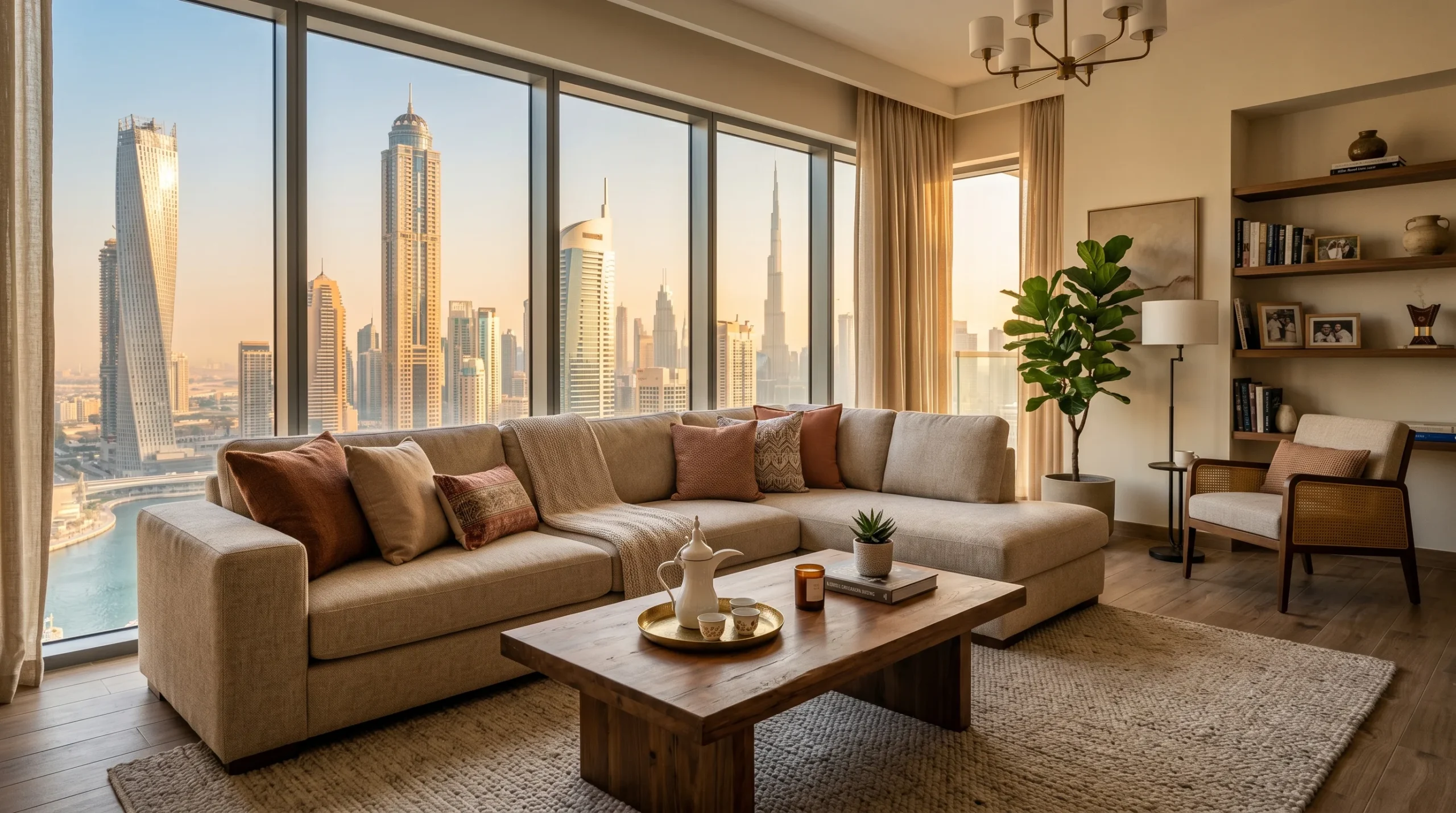
Here’s a question we hear at Karnak Home almost every week: “Why is my sofa fabric starting to feel damp?” or “My wooden dining table only arrived six months ago; why is it already warping?” If you’ve asked something similar, you’re not alone. Since 1988, we’ve helped more than 70,000 UAE families furnish their homes, and this single topic; how Dubai’s climate quietly destroys furniture; comes up more than almost any other. The good news is that with the right knowledge, the right materials, and a few simple habits, your furniture can look and feel great for decades.
For guidance on optimal indoor humidity levels to protect home environments and reduce moisture-related issues, refer to the U.S. EPA’s recommendations on indoor air quality.
Dubai and the wider UAE present a unique challenge that most furniture guides, written for European or American homes, simply don’t address. In summer, outdoor humidity regularly climbs above 90%. In winter it drops significantly. And your air conditioning runs almost every single day of the year. That constant cycle of moisture and dryness, combined with cold AC air blowing directly onto furniture surfaces, creates a set of conditions that will break down low-quality materials fast, and stress even good furniture if it’s not cared for properly.
For comprehensive historical climate observations and data access relevant to understanding regional humidity and temperature patterns, see NOAA’s Climate Data Online.
This guide covers everything you need to know.
How Dubai’s Climate Actually Damages Furniture
Most people assume humidity is the only threat. In reality, it’s the swing between humidity and dryness driven by your AC; that does the most damage. Understanding this helps you make smarter decisions when buying and maintaining furniture.
The Humidity-AC Cycle: The Real Enemy
When your AC is running, it actively removes moisture from the air inside your home. In a typical Dubai apartment or villa during summer, the indoor humidity when AC is running might be 40–50%. Switch off the AC overnight, during Ramadan rest hours, or during a brief power interruption and humidity can climb back toward 70–80% within hours as moisture enters from outside.
This constant expanding and contracting is what kills wooden furniture. Wood is a living material even after it’s been cut and treated. It absorbs moisture and swells, then releases it and contracts. Do that cycle enough times and you get warping, cracking, joint loosening, and eventually structural failure. Cheaper furniture made from MDF (medium-density fibreboard) is especially vulnerable it can swell irreversibly after just a few moisture events.
Solid hardwoods teak, oak, walnut, acacia handle this cycle far better because they’re denser and more dimensionally stable. That’s one reason furniture made from quality solid wood costs more but genuinely lasts longer in the UAE. When you’re comparing a solid teak dining table at AED 3,500 against an MDF version at AED 800, you’re not just paying for looks , you’re paying for climate resilience.
What Cold AC Air Does to Upholstery and Leather
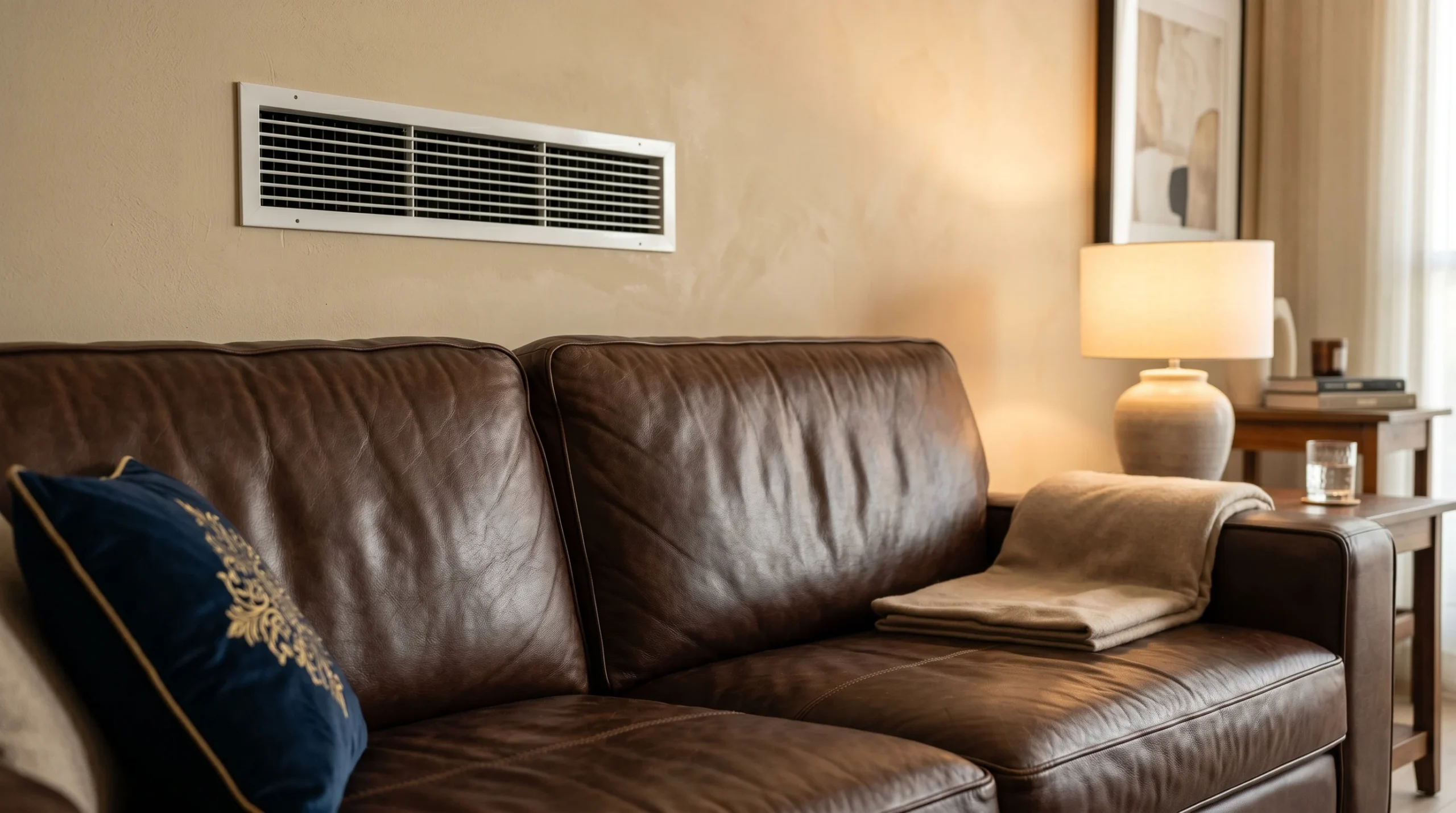
Leather is the material most visibly damaged by AC. When cold, dry air blows directly onto a leather sofa day after day, it strips the natural oils from the leather surface. You’ll start to see this as slight stiffness, then minor cracking along armrests and seat edges, the areas that get the most direct airflow. Within a year or two of neglect, those cracks deepen and the leather surface starts to peel.
Fabric sofas face a different problem. In rooms with poor ventilation or inconsistent AC use, common in kids’ rooms or guest bedrooms that aren’t used daily, fabric can trap enough ambient moisture to develop mildew. You might not see it immediately, but you’ll smell it. A musty odour from a fabric sofa is almost always early-stage mildew growth in the foam or the fabric backing.
How Humidity Affects Different Materials at a Glance
Different furniture materials react differently to Dubai’s climate, and knowing this helps you buy smarter:
Solid Wood (teak, oak, walnut): Handles humidity cycles well. Will expand and contract slightly but rarely fails structurally. Needs occasional oiling or polishing. Excellent long-term choice for UAE homes.
MDF and Particleboard: The most vulnerable. Absorbs moisture aggressively and swells permanently. Common in budget wardrobes and flat-pack furniture. Fine for dry, consistently air-conditioned rooms but risky in kitchens, bathrooms, or poorly ventilated spaces.
Plywood: Significantly more stable than MDF. A good middle-ground material used in quality wardrobe carcasses and bed bases.
Genuine Leather: Vulnerable to dryness from AC. Requires conditioning every 3–4 months in UAE conditions. Lasts 10–15 years with care, 3–5 without.
Bonded/PU Leather: Looks like leather but is a layered material that peels rather than ages gracefully. In Dubai’s conditions, expect visible peeling within 2–3 years in most cases.
Natural Fabric (cotton, linen): Breathable and comfortable but can trap moisture. Best in well-ventilated rooms with consistent AC.
Performance Fabrics (polyester blends, solution-dyed): Designed to resist moisture and mildew. Increasingly popular in UAE homes, particularly for families with young children.
Villa vs. Apartment: Why Location Matters
The furniture challenges in a Dubai villa are genuinely different from those in an apartment. Villas typically have larger spaces, higher ceilings, and often higher natural humidity infiltration especially on ground floors. Rooms that back onto gardens or courtyards, or that have less-used AC zones, are higher risk.
Apartments in modern buildings with centralised air conditioning tend to maintain more consistent humidity levels, which is actually better for furniture. However, older apartment buildings particularly in areas like Deira, Bur Dubai, and parts of Sharjah can have less effective sealing, meaning humidity management falls more to individual AC units.
If you live in a villa in areas like Jumeirah, Al Barsha, Mirdif, or Arabian Ranches, pay particular attention to ground-floor rooms, garage-adjacent spaces, and any room where the AC isn’t running regularly. These are your highest-risk zones.
Practical Steps to Protect Your Furniture
Knowing the problem is one thing. Here’s what actually works advice based on three and a half decades of seeing what happens to furniture in UAE homes.
Position Furniture Away From Direct AC Airflow
This single habit makes more difference than almost anything else. AC vents blow cold, dry air at velocity and that dryness accelerates leather cracking, fabric stiffening, and even wood surface drying. Ideally, maintain at least 50–60cm between any AC outlet and your furniture. If your room layout makes this difficult, consider redirecting the vent louvres to blow upward or at an angle rather than directly at the sofa or bed.
For split AC units the most common type in Dubai apartments and villas the airflow direction is adjustable on most modern units. Take five minutes to redirect airflow away from your main furniture pieces. It costs nothing and adds years to your upholstery.
Maintain Consistent Indoor Humidity (40–60%)
The ideal indoor humidity range for both human comfort and furniture longevity is 40–60%. Below 40%, wood and leather dry out. Above 60%, mold and swelling become risks. Most modern AC systems in UAE homes keep humidity somewhere in this range when running, but the problem occurs when they’re off.
A simple digital hygrometer (available at most hardware stores in Dubai for AED 30–80) lets you monitor the humidity in each room. If you notice humidity regularly spiking above 60% in certain areas often bedrooms with attached bathrooms, or rooms facing north a small portable dehumidifier (AED 250–600) can make a significant difference. For severe cases, particularly in older villas, whole-home dehumidification is worth considering.
Clean and Condition Regularly : But Correctly
One of the most common mistakes we see is overcleaning. Families with young children especially tend to wipe down leather sofas with harsh cleaning products repeatedly. This strips protective coatings and accelerates wear faster than humidity alone.
For leather sofas: wipe down with a soft, slightly damp cloth for surface dust. Every 3–4 months, apply a quality leather conditioner — products like Leather Master or similar (AED 60–120) replenish the oils that AC air removes. Avoid baby wipes and alcohol-based cleaners — both are damaging over time despite being convenient.
For fabric sofas: vacuum regularly using an upholstery attachment. For any spills, blot immediately — never rub. If you notice a musty smell developing, a fabric deodorizer or professional upholstery cleaning (AED 150–300 for a three-seater) is far better than waiting until mold becomes visible.
For wooden surfaces: dust regularly with a dry microfibre cloth. Polish with a suitable wood polish every few months. Avoid placing wooden furniture in direct sunlight — UV from Dubai’s sun fades finishes and dries out wood surfaces faster than almost anything else.
Use Rugs, Curtains, and Plants Strategically
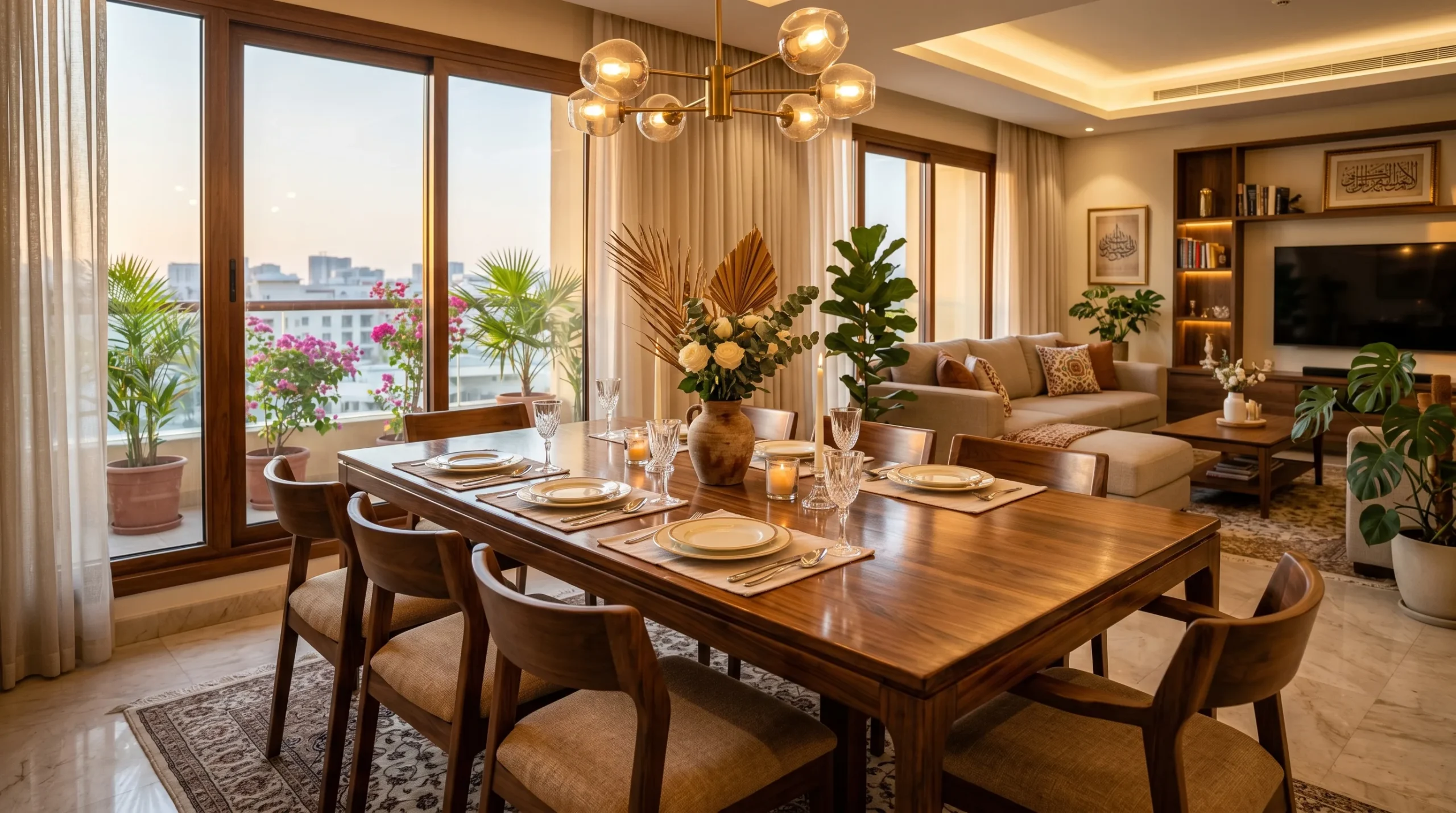
This sounds minor but matters more in UAE homes than elsewhere. Heavy curtains on west and east-facing windows reduce solar heat gain, which in turn reduces how hard your AC works — and therefore reduces the dryness AC creates. Blackout or thermal curtains (common in Dubai for obvious reasons) pull double duty: they block UV damage to furniture and moderate the indoor climate.
Indoor plants can add back a small amount of humidity to AC-dried rooms, though they won’t compensate for significant dryness. More importantly, placing a plant (not too close) near wooden furniture adds a gentle visual reminder to maintain that area and can moderate micro-climate near the piece.
Area rugs on hard floors reduce dust and particulate that settles onto furniture. In dusty UAE conditions — particularly during summer shamal winds or construction-heavy areas — airborne dust is a real contributor to fabric wear.
Storage and Seasonal Considerations
If you’re heading out of the UAE for an extended summer break — something many expat families and UAE nationals do — take a few minutes before you leave to protect your furniture:
Close all curtains and blinds to block UV and solar heat. Set your AC to a “vacation mode” or maintain it at around 26–28°C rather than switching it off entirely — the cost over 6–8 weeks is modest compared to the damage from humidity cycling. Cover leather sofas with breathable cotton sheets. Apply a light layer of leather conditioner before leaving. For wooden pieces, ensure they’re not sitting in direct sunlight through any gap in curtains.
Coming back to furniture that’s warped, cracked, or moldy after a summer trip is one of the most avoidable furniture problems we hear about. A little preparation before you leave saves a lot of expense when you return.
Choosing the Right Furniture for UAE Conditions
If you’re buying new furniture and want it to last in Dubai’s climate, here’s what to look for — and what to be cautious about.
Sofas: What to Look For
For UAE homes, the best long-term sofa choices are performance fabrics or high-quality genuine leather — not bonded leather, not PU leather, and not cheap polyester blends. Performance fabrics are engineered to resist moisture, staining, and fading. They’re particularly good for families with young children and for living rooms that see heavy daily use.
If you love the look of leather (and many families in the UAE do), invest in genuine full-grain or top-grain leather and commit to regular conditioning. A well-maintained genuine leather sofa from our sofa collection will outlast a PU leather sofa by 10 years or more in UAE conditions.
Frame construction matters too. Look for hardwood frames (beech, rubberwood) rather than softwood or engineered wood frames. Hardwood frames resist humidity movement better and don’t flex as joints absorb moisture.
Beds and Wardrobes: The Hidden Humidity Risks
Bedrooms are often the highest-humidity rooms in a UAE home due to proximity to bathrooms and the body heat and moisture generated during sleep. This makes beds and wardrobes more vulnerable than many families realise.
For bed frames and headboards, solid wood or quality plywood construction is significantly better than MDF in bedrooms. If you’re choosing a storage bed with drawer mechanisms underneath, ensure the runners are metal rather than plastic or MDF-on-MDF, as these bind in humid conditions.
For wardrobes, the critical area is the carcass — the structural shell. Quality wardrobes use plywood or moisture-resistant MDF for the carcass, with solid wood or quality veneer for visible surfaces. Look for this when comparing wardrobe options. A wardrobe that uses standard MDF throughout will begin to show swelling at the base and around drawer openings within a few years in UAE conditions. Our bedroom furniture range is built with UAE climate considerations in mind.
Dining Furniture: Where Humidity Hits Hardest
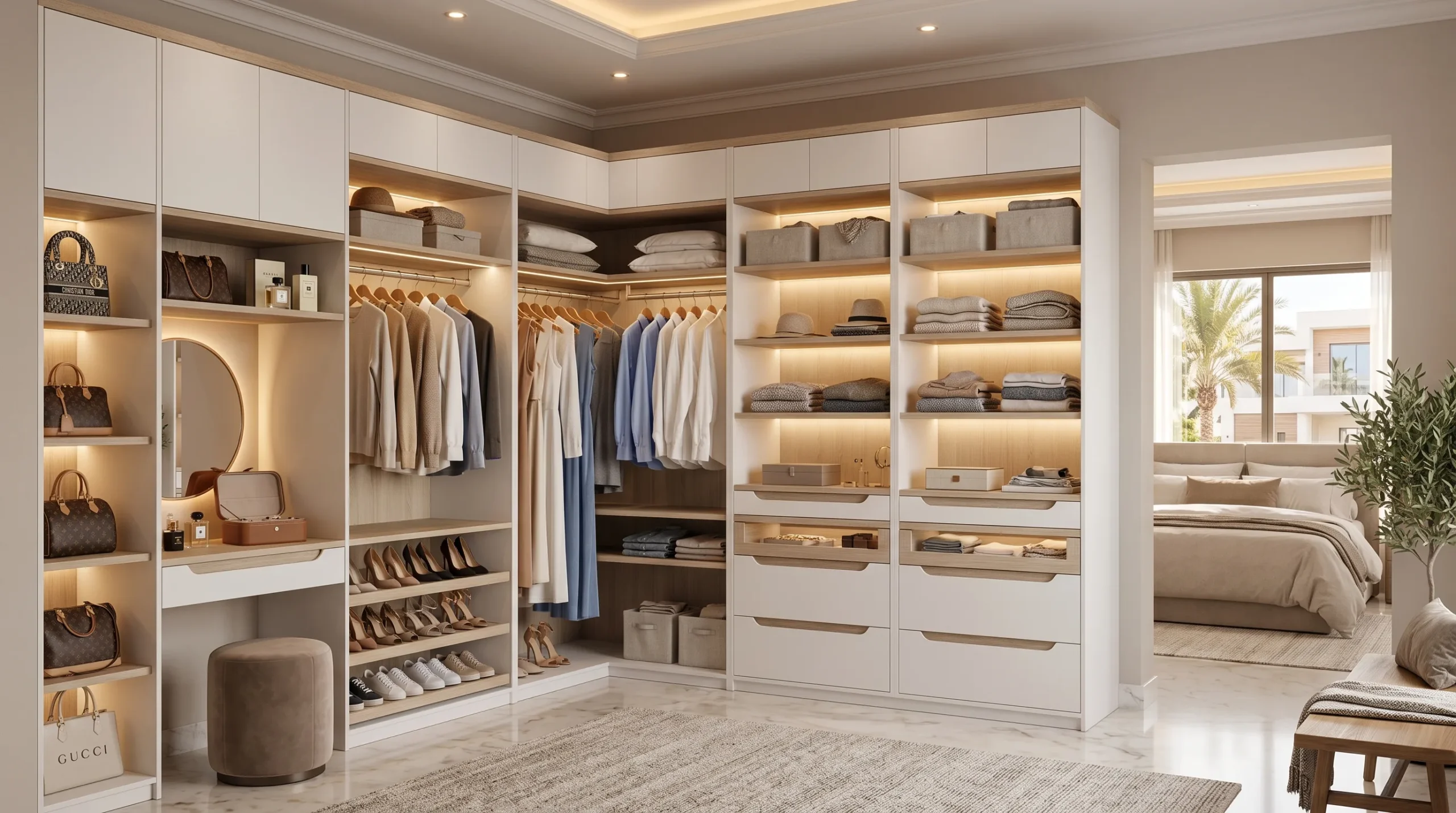
The dining area sits close to the kitchen — which is one of the highest-humidity zones in any home. Steam from cooking, dishwasher venting, and frequent temperature changes make dining furniture particularly vulnerable.
Solid wood dining tables are the best long-term choice. Teak is exceptionally resistant to moisture and is a traditional choice in hot, humid climates for good reason. Oak and acacia are also strong performers. For dining chairs, solid wood or upholstered chairs with performance fabric seats outperform MDF-framed or PU leather options significantly.
Avoid glass-topped dining tables positioned in direct airflow from kitchen extraction — the temperature differential can cause moisture condensation on the glass surface that then runs down onto wooden legs or bases.
You can explore our dining furniture range if you’re looking for options specifically suited to the UAE climate — our team can advise on the best materials for your specific space.
Kids’ Furniture: Safety First, Durability Second
Kids’ rooms in UAE homes tend to be slightly less consistently air-conditioned — especially during school hours when children aren’t home — meaning they can experience more humidity variation than master bedrooms or living rooms. For kids’ furniture, prioritise:
Solid wood or quality plywood construction over MDF. Non-toxic, water-resistant finishes. Metal hardware on beds, desks, and wardrobes (metal handles and hinges don’t absorb moisture the way plastic ones can). Performance or easy-clean upholstery on any chairs or sofas. Rounded edges and stable, wide-base construction for safety.
Common Mistakes UAE Families Make — And How to Avoid Them
Mistake 1: Buying Furniture Based on Price Alone
We understand budget pressure — furniture is a significant investment for any family. But the most expensive mistake we see isn’t buying premium furniture. It’s buying cheap furniture twice. A wardrobe at AED 600 that swells and fails in two years costs more than a AED 1,800 wardrobe that lasts fifteen. When evaluating furniture, ask specifically: what is the carcass material? What is the frame material? What is the upholstery base layer? These questions tell you far more about longevity than the surface finish does.
Mistake 2: Ignoring the Smell
A musty smell from fabric furniture is not normal and it doesn’t go away on its own. It’s early-stage mold or mildew growth, usually in the foam padding or fabric backing. Families often mask it with air freshener and hope it resolves — it doesn’t. Address it immediately with a professional upholstery clean, then investigate why moisture is reaching that piece. Is it in a poorly ventilated room? Near a bathroom? Positioned against an exterior wall?
Mistake 3: Using the Wrong Cleaning Products
Baby wipes are the most common furniture-damaging product in UAE family homes. They’re convenient and parents use them on everything — but they contain alcohol and chemicals that strip leather treatments and break down fabric protectors over time. For all furniture surfaces: use products designed for that material. Moreover, for genuine leather, stick to damp cloth for daily cleaning and leather-specific conditioner every few months. Additionally, for fabric, dry clean or use upholstery-specific foam cleaners.
Mistake 4: Placing Furniture Against Exterior Walls Without Protection
Exterior walls in Dubai buildings, particularly older ones and those facing west, can develop minor moisture seepage during high humidity periods, even if there’s no visible damp. Placing a wooden wardrobe or bookcase flush against such a wall traps any moisture between the furniture and wall, accelerating damage to the back panel and base. Leave 2–3cm of space between furniture and exterior walls to allow air circulation.
Mistake 5: Skipping the Warranty and Aftercare Conversation
When purchasing furniture, always ask specifically: what does the warranty cover? Does it cover humidity-related damage? What’s excluded? Quality furniture from established retailers like Karnak Home comes with clear warranty terms and real after-sale support. Buying from pop-up shops, temporary exhibitions, or unverified online sellers often means no meaningful warranty.
What Does Climate-Resilient Furniture Actually Cost in the UAE?
Honest pricing helps families plan better. Here are realistic ranges for quality furniture built to last in UAE conditions:
Sofas: AED 2,500–8,000 for a quality 3-seater in genuine leather or performance fabric. Budget options at AED 800–1,500 typically use PU leather or basic polyester fabric that degrades faster in UAE conditions.
Dining tables (solid wood): AED 1,800–6,000 depending on size, wood type, and finish. Teak and oak command premiums but earn them in longevity.
Wardrobes (2-door, quality construction): AED 1,500–4,500. Avoid anything below AED 800 if you want plywood or moisture-resistant carcasses.
Beds (solid wood frame, queen): AED 1,200–4,000. Platform beds with solid wood slat systems are among the most humidity-resilient options.
Kids’ furniture sets (bed, wardrobe, desk): AED 2,500–6,000 for quality sets. Worth investing here because kids are hard on furniture and UAE climate adds extra stress.
These ranges reflect the UAE market and include pieces that, with proper care, will last 10–20 years in Dubai’s climate. They’re not the cheapest options available, but they represent genuine long-term value.
Expert Tips From 35 Years of Furnishing UAE Homes
These are the things our team tells every family who walks into our showroom, not to sell them something, but because they’re genuinely useful:
1. Condition leather twice a year minimum. In Dubai, once per season is better. Set a reminder on your phone. A AED 80 bottle of leather conditioner used twice a year protects a AED 5,000 sofa investment.
2. Never place wooden furniture in direct sunlight. Dubai sun will bleach and dry out any wood finish faster than humidity will damage it. Curtains and blinds during peak sun hours are essential.
3. Check under your sofa every six months. Turn it upside down and look at the base fabric and frame. Early signs of mold, moisture, or frame stress are much cheaper to address than late-stage damage.
4. Give furniture time to acclimatise. When new furniture is delivered to your home, allow 24–48 hours before placing heavy loads on it. Wood especially adjusts its moisture content to the new environment during this period.
5. Don’t ignore minor warping. A slightly warped drawer or door is telling you something. Investigate the moisture source, don’t just force the drawer open and forget it.
6. Invest in furniture pads and risers in prone areas. Furniture feet in contact with tiled floors in humid rooms can wick moisture. Felt pads or small rubber risers create a barrier and also protect your floor.
7. Ask about materials before you buy, not after. Any reputable furniture retailer should be able to tell you exactly what the frame, carcass, and upholstery materials are. If the salesperson doesn’t know, that’s a red flag.
8. Plan for maintenance costs. Budget roughly 1–2% of your furniture’s value per year for maintenance, cleaning, and conditioning. This is far less than replacement costs.
Frequently Asked Questions (FAQ)
Furniture damage in the UAE is caused by the humidity-AC cycle. The AC dries the wood out, while high outdoor humidity makes it swell. This constant movement leads to warping and cracks. To prevent this, choose solid hardwoods (teak, oak, or walnut) and avoid low-quality MDF, which swells irreversibly in humid conditions.
Leather peels in the UAE because cold, dry AC airflow strips away its natural oils. To protect it, position your sofa away from direct vents and apply a leather conditioner every 3–4 months. Avoid using baby wipes or harsh chemicals, as these destroy the leather’s protective coating.
Performance fabrics and genuine top-grain leather are the best choices for the UAE. Performance fabrics resist the moisture and mildew common in humid villas, while genuine leather handles the AC-dryness better than “bonded” or PU leather, which typically peels within 2–3 years in Dubai.
Never switch your AC off entirely when leaving the UAE for summer. Set it to vacation mode (26–28°C) to regulate humidity. Close all curtains to block UV damage and cover leather pieces with breathable cotton sheets to prevent drying and cracking while you are away.
Musty odors are caused by mildew trapped in fabric fibers due to high humidity (above 60%). Ensure your home stays between 40–60% humidity, use a dehumidifier in damp rooms, and leave a 3cm gap between furniture and exterior walls to allow for essential air circulation.
حماية الأثاث من الرطوبة والتكييف في دبي: دليل العائلات في الإمارات
تعد المنازل في دولة الإمارات العربية المتحدة بيئة فريدة من نوعها؛ حيث تجتمع الرطوبة الخارجية العالية مع هواء التكييف الجاف والبارد في الداخل. في “كرنك هوم” (Karnak Home)، ومنذ عام 1988، ساعدنا أكثر من 70 ألف عائلة في تأثيث منازلهم، ودركنا تماماً أن التحدي الأكبر ليس في اختيار التصميم الجميل فحسب، بل في الحفاظ عليه ضد تقلبات المناخ.
إن العدو الحقيقي للأثاث في دبي ليس الرطوبة وحدها، بل دورة التمدد والتقلص المستمرة. عندما يعمل التكييف، فإنه يسحب الرطوبة من الجو، مما يؤدي إلى جفاف الخشب والجلد. وبمجرد إيقافه، تعود الرطوبة لتمتصها القطع مرة أخرى. هذا التذبذب يؤدي إلى تشقق الأثاث الخشبي الصلب وارتخاء المفاصل، بينما يتسبب في تقشير الجلود وتلف الأقمشة الرديئة.
لحماية استثماركم، ننصح دائماً باتباع خطوات عملية بسيطة. أولاً، يجب تجنب وضع الأثاث مباشرة تحت مخارج هواء التكييف، حيث يسرع الهواء البارد من جفاف الألياف وتلف أطقم الكنب المودرن. ثانياً، يعد الحفاظ على رطوبة داخلية ثابتة (بين 40% إلى 60%) أمراً حيوياً؛ ويمكن استخدام أجهزة قياس الرطوبة البسيطة لمراقبة ذلك. بالنسبة للجلود الطبيعية، فإن الترطيب الدوري كل 3-4 أشهر هو السر وراء بقائها مرنة لسنوات طويلة، بينما يفضل اختيار أثاث غرف النوم المصنوع من الخشب عالي الجودة أو البلايوود لمقاومة الرطوبة في الغرف القريبة من الحمامات.
عند التسوق، ابحثوا دائماً عن الخامات المصممة لتحمل بيئة الخليج. إن الاستثمار في طاولات طعام من خشب الزان أو البلوط، واختيار أقمشة “الأداء” (Performance Fabrics) المقاومة للعفن، يضمن لكم طول العمر الافتراضي لقطعكم. تذكروا أن جودة التصنيع الداخلي هي ما يحمي أثاثكم من التآكل الصامت الذي تسببه الرطوبة، مما يوفر عليكم تكاليف الاستبدال مستقبلاً.
هل تبحثون عن أثاث يجمع بين الفخامة والقدرة على تحمل مناخ الإمارات؟ تفضلوا بزيارة معرضنا اليوم لاكتشاف تشكيلاتنا المختارة بعناية، أو تواصلوا معنا مباشرة عبر واتساب للحصول على استشارة مجانية من خبراء التأثيث لدينا.
تواصل معنا عبر واتساب | تفضل بزيارة معرضنا
Conclusion: Protecting Your Furniture in Dubai Is About Smart Choices
Dubai’s climate doesn’t have to be your furniture’s enemy. With the right materials, consistent care habits, and a little awareness of how humidity and air conditioning interact with different surfaces, your furniture can look and feel excellent for many years, regardless of whether you’re in a Jumeirah villa, a JLT apartment, a family home in Sharjah, or a villa in Abu Dhabi.
The families who come back to Karnak Home after ten or fifteen years, not because their furniture failed, but because they’re ready to update — are the ones who bought quality, maintained it properly, and treated their furniture as the long-term investment it is.
Key Takeaways:
- The humidity-AC cycle, not just humidity alone; is the primary threat to furniture in UAE homes. Managing indoor humidity consistency is more important than managing peak humidity levels.
- Material choice at purchase time is the single biggest factor in long-term durability. Solid wood, quality plywood, genuine leather, and performance fabrics all significantly outperform budget alternatives in UAE conditions.
- Simple care habits, conditioning leather, keeping furniture from direct AC airflow, cleaning with appropriate products, add years of life to any quality piece.
Ready to Find Furniture That Lasts in the UAE?
At Karnak Home, every piece we carry has been selected with the UAE climate in mind. Our team; many of whom have been advising Dubai families for over a decade, can help you choose the right materials for your specific home, whether you’re furnishing a compact apartment in Downtown Dubai or a seven-bedroom villa in Emirates Hills. Visit our showroom to see and feel the difference in construction quality, or browse our full range online and have it delivered directly to your door anywhere in the UAE.
Shop Online: karnakhome.com
Visit Our Showroom: Dubai, UAE