
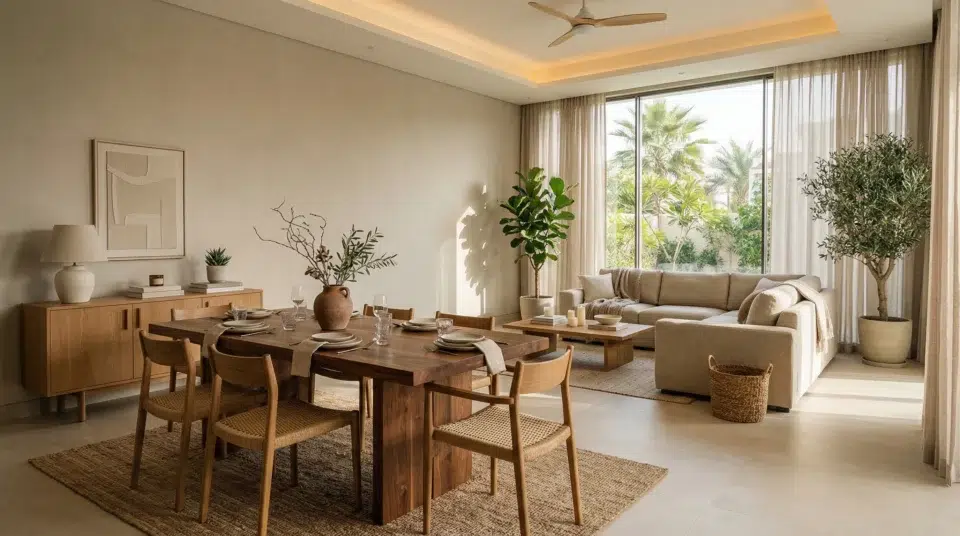
Here’s a question we hear almost every week at our showroom: “Should I spend more on solid wood, or is engineered wood just as good?” It’s one of the most important questions any furniture buyer can ask — and honestly, the answer isn’t as simple as most people think.
At Karnak Home, we’ve been helping UAE families furnish their homes since 1988. Over 35 years and more than 70,000 families later, we’ve seen every furniture mistake in the book — and we’ve helped just as many families avoid them. The solid wood vs. engineered wood debate comes up constantly, whether a family is setting up a new villa in Arabian Ranches, upgrading an apartment in JLT, or furnishing a growing home in Sharjah.
This guide isn’t a sales pitch. It’s what we’d tell our own family. We’ll walk you through exactly what each material is, how each performs in the UAE’s specific climate, what you should realistically expect to pay, and — most importantly — which one makes sense for your home and your budget.
The UAE presents furniture with a genuinely unique set of challenges. Temperatures can swing from 15°C in January to well above 45°C in summer. Indoor air conditioning runs almost continuously for six to eight months of the year. Coastal areas like Dubai Marina, Abu Dhabi Corniche, and Ajman see real humidity. Inland areas like Al Ain face dry heat but intense UV exposure through windows. These conditions affect wood furniture in ways that buyers from Europe or Asia simply don’t anticipate — and understanding this is the foundation of making a smart purchase.
What Exactly Are You Buying? Understanding the Two Materials
Before comparing them, it’s worth being clear about what each material actually is — because marketing language in the furniture industry can be genuinely misleading.
What Is Solid Wood Furniture?
Solid wood furniture is made entirely, or primarily, from natural timber. When you run your hand along a solid wood dining table, you’re touching the same material all the way through — whether it’s teak, acacia, mango wood, oak, or rubberwood. Each piece has a unique grain pattern, small natural variations, and the kind of depth that simply can’t be replicated.
In the UAE market, the most common solid wood species you’ll encounter are teak (highly moisture-resistant and long-lasting), acacia (beautiful grain, very durable), rubberwood (eco-friendly, affordable entry point), mango wood (warm tones, sustainable), and oak (imported, premium price point). Teak and acacia tend to perform especially well in the Gulf climate due to their natural oils and density.
Solid wood furniture is heavier than most people expect. A solid teak dining table for six can weigh 80–120 kg. A solid wood wardrobe can exceed 150 kg. This matters for apartment buildings with weight-sensitive flooring, and it matters for delivery access in older buildings without large lifts.
What Is Engineered Wood Furniture?
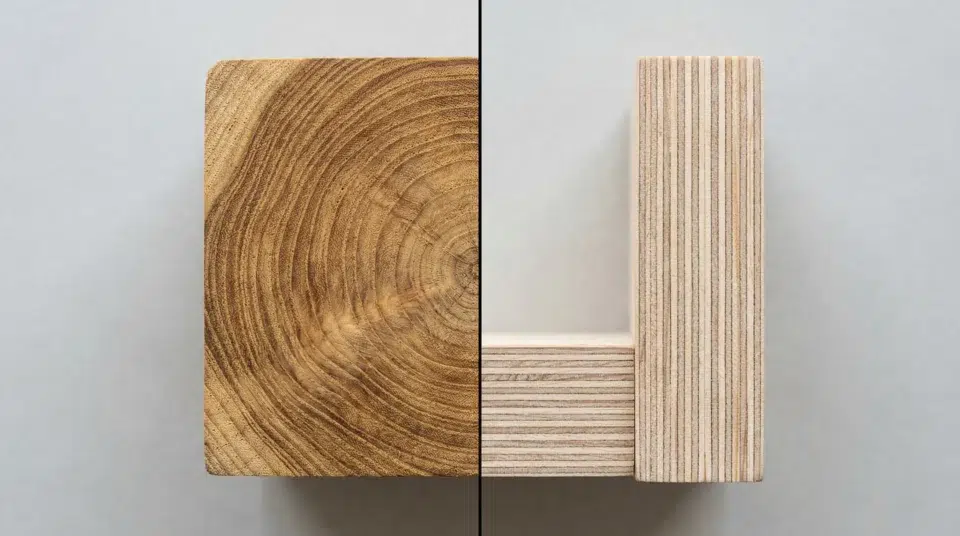
Engineered wood is a broad category covering several manufactured materials: MDF (Medium Density Fibreboard), HDF (High Density Fibreboard), plywood, particleboard, and blockboard. Each is made by bonding wood fibres, particles, or sheets together with adhesives under heat and pressure. The result is a consistent, uniform material that can be cut with precision, wrapped in veneer or laminate, and produced at lower cost than solid timber.
It’s important not to dismiss engineered wood as simply “cheap wood.” High-quality plywood, for instance, is genuinely strong, dimensionally stable, and used in premium furniture worldwide. The difference in quality between low-grade particleboard and high-grade MDF or E0-rated plywood is significant. What you’re buying within the engineered wood category matters enormously.
A Quick Note on Veneered Furniture
Many families are confused by veneered furniture. A veneer piece uses a thin slice of real wood (often 0.6mm–3mm thick) bonded to an engineered wood core. It looks like solid wood on the surface and is often finished beautifully — but it is not solid wood. Veneered furniture can be excellent quality at a fair price, but it must be maintained carefully because sanding and refinishing options are very limited compared to solid wood.
How UAE Climate Affects Each Material
This is where the conversation gets genuinely important for anyone buying furniture in the Gulf.
The Problem with Humidity Swings
Natural wood is hygroscopic — it absorbs and releases moisture from the surrounding air. In a stable climate, this isn’t a major issue. In the UAE, where you move from 35°C outdoor heat into an air-conditioned interior kept at 20–23°C, wood experiences repeated expansion and contraction cycles. Over years, this can cause solid wood to crack, warp, or develop small gaps at joints if the furniture wasn’t properly kiln-dried and treated before manufacture.
High-quality solid wood furniture from reputable manufacturers addresses this through kiln-drying (reducing moisture content to 6–10% before production), proper joinery techniques, and protective finishing. Lower-quality solid wood pieces — and there is a lot of poorly kiln-dried timber in the market — will show movement within months in UAE conditions.
Engineered wood, particularly MDF and plywood, is dimensionally more stable than solid wood in fluctuating humidity. The manufacturing process creates a product that doesn’t move as dramatically with moisture changes. This is a genuine advantage in UAE homes. However, engineered wood has its own vulnerability: if water penetrates the surface — a leak, a spill left too long, a badly sealed edge — the material can swell, bubble, and delaminate. Once this happens, it cannot be repaired.
Coastal vs. Inland UAE Considerations
Families in Dubai Marina, Palm Jumeirah, Jumeirah Beach Residence, Abu Dhabi islands, and Ajman coastal areas face higher ambient humidity year-round. For these homes, marine-grade plywood or teak-based solid wood outperforms budget engineered alternatives. The salt air is harder on surfaces than most people realise.
Inland areas — Dubai’s suburban communities, Sharjah, Al Ain, Ras Al Khaimah inland — are drier but face intense summer heat. Air conditioning creates significant indoor dryness in these environments, which can actually stress solid wood by drying it out. Maintaining a stable indoor humidity between 40–60% using a humidifier in particularly dry rooms genuinely extends wood furniture life.
Air Conditioning: The Hidden Furniture Stressor
The most underappreciated furniture stressor in UAE homes is air conditioning vents. A sofa or cabinet placed directly under or beside an A/C vent experiences concentrated cold, dry air that cycles on and off throughout the day. For solid wood, this is one of the worst positions possible — it creates localised drying that can lead to surface cracking over time. For engineered wood, veneer or laminate surfaces near vents can begin to lift at edges after a few years. Our advice: position major furniture pieces at least 60–90cm away from direct A/C airflow wherever your room layout allows.
Durability and Lifespan: What to Realistically Expect
Solid Wood Lifespan in UAE Homes
A well-made solid wood piece — properly kiln-dried, correctly jointed, well-finished — bought from a quality manufacturer can last 20 to 40+ years in UAE conditions. We have customers who bought solid teak dining sets from us in the late 1990s who still have them today, refinished once, still going strong. That lifespan is the core of the value argument for solid wood.
The refinishing option is unique to solid wood. If a solid wood dining table gets scratched after ten years of family use, a professional can sand it back and refinish it. The table looks new again. No other material offers this. For a family with young children who want furniture that will still be with them when those children are in secondary school, this matters.
Engineered Wood Lifespan in UAE Homes
Quality MDF and plywood furniture, well-maintained, typically performs well for 8–15 years in UAE conditions. Budget particleboard furniture — the kind seen in very low price-point flat-pack products — may begin showing wear, swelling, or hinge failures within 3–5 years under regular family use.
The lifespan of engineered wood furniture depends heavily on surface treatment, edge sealing, and hardware quality. A well-made engineered wood wardrobe with proper edge banding, quality hinges rated for 100,000+ cycles, and a durable melamine or lacquer finish will outlast a poorly made solid wood wardrobe. Material is only part of the story — manufacturing quality matters enormously.
Comparing Costs: What Are You Actually Paying in the UAE Market?
Solid Wood Price Ranges (AED)
Solid wood furniture commands a premium that is real and substantial. Here’s what you can realistically expect to pay for quality pieces in the UAE market:
A solid wood dining table (6-seater, teak or acacia) typically ranges from AED 2,800 to AED 8,000+ depending on species, finish, and brand. A solid wood queen-size bed frame runs AED 2,200 to AED 6,500. A solid wood wardrobe (3-door, 200cm) can range from AED 3,500 to AED 12,000 for premium teak. A solid wood sofa frame with quality upholstery starts around AED 3,500.
These are investment purchases. The per-year cost, amortised over 20–30 years of use, often works out very competitively against replacing cheaper furniture twice or three times.
Engineered Wood Price Ranges (AED)
Quality engineered wood furniture offers considerably more accessible price points. A well-made MDF or plywood dining table runs AED 800 to AED 2,500. An engineered wood bed frame with proper supporting structure: AED 600 to AED 2,200. A quality engineered wood wardrobe (3-door, 200cm): AED 900 to AED 3,500. These prices reflect genuine quality products — not ultra-budget flat-pack alternatives.
For families furnishing a full apartment in areas like Dubai Silicon Oasis, International City, or Sharjah’s residential areas, engineered wood allows a complete, attractive home setup within a realistic total budget.
The Value Question: Cost Per Year of Use
This is how we encourage families to think about furniture spending. A solid wood dining table at AED 5,500 that lasts 25 years costs AED 220 per year. An engineered wood dining table at AED 1,800 that lasts 12 years costs AED 150 per year — still good value, but with two purchases required over that 25-year period. When you factor in the second purchase, delivery, disposal, and the hassle of choosing again, the gap narrows considerably.
The calculus shifts depending on how long you plan to stay in your current home. Expats on 2–3 year assignments might reasonably prioritise the engineered wood option. UAE residents in their long-term family home should seriously consider solid wood for key pieces.
Room-by-Room Guidance: Which Material Where?
Living Room
The sofa frame is hidden inside upholstery, so the material matters functionally, not visually. A solid wood sofa frame is genuinely more durable — it holds screws better over years of use and doesn’t flex. For coffee tables and TV units, both materials work well if quality-made. A solid wood coffee table makes a beautiful centrepiece; an engineered wood TV unit with good laminate finish looks clean and modern and handles UAE climate fine.
Bedroom
Beds take significant stress — movement, weight, and years of use. A solid wood bed frame is a worthwhile investment, particularly for master bedrooms. The frame will last decades. For children’s bedrooms, quality engineered wood is entirely practical and appropriate — children outgrow furniture and have different needs as they age. Wardrobes are one area where engineered wood genuinely competes well: modern wardrobe interiors use engineered wood by design because the dimensional stability and ability to create precise shelving and drawer systems is actually better suited to the application.
Dining Room
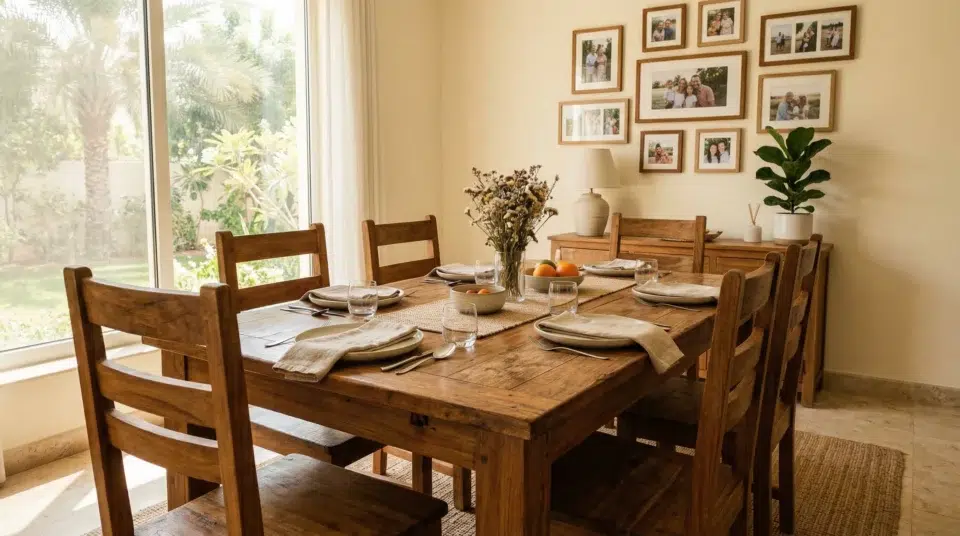
If there’s one room to invest in solid wood, it’s the dining room. A solid wood dining table is the centrepiece of family life — birthday dinners, homework sessions, daily meals. It takes heat from plates, moisture from spills, the weight of elbows and energy of children. Solid wood handles all of this and, with basic care, looks better with age rather than worse.
Home Office
For home offices, engineered wood in well-designed desks and storage units is entirely appropriate. The precision manufacturing of engineered wood is actually an advantage for modular office furniture. [Explore our home office furniture collection →]
Common Mistakes UAE Furniture Buyers Make
Mistake 1: Assuming All “Solid Wood” Claims Are Equal
The phrase “solid wood” is used loosely in the UAE market. Some products described as solid wood are actually solid wood frames with MDF panels, or wood composite cores. Always ask specifically: what species of wood is used, what is the moisture content at manufacture, and what is the core material of panels and tabletops? At Karnak Home, we specify exactly what species and grade goes into every piece we sell — and we encourage any buyer anywhere to ask those questions.
Mistake 2: Buying Budget Particleboard for High-Use Areas
The lowest price-point engineered wood — thin particleboard with paper laminate — is simply not appropriate for UAE family use in key rooms. It swells with any moisture exposure, screws pull out under repeated stress, and edges chip. It’s fine for a guest room shelf. It’s not appropriate for a family dining table or a heavily used wardrobe. The difference in price between budget particleboard and quality MDF or plywood furniture is often only a few hundred dirhams — and the difference in lifespan is years.
Mistake 3: Placing Furniture Without Considering A/C Airflow
We mentioned this earlier, but it deserves its own entry. Many warranty claims we see involving surface cracking, veneer lifting, or edge separation are linked to furniture placed directly in A/C airflow. Check your room layout before positioning key pieces, and ensure vents aren’t blowing directly onto furniture surfaces.
Mistake 4: Ignoring Edge Sealing in Engineered Wood
In engineered wood furniture, the edge — where the panel is cut — is the most vulnerable point. Quality furniture uses PVC edge banding or solid wood lipping to seal these edges completely. Budget furniture often leaves edges partially sealed or uses paper tape that peels over time. In humid UAE conditions, an unsealed edge on an MDF piece is where moisture enters and swelling begins. When evaluating any engineered wood piece, run your fingers along the edges. They should feel smooth, continuous, and firmly bonded.
Mistake 5: Refinishing Veneer the Same Way as Solid Wood
We occasionally hear from customers who’ve tried to sand and refinish a veneered piece thinking it was solid wood. The veneer layer is typically less than 1mm thick — sanding through it destroys the piece. Before any maintenance or refinishing attempt, confirm what material you have. If you’re unsure about pieces already in your home, our team can help you identify them.
Expert Tips from 35 Years of UAE Furniture Experience
Tip 1: Invest heavily in beds and dining tables; be budget-smart on storage and TV units. These are the two items that see the most physical and emotional use in a home. They’re also the two most visible pieces in daily life. Quality here pays off noticeably.
Tip 2: In coastal UAE locations, specify teak or acacia wood for any solid wood purchase. The natural oils in these species provide inherent moisture and salt-air resistance that oak or pine cannot match without additional treatment.
Tip 3: Ask about kiln-drying certification when buying solid wood. Kiln-dried to 6–8% moisture content is the standard for stable performance in the UAE climate. Furniture that hasn’t been properly dried will show movement in your home, not the manufacturer’s showroom.
Tip 4: Match material to your current life stage. Young families with small children: quality engineered wood for children’s rooms, solid wood for key living and dining pieces. Empty nesters or established families: solid wood investment pieces are ideal for long-term enjoyment.
Tip 5: Maintain solid wood with oil or wax treatment annually. In the UAE’s dry interior climate, a light application of food-safe teak oil or beeswax polish once a year keeps solid wood hydrated and prevents surface drying and fine cracking. It takes 20 minutes and adds years to a piece’s life.
Tip 6: Use coasters, mats, and tablecloths actively. Both solid and engineered wood surfaces are damaged by heat and water rings over time. A AED 30 set of cork coasters prevents a AED 4,000 dining table from developing rings and stains that can’t be reversed in engineered wood.
Tip 7: For families who move frequently within UAE, consider engineered wood’s weight advantage. A quality engineered wood wardrobe weighing 60–80 kg is significantly easier to move between villas and apartments than a 150 kg solid wood alternative. Practical consideration if you anticipate moving every few years.
Conclusion: Making Your Decision
After 35 years and more than 70,000 UAE families helped, here’s what we genuinely believe:
There’s no single right answer — but there is a right answer for your situation.
If you’re a UAE resident planning to stay in your current home for many years, investing in solid wood for your key pieces — the dining table, the master bed frame, perhaps a statement coffee table — will reward you for decades. These pieces become part of your home’s character. They handle the UAE climate with dignity when they’re made properly. And they can be passed down rather than disposed of.
If you’re setting up a home on a defined budget, furnishing children’s rooms, kitting out a home office, or approaching this as a practical rather than sentimental exercise, quality engineered wood is not a compromise — it’s a sensible, well-engineered choice. The key word is quality: buy the best engineered wood your budget allows, not the cheapest.
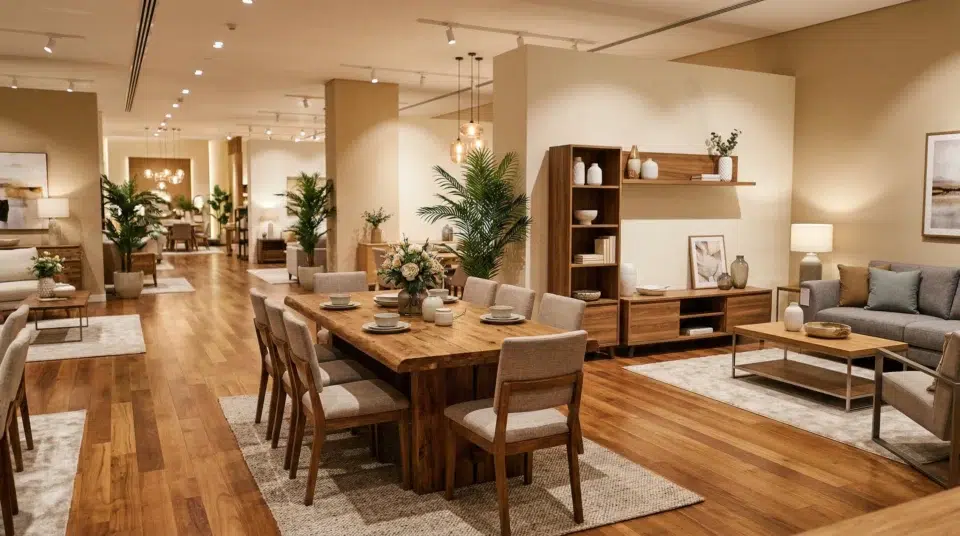
For most UAE families, the answer is actually both: solid wood for the anchor pieces that define your home, quality engineered wood for the supporting cast. This is exactly how our most satisfied customers approach it.
Key Takeaways:
- Solid wood offers superior longevity (20–40 years), refinishability, and character — best for dining tables, bed frames, and anchor pieces in long-term UAE homes.
- Engineered wood offers dimensional stability, lighter weight, lower cost, and is entirely appropriate for storage, children’s rooms, and home offices when quality-made.
- UAE climate — particularly humidity swings and A/C airflow — affects both materials; proper manufacturing quality and placement mitigate the risks for either choice.
Ready to Find the Right Furniture for Your Home?
Whether you’re drawn to the warmth and longevity of solid wood or the practicality of quality engineered furniture, Karnak Home has helped UAE families make this decision well since 1988. Our showroom lets you feel, touch, and compare both options side by side — something no product listing can replicate. Our team doesn’t work on commission; they work on helping you get it right. Browse our full furniture collections online at karnakhome.com, or visit us in person and let us show you exactly what 35 years of furniture expertise looks like.
Shop Online: karnakhome.com Visit Showroom: [Karnak Home Showroom, Dubai — View Location →] Expert Advice: [Contact Our Furniture Experts →]
Related Articles:
- How to Care for Wood Furniture in the UAE’s Climate
- Villa vs. Apartment Furniture: Sizing and Style Guide for Dubai Homes
- The Best Bed Frames for UAE Families: Materials, Sizes & What to Look For
- How to Furnish a Dubai Home on a Budget Without Compromising Quality
Ready to Choose the Right Wood Furniture for Your UAE Home?
You’ve now understood the real differences between solid wood and engineered wood in Dubai’s humid climate, from longevity and cost-per-year value to ideal use in villas, apartments, bedrooms, and dining areas. Explore our quality collections featuring both solid frames and stable engineered options, all with free delivery and free installation across the UAE for lasting results in your family home.
- → Home Furniture – Full range of solid wood and engineered wood pieces built for the UAE climate and family lifestyles in villas and apartments
- → Bedroom Sets – Complete bedroom packages with solid wood frames or stable engineered options for master suites and kids’ rooms
- → Wardrobes – Durable wardrobes in solid teak/acacia or precision-engineered designs perfect for storage in Dubai homes
- → Bedroom – Quality bed frames and nightstands in both solid and engineered wood suited to long-term or growing family needs
- → Dining Tables – Solid wood dining tables as family centrepieces or practical engineered options for everyday UAE use
- → Chest of Drawers – Functional storage chests in quality wood materials for bedrooms and living areas
- → Living Room – Living room furniture, including solid wood sofa frames and engineered TV units/coffee tables
- → Sofas – Sofas with robust solid wood frames designed for durability in humid coastal or inland UAE homes
- → Office Desks – Engineered wood desks and workstations offering stability and value for home offices
- → Furniture Packages – Complete room packages combining solid and engineered pieces for efficient, budget-smart furnishing
💬 Get Free Consultation on WhatsApp Shop All Home Furniture Now →