
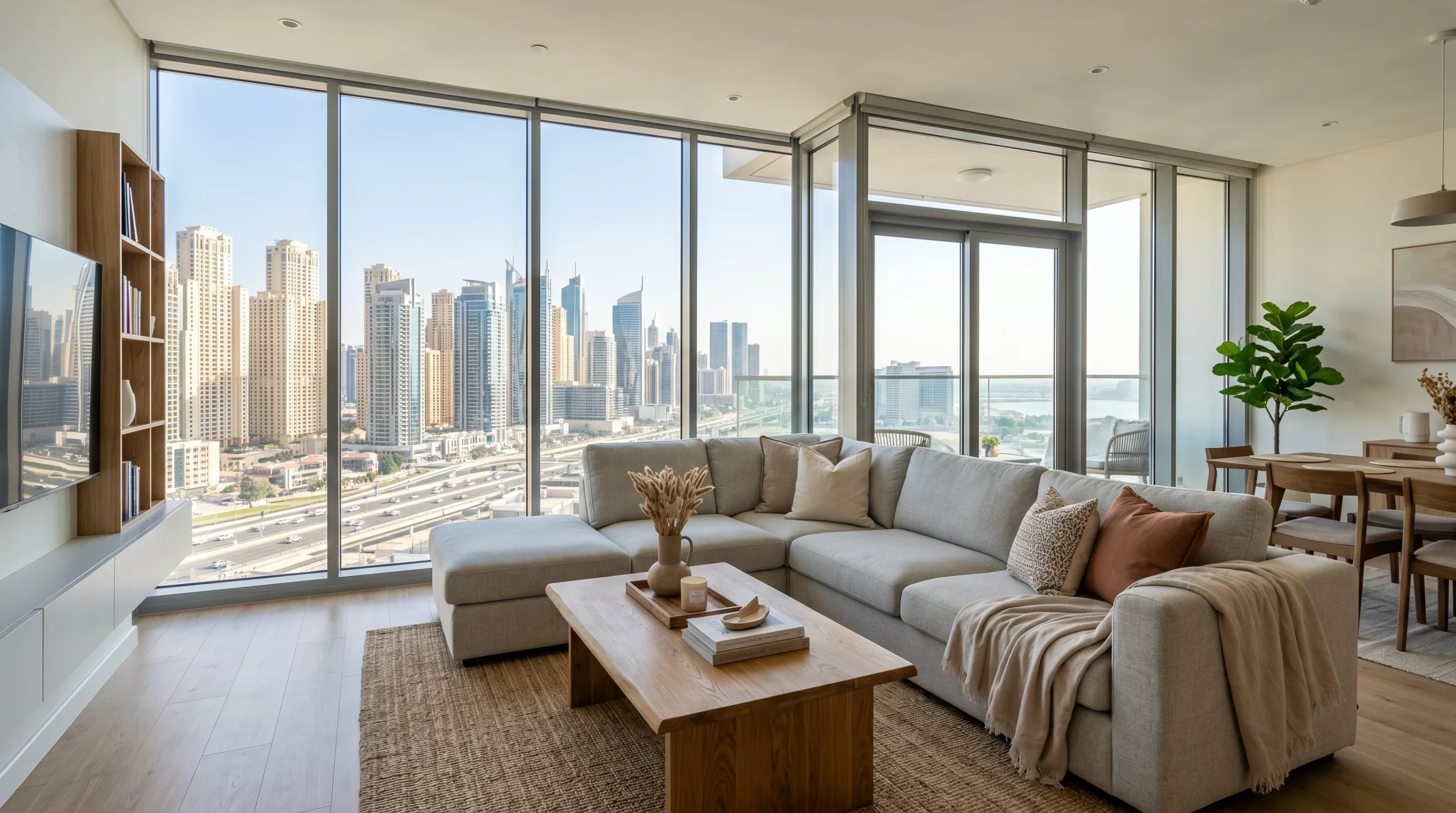
Walk into any furniture showroom in Dubai and you’ll see dozens of beautiful pieces. But here’s a question most salespeople won’t ask you: will this sofa look the same in three years as it does today?
In over 35 years helping more than 70,000 UAE families furnish their homes, the team at Karnak Home has seen the same heartbreak repeat itself – a family invests in a beautiful dining table or a plush sofa, and within 18 months, the wood is warping, the fabric is peeling, or the frame has started creaking. Not because they bought cheap furniture. Because they bought the wrong material for where they live.
This guide isn’t about selling you anything. It’s about giving you the knowledge our experts use every day so you can walk into any furniture store – including ours – and make a genuinely informed decision.
Dubai and the broader UAE present one of the most challenging environments for furniture on earth. You’re dealing with extreme summer heat that pushes 45°C+ outdoors, heavily air-conditioned interiors that can drop below 20°C, coastal humidity in areas like Dubai Marina, JBR, and Abu Dhabi’s Corniche, and dust that works its way into every crevice. Most furniture is designed and tested for temperate European or North American climates. What works in London actively fails in Jumeirah.
Let’s fix that knowledge gap.
How Dubai’s Climate Actually Damages Furniture – And Why It Matters Before You Buy
Before getting into specific materials, it helps to understand the mechanisms of damage so you can evaluate any piece of furniture intelligently.
The Heat-Cold Cycle Is the Real Problem
Most people think of Dubai as simply “hot.” The more accurate picture is that furniture in UAE homes experiences dramatic temperature swings daily. A sofa sitting near a window might absorb surface temperatures of 60°C+ during a summer afternoon, then cool rapidly once the AC kicks in. Wood expands in heat and contracts in cold. Do this repeatedly for months and years, and joints loosen, panels crack, and veneer lifts at the edges.
Solid wood handles this cycle better than alternatives because the expansion is relatively uniform. MDF (medium-density fibreboard) and particleboard, which are used extensively in budget and mid-range furniture, handle it poorly – the composite fibres and adhesives inside degrade at different rates, leading to swelling, warping, and eventual structural failure. In our experience at Karnak, a well-made solid wood dining table will outlast an MDF equivalent by 10 to 15 years in UAE conditions.
Humidity Creates a Different Category of Problems
Coastal areas of the UAE – Dubai Marina, Palm Jumeirah, Abu Dhabi, Sharjah’s waterfront – experience relative humidity that regularly exceeds 80% in summer months. This creates a separate class of furniture damage: metal hardware corrodes, fabric develops musty odours, leather can grow mould on its underside if airflow is poor, and foam inside upholstered pieces absorbs moisture and never fully dries, leading to that characteristic stale smell in older sofas.
Inland areas like Al Ain, Sharjah’s inland suburbs, and parts of Dubai like DAMAC Hills are drier – but the desert dust they contend with is an abrasive that degrades fabric weave and infiltrates mechanical components in recliners and sofa beds.
UV Exposure Is Furniture’s Silent Enemy
UAE sunlight is intense year-round. Direct or even indirect sunlight through glass causes UV degradation in fabric colours, leather pigments, and wood finishes. A sofa placed one metre from a large west-facing window in a Dubai apartment can fade visibly within six months if the material isn’t UV-stable. This matters enormously when choosing upholstery colours and finishes.
Upholstery Materials: The Honest Ranking for UAE Homes
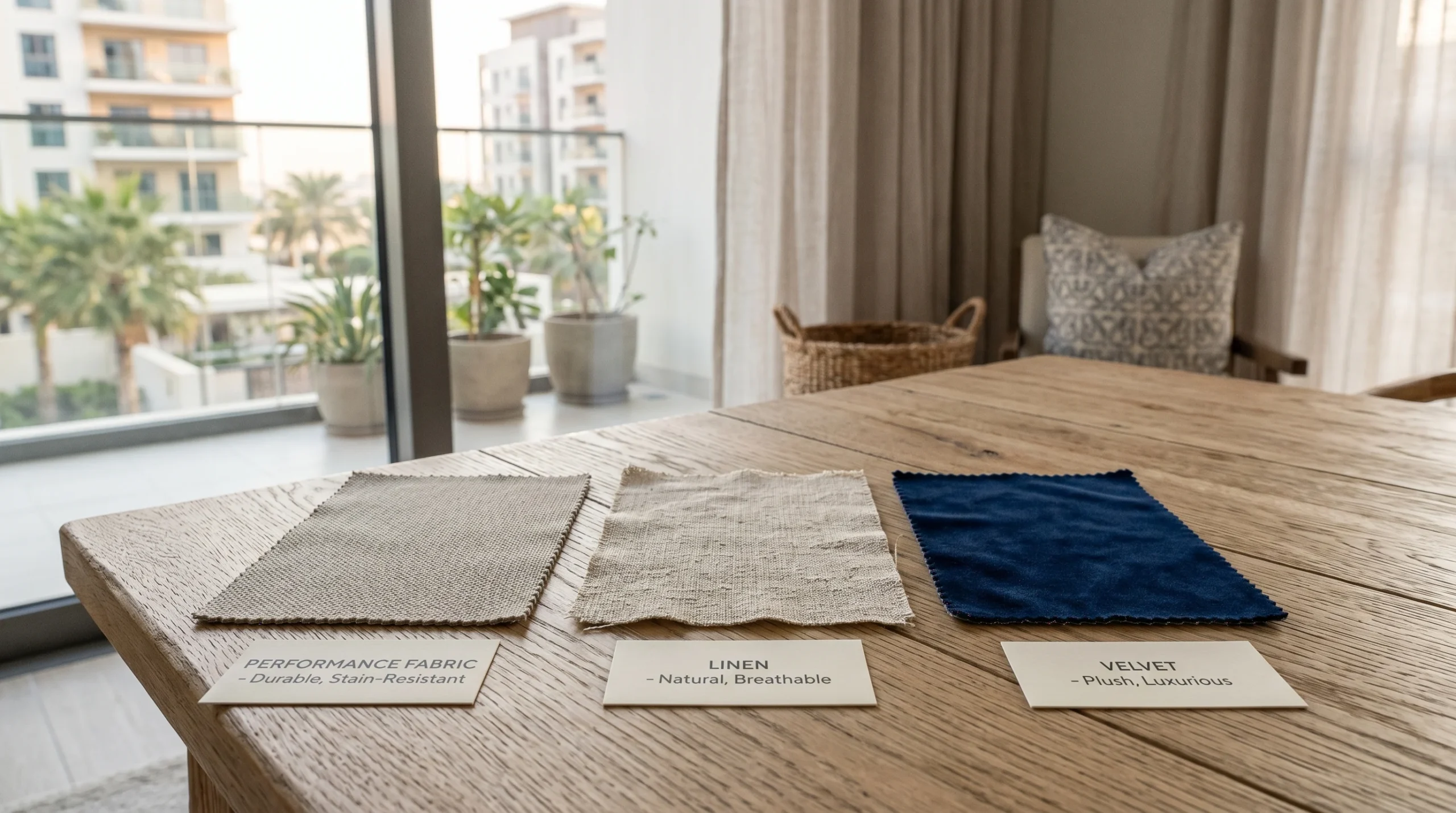
Your sofa, armchairs, and bed headboard are covered in one of several upholstery materials. Here’s how each performs in the UAE.
Performance Fabrics: The Best All-Round Choice for UAE Families
If you only take one recommendation from this guide, make it this: for most UAE families, a high-quality performance fabric sofa is the smartest purchase you can make.
Performance fabrics – sold under names like Crypton, Revolution, or branded by furniture manufacturers under proprietary names – are engineered to be stain-resistant, moisture-resistant, and UV-stable. They’re woven tightly enough to resist pilling, and the fibres are typically treated so that liquids bead on the surface rather than absorbing. In a household with children, in a climate with humidity, and in a home where you’ll be eating near the sofa more often than most European homes (it’s simply how UAE family life works), this matters enormously.
Good performance fabric sofas at Karnak start from around AED 3,500 for a three-seater. The premium versions with thicker foam, better frames, and superior weave density sit in the AED 6,000–12,000 range. Expect 8–12 years of genuine good-looking daily use from a well-made piece.
Linen and Natural Fabrics: Beautiful But Demanding
Linen looks spectacular in a UAE home – it has a natural, relaxed elegance that suits both contemporary apartments and more traditional villa settings. The problem is that natural linen absorbs moisture, stains readily, and fades relatively quickly in strong light. In a coastal area with humidity, an untreated linen sofa can start to feel slightly damp to the touch in summer.
This doesn’t mean you should avoid linen entirely. A linen-blend fabric (typically 60–70% linen with polyester or viscose) performs noticeably better, and if you’re placing the sofa away from direct light and in a consistently air-conditioned interior, a quality linen sofa can last well. Just budget for professional cleaning every 12–18 months, which costs roughly AED 200–400 per piece depending on size.
Velvet: A Surprisingly Practical Option When Done Right
Velvet sofas trend heavily in UAE interior design – and they perform better than their delicate appearance suggests, if the velvet is synthetic (polyester or polyester-blend) rather than natural. Synthetic velvet resists moisture, cleans reasonably well, and doesn’t fade as aggressively as natural velvet.
The concern with velvet in UAE homes is dust. The short pile of velvet fabric traps fine desert dust effectively, meaning these sofas require more frequent vacuuming than other fabric types. In a villa where doors and windows are opened regularly, or in a home with pets, this is a real maintenance consideration.
Full-Grain Leather: Honest Assessment
Leather sofas have a reputation problem in the UAE – many families have bought leather pieces that cracked, peeled, or developed an unpleasant tackiness within a year or two. Almost always, this is because they bought bonded leather or PU leather (polyurethane coated split leather), not genuine full-grain or top-grain leather.
Genuine full-grain leather actually performs well in air-conditioned UAE interiors if maintained properly. It doesn’t absorb moisture like fabric, wipes clean easily, and develops a patina over time. The challenge is that quality full-grain leather furniture is expensive – expect AED 12,000–30,000+ for a quality three-seater – and it requires conditioning every 3–6 months to prevent drying and cracking in air-conditioned environments. It also feels warm to sit on in summer, which is a genuine comfort consideration.
Avoid any leather described as “bonded,” “reconstituted,” or simply labelled “PU leather” if longevity is your goal. These peel consistently within 2–4 years in UAE conditions regardless of price point.
Microfibre: The Underrated Family Fabric
Microfibre (also called microsuede or Alcantara in premium versions) is genuinely underrated for UAE family homes. It’s soft, stain-resistant when treated, relatively easy to clean with a damp cloth, and holds up well in humidity. It’s not as aesthetically distinctive as velvet or linen, but for a family room that sees daily use – children, meals, guests – it’s one of the most practical choices available. Mid-range microfibre sofas at Karnak sit in the AED 2,800–6,000 range.
Wood and Frame Materials: What the Structure Is Made Of Matters as Much as the Surface
Many families focus entirely on upholstery when evaluating furniture and overlook what’s underneath. The frame and structural material determine whether a piece survives 5 years or 20.
Solid Wood: The Gold Standard (With Important Caveats)
Solid wood furniture – particularly teak, oak, walnut, and rubberwood – outperforms every alternative in UAE conditions when properly finished. Teak is especially notable because its natural oils make it inherently resistant to humidity and insects, which is why it’s been used in outdoor furniture throughout Southeast Asia and the Gulf for centuries.
For indoor furniture in UAE homes, well-finished solid oak and walnut dining tables, bed frames, and wardrobes will last decades. The key phrase is “well-finished” – a quality penetrating oil or lacquer finish seals the wood against humidity fluctuations. Unfinished or poorly finished solid wood can still warp in UAE conditions.
Rubberwood, used frequently in mid-range solid wood furniture, is a sustainable and economical option that performs reasonably well indoors in air-conditioned spaces. It’s not as naturally resistant as teak but significantly outperforms MDF in longevity. Solid rubberwood dining sets at Karnak start from around AED 2,200 for a four-seater.
Engineered Wood and MDF: Use With Eyes Open
We’d be dishonest if we didn’t acknowledge that a large portion of the furniture sold in the UAE – including pieces at various price points – uses MDF, HDF (high-density fibreboard), or particleboard for panels, doors, and internal structures. This is not inherently a problem if you understand the limitations.
High-density MDF with a quality laminate or veneer finish performs acceptably in consistently air-conditioned spaces away from moisture exposure. The problems arise when: pieces are placed near kitchen steam, bathroom humidity, or outdoor-adjacent areas; quality is low and the adhesives used are not moisture-resistant; or the laminate edges are poorly sealed, allowing moisture ingress.
For wardrobes, TV units, and shelving in bedroom or living room settings in UAE apartments, well-made HDF pieces can serve families for 8–12 years. We’d be cautious recommending MDF for dining furniture where regular cleaning introduces moisture, or for any furniture in coastal-area homes with high ambient humidity.
Metal Frames: Steel vs. Aluminium
Metal is used in bed frames, dining chair legs, sofa feet, and occasional furniture. In UAE conditions, untreated steel corrodes – slowly indoors, but noticeably over a decade, particularly in coastal areas. Quality furniture uses powder-coated or stainless steel, which resists corrosion significantly better.
Aluminium is inherently rust-proof and performs excellently in UAE conditions, which is why it dominates the outdoor furniture market here. For indoor furniture, aluminium frames are increasingly used in contemporary designs – they’re lightweight, durable, and genuinely suited to the climate.
Brass hardware – drawer handles, bed feet, decorative elements – is experiencing a major design trend in UAE interiors. Solid brass ages gracefully and doesn’t corrode. Brass-plated hardware, however, can tarnish and peel in humid environments. Always ask whether hardware is solid brass or brass-plated.
Mattresses and Beds: Climate Considerations Most Families Miss
Bed frames follow the same wood and metal guidelines above, but mattresses introduce additional UAE-specific considerations that often get overlooked entirely.
Foam Density and Heat Retention
Standard memory foam mattresses that perform well in cooler climates can feel uncomfortably hot in UAE bedrooms, even with air conditioning. The dense foam traps body heat. If you’re waking up warmer than you’d like, or if the mattress has a slight musty smell after a year or two, foam heat retention and moisture absorption are likely causes.
For UAE families, look for mattresses that combine foam with pocket springs (hybrid designs), use open-cell foam rather than closed-cell, or incorporate cooling gel layers. These designs allow better airflow and significantly reduce the moisture retention issue. Budget for AED 2,500–8,000 for a quality king-size hybrid mattress that will genuinely perform in UAE conditions.
Mattress Protectors Are Non-Negotiable in UAE
A good waterproof, breathable mattress protector is not optional in the UAE. Given humidity levels and the fact that air conditioning in UAE bedrooms runs continuously for 6–8 months of the year (creating condensation risks), a quality protector extends mattress life substantially. This is a AED 150–400 investment that protects a AED 3,000–8,000 mattress.
Common Mistakes UAE Families Make When Buying Furniture
Mistake 1: Choosing Beautiful Over Practical for High-Use Spaces
A hand-knotted rug under your dining table looks extraordinary in a showroom photo. In a UAE family home where children spill, where outdoor shoes come in with dust, and where the piece will be moved for cleaning weekly, it’s a maintenance nightmare. The same applies to white or very light upholstery in family rooms – we understand the appeal, but dark-bordered or mid-tone performance fabrics will genuinely serve your family better in rooms that see daily use.
Mistake 2: Not Asking What the Core Material Is
When a salesperson says “solid wood,” always ask which wood and which parts are solid. Many pieces have solid wood legs and visible panels but MDF interiors and backs. This isn’t necessarily deceptive – it’s standard practice in the industry – but it affects how the piece will perform and how long it will last. At Karnak, our team is trained to answer this question honestly for every piece.
Mistake 3: Ignoring Placement in Relation to Windows
As mentioned earlier, UV damage from UAE sunlight is substantial. A light-coloured fabric sofa placed directly facing a large south or west-facing window without UV-filtering glass or curtains will fade visibly within 12 months. Before finalising furniture placement, consider where direct and reflected sunlight falls throughout the day and choose materials and colours accordingly.
Mistake 4: Buying Outdoor Furniture Not Rated for UAE’s Sun Intensity
UAE summer sun is significantly more intense than the temperate climates most outdoor furniture is tested in. A rattan set rated for “outdoor use” in a European context may bleach, crack, and deteriorate within a single UAE summer if exposed to direct midday sun. Look for furniture specifically rated for high UV environments, made with synthetic rattan, powder-coated aluminium frames, and UV-stabilised outdoor fabrics. Teak remains an excellent natural option for outdoor use.
Mistake 5: Underestimating Maintenance Requirements
Every material has maintenance needs. The mistake isn’t buying leather or linen – it’s buying them without understanding what keeping them looking good actually requires. Before purchasing, ask specifically: how do I clean spills, what’s the recommended annual care, and what’s the cost of professional cleaning? If the answers aren’t clear, that’s a signal.
Budget Guide: What UAE Families Actually Spend on Quality Furniture That Lasts
There’s a price range where furniture in the UAE represents poor value – cheap enough to seem affordable but not well-made enough to last, meaning you end up replacing it within 3–5 years and spending more in total. Here’s an honest picture of where quality begins for common pieces.
- Living Room: Fabric sofa (3-seater, quality performance fabric, solid frame): AED 3,500–9,000. Genuine leather three-seater: AED 12,000–28,000.
- Bedroom: King-size solid wood or upholstered bed frame: AED 2,800–7,000. Quality hybrid mattress (king): AED 2,500–8,000.
- Dining: Four-seater solid wood dining table with chairs: AED 2,200–8,500. Six-seater extending solid oak: AED 5,500–15,000.
- Wardrobes: Built-in style freestanding wardrobe, quality HDF/solid wood combination, 200cm: AED 1,800–6,000.
These ranges reflect pieces that will genuinely serve a UAE family for 10+ years with proper care. The lower ends of these ranges are achievable at Karnak – we source specifically for value at each price point, which is part of why 70,000+ families have trusted us since 1988.
Expert Tips From 38 Years of Furnishing UAE Homes
Here are the most important practical tips we share with every family at Karnak Home to help their furniture last longer in Dubai’s demanding climate:
1. Protect Furniture from Air Conditioning Vents
Never place wooden furniture directly under or in front of a strong AC vent. The concentrated cold, dry airflow dries out wood much faster than normal room air conditioning, accelerating cracking in finishes and loosening joints over time.
2. Use Quality Rugs Under Seating Areas
A good rug under your sofa and coffee table creates a protective barrier against floor-level dust and reduces abrasive wear on sofa legs. It also visually anchors the seating arrangement, offering both practical protection and design value.
3. Rotate and Flip Seat Cushions Every 3 Months
In UAE homes, air conditioning airflow often hits one side of the sofa more than the other, causing uneven foam compression and fabric fading. This simple 2-minute habit can easily double the lifespan of your cushions.
4. Deal with Spills Immediately
Due to high humidity, a fabric spill left overnight can develop a mildew smell within 24–48 hours. Always blot (never rub), then clean with a damp cloth followed by a dry one.
5. Add Felt Pads to All Furniture Legs
Marble and tile floors common in UAE villas and apartments are unforgiving — they scratch, cause sliding, and transmit vibrations. Simple felt pads protect both your floor and furniture feet.
6. Schedule Professional Cleaning Every 12–18 Months
In Dubai’s dusty environment, deep professional cleaning removes embedded particles that accelerate fabric wear. It also addresses moisture and early mildew. Many cases of “old sofa smell” are resolved after a single professional clean.
7. Choose Materials Twice for Outdoor-Adjacent Areas
Furniture near open sliding doors, in covered majlis spaces, or semi-outdoor zones faces greater humidity and temperature swings. Always specify more durable, climate-resistant materials than standard indoor furniture.
8. Keep Receipts and Warranties
UAE consumer protection law provides strong rights on furniture defects. Always ask about warranty terms before buying and keep all documents safe for future support.
Conclusion: Making Your Decision
The right furniture for a Dubai home isn’t just about aesthetics – it’s about material science, climate awareness, and understanding how your family actually lives. A piece that looks identical to another might last twice as long because of what’s inside the frame, how the fabric is woven, or how the finish was applied.
After 38 years and 70,000+ families, here’s what we know: the families who are happiest with their furniture 10 years later are the ones who asked the right questions before buying. They asked about materials, they thought about placement and they chose quality over novelty. And they bought from people who would be honest with them.
We hope this guide has given you the tools to be that buyer – wherever you shop.
Key Takeaways:
- Performance fabrics and genuine leather (not bonded) are the most durable upholstery choices for UAE homes; avoid PU and bonded leather entirely.
- Solid wood and high-density MDF with quality finishes both work in air-conditioned interiors, but solid wood significantly outperforms in longevity, especially near humidity.
- Coastal areas (Dubai Marina, Palm, Abu Dhabi waterfront) require extra scrutiny on metal hardware corrosion and foam moisture absorption in upholstered pieces.
Ready to Furnish Your Dubai Home?
Karnak Home has been helping UAE families furnish their homes since 1988, more than 70,000 families across Dubai, Abu Dhabi, Sharjah, and beyond. Whether you want to browse from home or come in for a proper consultation, we’re here to help you make decisions you’ll be happy with for years.
Shop Online: Karnak Home
Visit Our Showroom: Dubai – Showroom Address & Directions
Expert Advice: Call Us or WhatsApp our team for personalised guidance
Related Articles: