
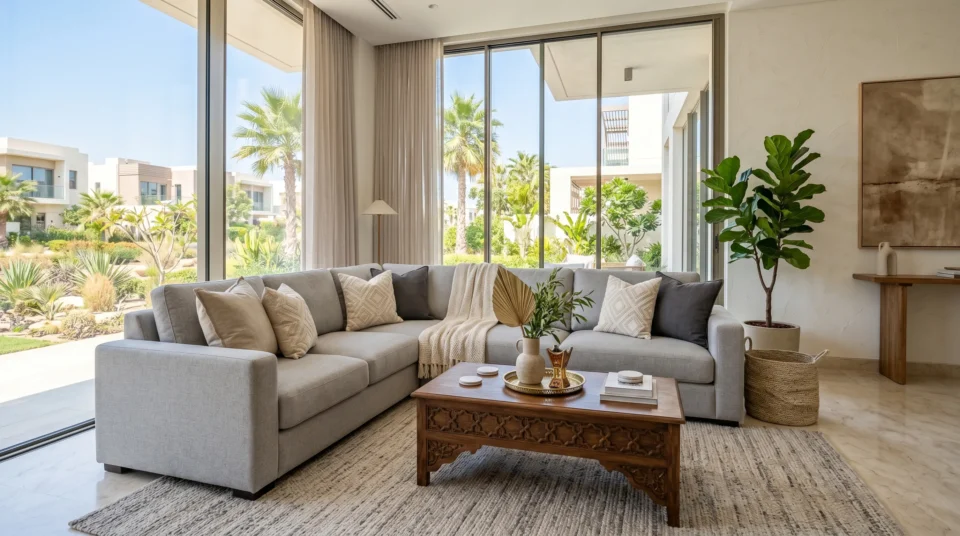
If you’ve ever spilled Arabic coffee on a cream fabric sofa at 10 PM, the night before Eid guests arrive, you already understand why sofa maintenance isn’t just a housekeeping topic in Dubai. It’s practically survival.
At Karnak Home, we’ve been helping UAE families furnish their homes since 1988. In that time, across more than 70,000 families served, the single most common question we receive after a sofa purchase isn’t about colour or size. It’s this: “How do I keep it looking new?” And in Dubai specifically, that’s a more layered question than most people realise.
This guide gives you everything: routine care routines, stain-by-stain solutions, fabric-specific advice, and the honest truth about when DIY isn’t enough. Whether you have a linen sectional in a JLT apartment or a full leather living set in an Emirates Hills villa, the guidance here is tailored to the UAE environment, because furniture care in Dubai is genuinely different from what you’d find in a European blog post.
Looking to better understand the UAE lifestyle, weather, and daily living? Check out this excellent UAE Living Portal by Gulf News for insider tips and practical advice on navigating life in the Emirates.
Why Sofa Maintenance in Dubai Is Different
Dubai’s climate is uniquely demanding on upholstered furniture. Most international furniture care content is written for temperate climates, places where humidity is moderate and dust isn’t a daily concern. The UAE is another world entirely.
From May through September, outdoor humidity regularly climbs above 85%, while indoor air conditioning runs almost continuously. This constant shift between hot, humid outdoor air and dry, cooled indoor air creates a cycle that stresses fabric fibres, dries out leather, and, critically, creates the kind of micro-moisture environment where dust mites and allergens thrive. Families with young children or anyone prone to allergies should pay particular attention to this, because a sofa that looks clean can still harbour significant allergen buildup within its cushioning.
Then there’s the dust. Dubai’s fine desert particulate is much finer than typical household dust. It settles deep into fabric weaves and can act almost like a mild abrasive over time, slowly dulling fabric sheen and weakening fibres if not addressed regularly. Leather sofas face their own challenge: the combination of dry conditioned air and UV exposure from those beautiful floor-to-ceiling windows that define so many UAE homes can cause leather to crack within just a few years if left unconditioned.
Finally, UAE family lifestyles mean sofas work hard. Large extended family gatherings, shoes-off households (which actually helps), children, and frequent entertaining all accelerate wear. Understanding this reality is the starting point for any sensible maintenance plan.
Understanding Your Sofa’s Cleaning Code
Before you apply anything to your sofa, find the care label, usually attached under the cushion or on the sofa’s base. This label contains a cleaning code that tells you exactly what’s safe to use.
The Four Cleaning Codes Explained
W — Water-based cleaners only. This is the safest and most common code. You can use water-based upholstery shampoos and mild soap solutions. Most polyester and microfiber sofas fall here.
S — Solvent-based cleaners only. Do not use water on these fabrics. This includes many premium fabrics like rayon or certain wools. Water can cause permanent watermark stains or shrinkage.
W/S — Both water and solvent-based cleaners are safe. You have the most flexibility with these fabrics.
X — Vacuum only. No liquid whatsoever. These fabrics must be professionally dry-cleaned if deeper cleaning is needed. Velvet and some antique-style fabrics often carry this code.
This is information that genuinely matters, and skipping this step is the number one reason DIY sofa cleaning goes wrong. We’ll say it clearly: if your sofa is coded S or X, most of the liquid-based advice you’ll read online does not apply to your sofa. Always check first.
Routine Maintenance: Your Weekly and Monthly Schedule
Consistent light maintenance is far more effective than occasional deep cleaning. Think of it like your car, regular oil changes prevent engine damage that’s costly to fix later.
Weekly Care (15 Minutes)
The most important weekly task is vacuuming. Use your vacuum cleaner’s upholstery attachment, not the standard floor head, and work methodically across all surfaces including the back, sides, and under cushions. In Dubai, where fine dust settles daily, this step makes a visible difference within weeks.
Remove all cushions and vacuum the seat deck underneath. This is where crumbs, dust, and debris accumulate fastest and where dust mites are most concentrated. For families with young children, this area deserves particular attention.
Rotate and flip your cushions if they’re reversible. This is one of the simplest and most effective ways to extend a sofa’s life, it distributes wear evenly so no single area compresses or fades before the rest. If your cushions aren’t reversible, simply rotate them front-to-back each week.
Monthly Care (30–45 Minutes)
Once a month, do a more thorough wipe-down. For fabric sofas, a lightly dampened microfibre cloth, wrung out until almost dry, can be used to wipe armrests and high-contact areas where skin oils accumulate. For leather sofas, this is the time to apply a leather conditioner (more on this in the leather section below).
Check all seams, piping, and leg fittings. Catching a small seam separation early costs nothing to fix. Left for six months, the same seam may require professional reupholstery. Tighten any loose legs, most wooden legs simply screw on and can be hand-tightened in seconds.
Fabric Sofa Cleaning: Type-by-Type Guide
Not all fabric sofas are treated the same, and using the wrong method on the wrong material can cause permanent damage. Here’s what you need to know for the most common fabric types found in UAE homes.
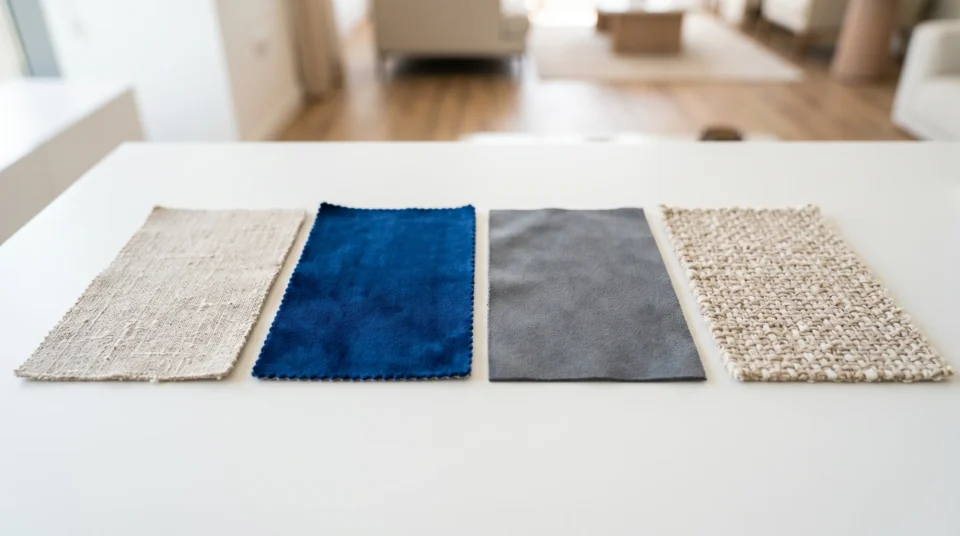
Microfiber Sofas
Microfiber is one of the most practical fabric choices for UAE families, and for good reason, it’s durable, relatively stain-resistant, and easy to maintain. For water-coded microfiber, mix a small amount of mild dish soap with warm water and apply with a soft white cloth using gentle circular motions. The key word is white cloth, coloured cloths can transfer dye onto your sofa.
After spot cleaning, use a dry white cloth to absorb excess moisture, then allow the area to air dry completely before replacing cushions. In Dubai’s air-conditioned homes, this usually takes about an hour. Never use a hair dryer, concentrated heat can set stains permanently and damage fibres.
Linen and Cotton Sofas
These natural fibres are popular in Dubai for their breathable, relaxed aesthetic, particularly in villas and apartments in areas like Arabian Ranches, The Meadows, and Jumeirah. However, they absorb liquid quickly, which makes fast action on spills critical.
Blot, never rub, spills immediately with a clean, dry cloth. Rubing spreads the stain and pushes it deeper into the weave. For dried stains, a mixture of warm water and a small amount of white vinegar (1:1 ratio) works well on most common stains. Always test on a hidden area first and allow to dry fully before assessing.
Linen sofas benefit from periodic professional steam cleaning, once every 12 to 18 months is appropriate for a heavily used family sofa in the UAE. Budget approximately AED 150–350 for a professional sofa steam-cleaning service in Dubai, depending on size and the service provider.
Velvet Sofas
Velvet has experienced a real resurgence in UAE interior design, deep jewel tones like emerald, navy, and dusty rose are enormously popular in both apartments and villas right now. But velvet requires a specific approach to cleaning.
The pile direction matters enormously. Always brush velvet in the direction of the pile using a soft-bristle brush. Crushed pile, that flat, dull patch you see on velvet after something sits on it, can usually be restored by holding the fabric briefly over steam (a kettle or clothes steamer works well) and then gently brushing in the pile direction while the fibres are still slightly warm.
Most velvet sofas are coded W/S or X. If yours is coded X, no liquid cleaning at all, vacuum with a soft brush attachment only and call a professional for deeper cleaning.
Performance and Outdoor Fabrics
Increasingly popular in UAE homes, performance fabrics (brands like Crypton, Sunbrella) are designed to resist stains, moisture, and UV. If you have children or pets, these fabrics are worth a serious look. They clean easily with a mild soap and water solution, and most stains wipe off without residue if caught quickly. These fabrics are also ideal for covered outdoor seating areas, a staple of villa living across Dubai.
Leather Sofa Care in Dubai’s Climate
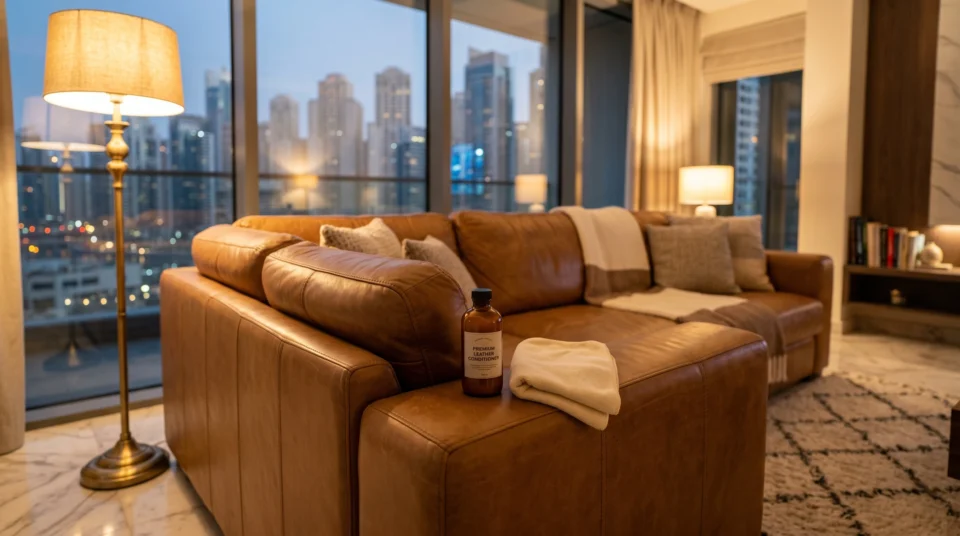
Leather sofas are a long-term investment, a quality piece can last 15–25 years with proper care, or develop unsightly cracking within 3–5 years without it. In Dubai specifically, the combination of air conditioning, UV exposure, and occasional high humidity makes conditioning non-negotiable.
Understanding Leather Types
There are three main leather grades you’ll encounter in UAE furniture retail:
Full-grain leather is the highest quality, it retains the natural surface of the hide, complete with natural markings. It’s the most durable and develops a beautiful patina over time. In Dubai retail, a full-grain leather sofa typically starts from AED 8,000–12,000 and above for a three-seater.
Top-grain leather has the surface sanded and a finish coat applied. It’s more uniform in appearance, slightly more resistant to staining, and represents excellent value in the AED 4,000–9,000 range. Most leather sofas in this price bracket from reputable retailers are top-grain.
Bonded leather is a manufactured product, leather scraps bonded to a backing. It’s significantly cheaper (AED 1,500–3,500 for a set), but it peels and deteriorates relatively quickly. In Dubai’s dry air conditioning environment, bonded leather often begins peeling within 2–4 years. This is honest, important information we share with every customer who asks, and it’s a key reason we guide families toward genuine leather when budget allows.
Leather Conditioning Routine
Clean leather sofas monthly with a dedicated leather cleaner, not baby wipes, not all-purpose cleaners, and certainly not bleach-based products. These strip the leather’s natural oils and accelerate cracking. Apply conditioner every three months in Dubai, the air conditioning alone is enough to dry leather out significantly faster than in more temperate climates.
Use a product specifically formulated for furniture leather (as opposed to car leather products, which have different formulations). Apply a small amount to a soft cloth, never directly to the leather, and work in gentle circular motions. Allow it to absorb for 20–30 minutes, then buff lightly with a clean dry cloth.
Keep leather sofas out of direct sunlight where possible. The UV exposure through Dubai’s large windows causes fading and drying faster than almost any other factor. If repositioning isn’t possible, UV-protective window film is a practical and increasingly popular solution in UAE homes.
Tackling Common Stains: A Dubai Family’s Reference Guide
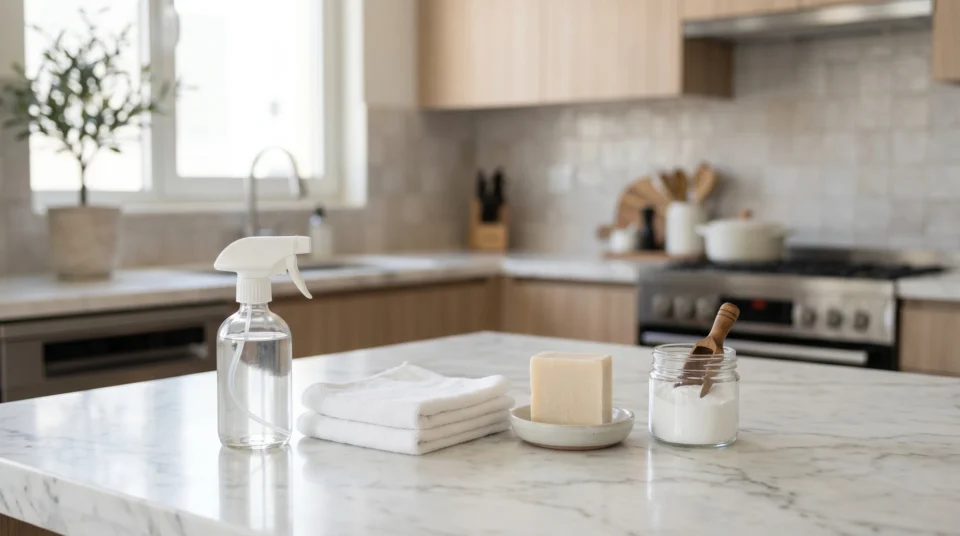
Every household has its repeat offenders, the stains that come up again and again. Here are the most common ones in UAE homes and exactly how to address them.
Arabic Coffee and Tea
Act immediately. Blot with a clean dry cloth to absorb as much liquid as possible. Mix one teaspoon of mild dish soap with one cup of cold water and apply with a clean cloth, blotting from the outside of the stain inward to prevent spreading. For dried Arabic coffee stains (which contain cardamom and can be stubborn), a solution of one part white vinegar to two parts water often helps break down the residue before shampooing.
Food and Cooking Oil
Sprinkle a small amount of baking soda or corn starch directly onto a fresh oil stain and leave for 15–20 minutes to absorb the oil before vacuuming away. Follow with a mild soap and water solution. Do not apply water first to an oil stain, it makes the stain harder to remove, not easier.
Ink
Act fast. Isopropyl alcohol (rubbing alcohol) on a clean white cloth, dabbed, not rubbed, onto the stain is the most effective first response for ballpoint ink. This works on most fabric types coded W or W/S. Test on a hidden area first. Ink is one of the stains where professional intervention often gives better results if DIY attempts don’t fully work, as incorrect treatment can set the stain permanently.
Children’s Food Dyes and Juice
UAE supermarkets carry heavily dyed snacks and juices that can stain vividly. Cold water is your friend here, hot water sets these stains. Blot cold water immediately, then use a fabric-safe stain remover. Enzyme-based cleaners, available from most UAE hypermarkets, are particularly effective on organic food stains.
Pet Accidents
For households with pets, an enzyme-based cleaner is essential. These products break down the organic compounds in urine and eliminate odour at the molecular level, unlike regular cleaners, which mask odour temporarily. Apply generously, allow to dwell for the time specified on the product label, then blot clean and allow to dry fully.
Common Maintenance Mistakes to Avoid
Mistake 1: Rubbing Stains Instead of Blotting
This is the single most common and most damaging mistake. Rubbing a stain spreads it wider, pushes it deeper into the fabric, and can damage the surface fibres, causing pilling or a rough texture even after the stain is gone. Always blot, always work from the outside of the stain inward, and always be patient.
Mistake 2: Using Too Much Water
Over-wetting fabric can cause watermarks, encourage mould growth (a real risk in Dubai’s high-humidity months), and damage foam filling. The damp cloth should feel almost dry to the touch, if you’re wringing out significant water, it’s too wet.
Mistake 3: Skipping the Patch Test
Products that are completely safe on one fabric can discolour or damage another. Before applying any cleaning product to a visible area of your sofa, test it on a hidden patch, under a cushion or on the underside of the base, and allow it to dry fully before assessing. This takes five minutes and saves significant heartache.
Mistake 4: Ignoring the Care Label
We covered this earlier, but it bears repeating because the consequences of ignoring it can be irreversible. Using water on an S-coded sofa, or any liquid on an X-coded sofa, can cause permanent damage that invalidates your warranty and requires professional remediation.
Mistake 5: Using Household Cleaners Not Designed for Upholstery
Bleach, all-purpose sprays, and glass cleaners are common improvised solutions that cause more damage than they fix. They strip protective coatings, fade colours, weaken fibres, and on leather, accelerate cracking dramatically. Dedicated upholstery cleaners are widely available at UAE hypermarkets and cost very little relative to the damage they prevent.
Professional Cleaning: When to Call the Experts
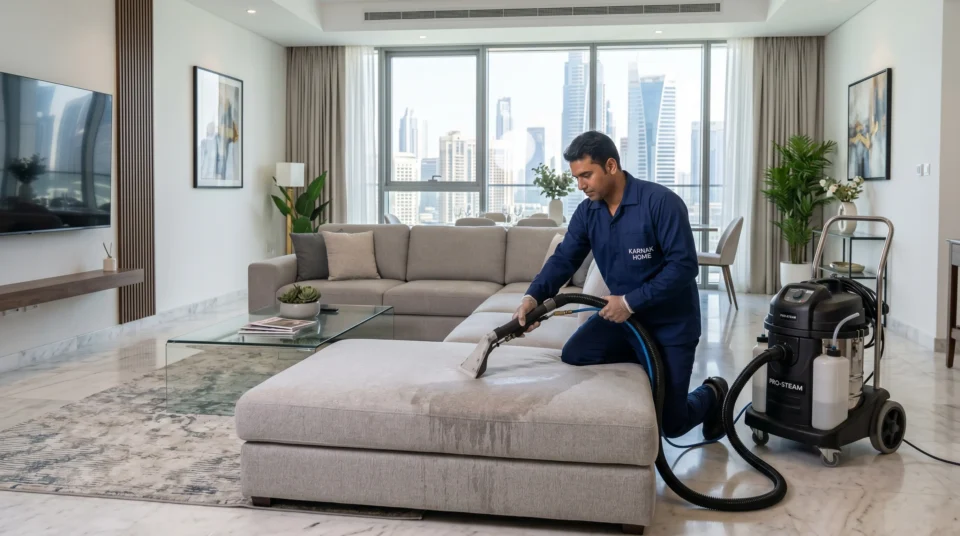
DIY maintenance handles the vast majority of sofa care needs. But there are situations where professional cleaning is the right call.
You should book a professional clean if: your sofa has a persistent odour that isn’t resolved by surface cleaning; you have X-coded fabric; the sofa hasn’t been deep-cleaned in over 18 months of regular family use; there’s visible mould or mildew (which can happen in UAE coastal areas or during particularly humid summers); or you have a large, light-coloured sofa before a significant occasion.
In Dubai, professional upholstery cleaning services range from approximately AED 150 for a two-seater to AED 400–600 for a large L-shaped sectional, depending on fabric type and service level. A reputable service will identify your fabric type before treating it, if they don’t ask, that’s a warning sign.
For families who entertain frequently or have young children and pets, scheduling a professional deep clean annually makes practical sense regardless of the sofa’s visible condition.
Expert Tips from 35 Years of UAE Furniture Experience
After helping more than 70,000 families furnish their UAE homes, these are the maintenance insights we share most often:
- Buy performance fabric if children are under 10. The difference in peace of mind is enormous, and the additional cost over standard fabric is modest relative to the stress it saves.
- Use armrest covers proactively. Armrests absorb the most wear, skin oils, friction, and direct contact. Washable armrest covers cost very little and can extend your sofa’s life by years.
- Position sofas away from AC vents where possible. Direct air conditioning airflow accelerates drying of both leather and fabric, and creates localised dust accumulation. Even a 30cm gap from a direct vent makes a measurable difference.
- Address spills in the first 30 seconds. The difference between a stain that lifts completely and one that becomes permanent is often measured in seconds. Keep a clean dry cloth in your living room as standard.
- Deodorise regularly with baking soda. Sprinkle baking soda lightly over fabric surfaces, leave for 20–30 minutes, then vacuum away. This absorbs odours naturally and safely, with no chemical residue. Particularly useful for pet-owning households or after extended periods of heavy use.
- Check leg pads every 6 months. The felt or rubber pads on sofa legs prevent floor scratching and keep the sofa stable. They wear away gradually and are inexpensive to replace, available at any UAE hardware store for a few dirhams.
- Never put wet laundry on your sofa. Common in many households, this habit transfers moisture into the cushion filling, which in Dubai’s climate can encourage mould growth and persistent odour in the foam core, a problem that’s difficult and expensive to remediate.
- For velvet: steam is your friend. A clothes steamer used monthly on velvet sofas keeps the pile fresh, lifts crushed areas, and gently sanitises the surface. It’s one of the most effective low-effort maintenance habits for premium fabric sofas.
Choosing a Low-Maintenance Sofa: What to Look for Next Time
If you’re approaching the end of your current sofa’s life, or furnishing a new home, the maintenance considerations above inform what to look for in your next purchase.
Darker colours in heavily used family areas hide wear and staining more forgivingly than light tones, though light-coloured sofas can absolutely work in lower-traffic rooms. Performance fabrics command a modest premium but return significantly more years of presentable use. Removable, washable cushion covers are a feature worth prioritising, not all sofas offer them, but those that do offer a meaningful practical advantage for UAE families.
For families in the villa belt, Arabian Ranches, The Springs, Mudon, Damac Hills, Reem, L-shaped sectionals in durable fabric or leather tend to be the most practical choice for the large living spaces and active family lifestyles that characterise these communities. For apartment dwellers in areas like JBR, Business Bay, or Dubai Marina, space efficiency often matters as much as durability, and modular sofas offer the flexibility to adapt as living arrangements change.
If you’re thinking about your next sofa purchase, our sofa collection at Karnak Home spans everything from compact two-seaters to villa-scale sectionals, with options across fabric types, configurations, and price points. Check out our wider home furniture range, including coffee tables, dining tables, tv media units, accent chairs, and our mirrors collection. We also offer dedicated selections for bedroom furniture, premium mattresses, and office furniture.
Additionally, if you are looking for custom design solutions, you can explore options from Kustom Deco and view their new arrivals. Their collections feature specialized options for living room furniture such as sofas, sectional sofas, dining sets, and tv cabinets. For the bedroom, you can find quality bedroom furniture including beds, custom wardrobes, and a stylish dressing table. Every piece comes with clear care guidance and a warranty that reflects the quality you’re investing in.
Conclusion: Making Your Decision
A sofa in an active UAE household is one of the hardest-working pieces of furniture you own. Maintaining it well doesn’t require significant time or expense, what it requires is consistency, the right products, and an understanding of what your specific sofa needs.
The fundamentals are straightforward: vacuum weekly, address spills immediately, condition leather every three months, and book a professional clean every 12–18 months. Do these things, and a well-made sofa will serve your family for a decade or more.
Key Takeaways
- Always check your sofa’s care code label before applying any cleaning product, the wrong method on the wrong fabric causes permanent damage.
- Dubai’s climate demands more frequent leather conditioning and more consistent dust management than most international care guides suggest.
- Speed is the single biggest factor in stain removal, the first 30 seconds after a spill determines whether it becomes a stain.
Ready to Find the Right Furniture for Your Space?
Whether you’d like to browse at your own pace or talk through your specific apartment layout with one of our team, Karnak Home makes it straightforward. Our showroom gives you the chance to experience furniture at full scale – something that makes a real difference when you’re choosing pieces for a small space. Our online store lets you filter by dimensions, style, and function so you can shortlist options before committing to a visit.
We offer delivery across all seven emirates, and our team can advise on anything from sofa dimensions to full room layouts. There’s no pressure and no commission-driven sales – just genuine guidance from people who know UAE homes.
Shop Online: Karnak Home
Visit Our Showroom: Dubai – Showroom Address & Directions
Expert Advice: Call Us or WhatsApp our team for personalised guidance
Related Articles: